OTSUKI, Gentaku.  Auf Merkliste setzen
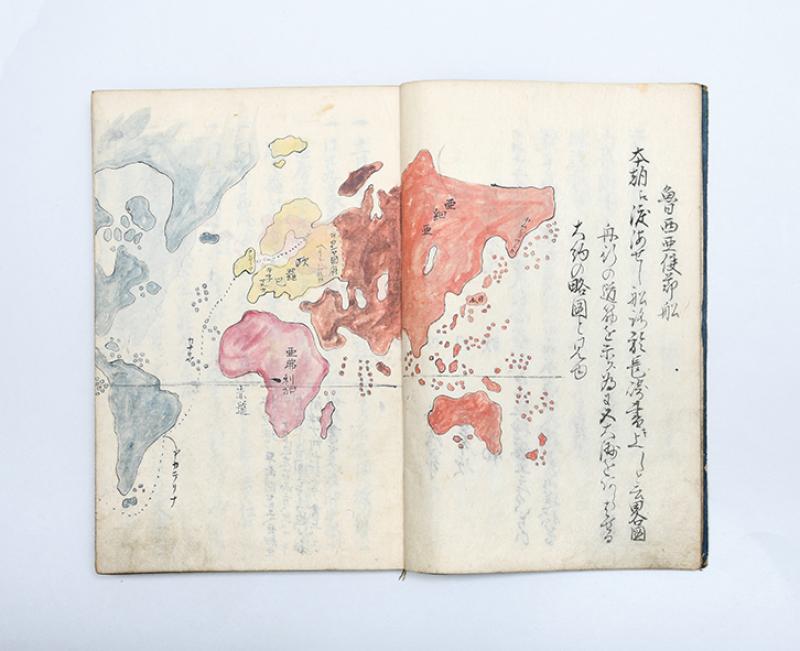
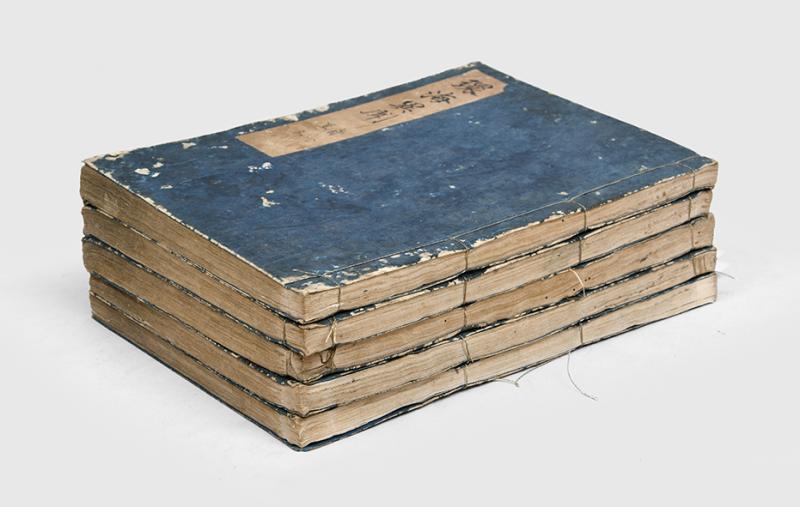
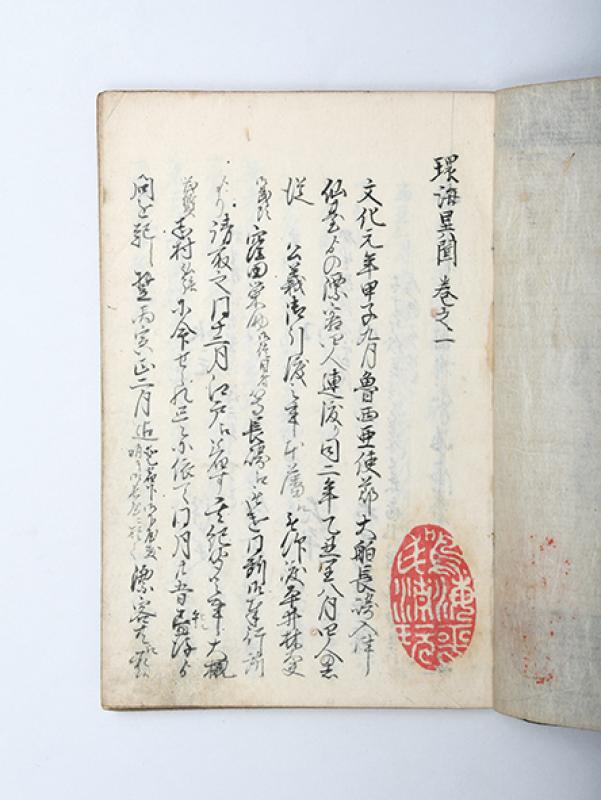
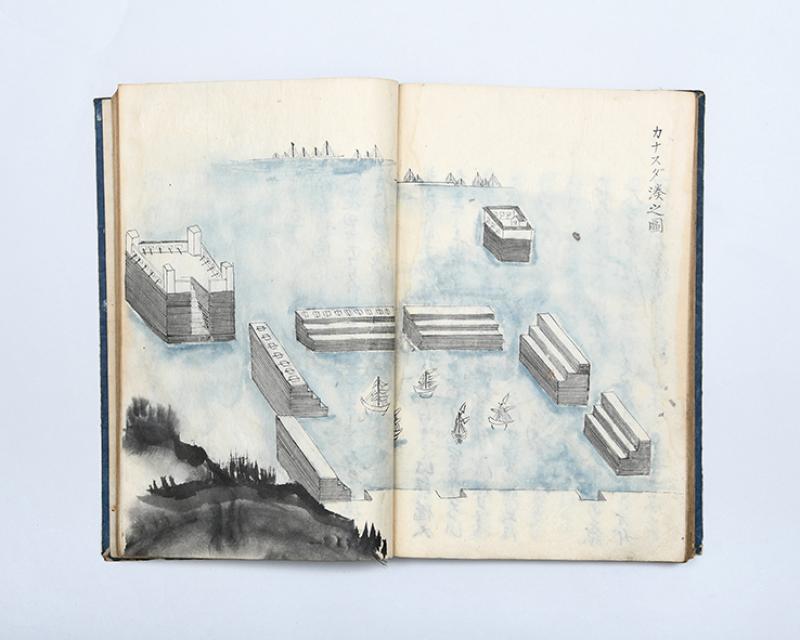
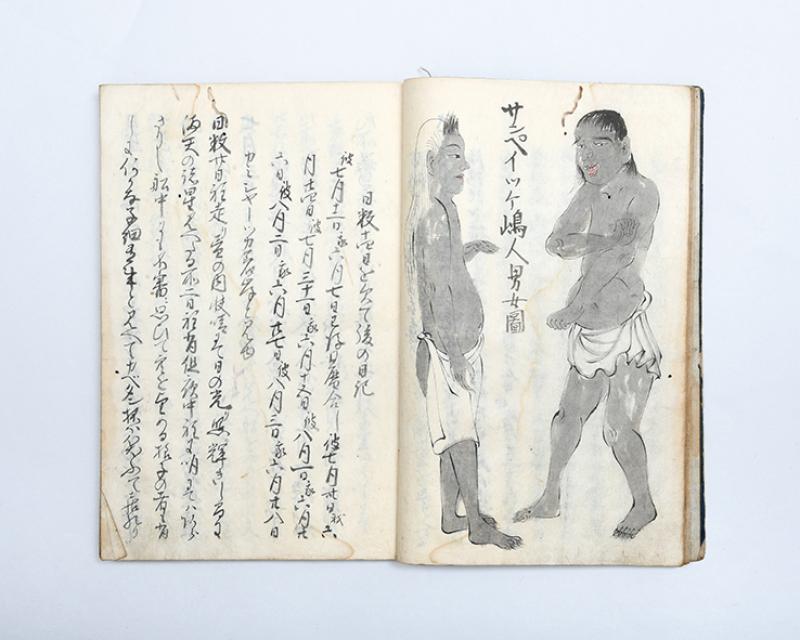
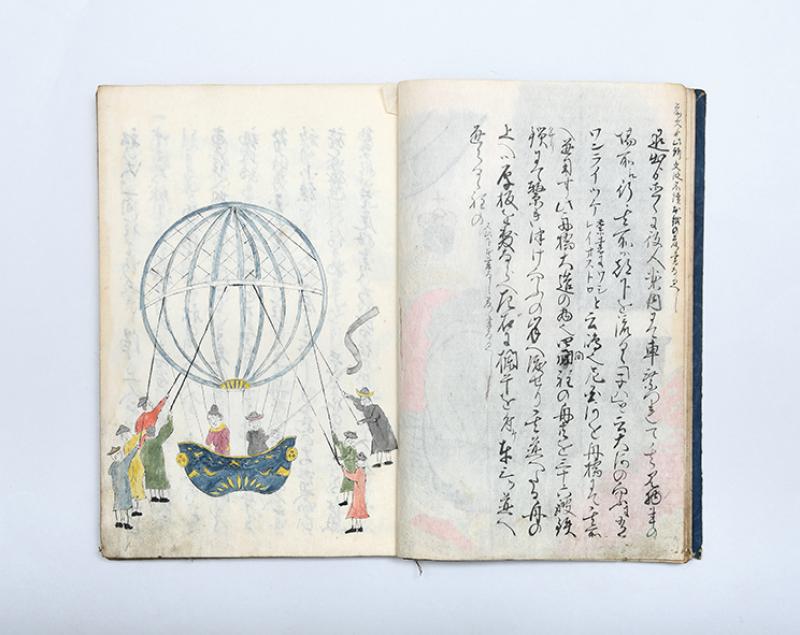
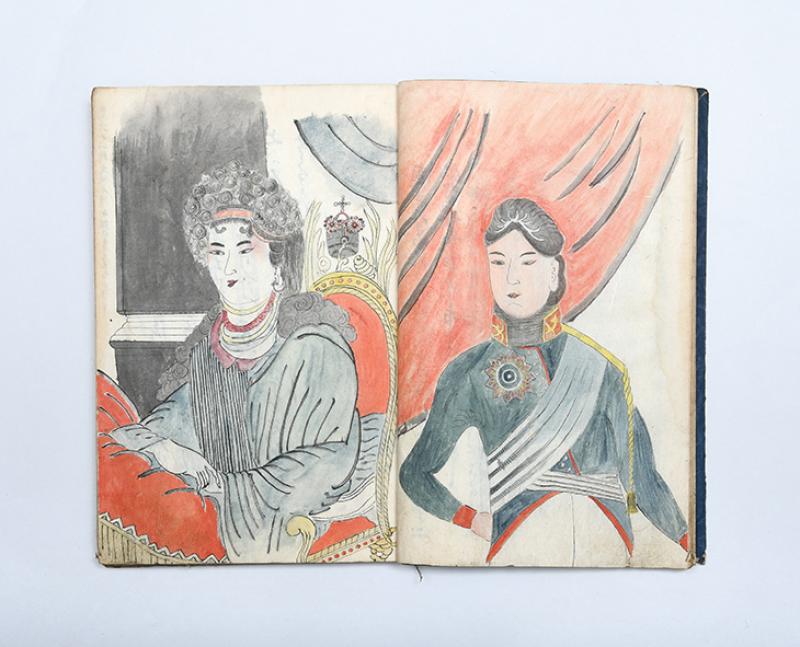
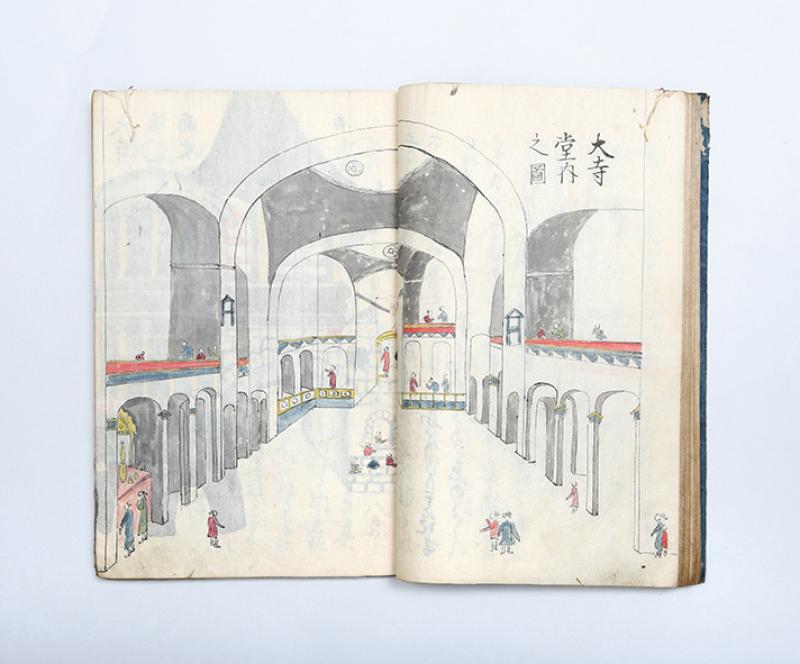
Kankai ibun (“Strange Tales of a Circumnavigation”). [Japan: 1807-19]. ¶ 14 parts in 5 vols, large octavo, manuscript on recto and verso of each leaf. With 82 manuscript drawings (63 hand-coloured, 1 loosely inserted), 2 manuscript maps (1 hand-coloured); text in classical Japanese. Original blue cloud-patterned wrappers, renewed grey thread fukuro-toji binding, manuscript title labels on front wrappers. Contemporary inscription of one Mr Naito, Buheicho, Nagoya, on final page of each vol., later manuscript catalogue note loosely inserted. Wrappers worn and creased, thread loose in places but stable, occasional worm-holing and tidemarks internally: a very good example. An early manuscript copy, recounting the travels of four Japanese sailors shipwrecked in Russia and their return to Japan aboard Krusenstern’s voyage. Besides a map tracing the route, it contains many accomplished illustrations, including a portrait of two indigenous Hawai’ians, a depiction of a Russian planetarium, and many diagrams of Western clothes. ¶ In late 1793, the vessel Wakamiya-maru set sail for Edo, but storms drove it off course to the Aleutian Islands. After months, the crew were discovered and taken to Russia, where they remained for the next decade. In 1803, Tsar Alexander I asked the 10 surviving crewmen whether they wished to return to Japan aboard Krusenstern and Rezanov’s famous circumnavigation. Four agreed - Tsudayu, Gihee, Sahei, and Tajuro - who were accompanied by a fifth, Zenroku, working as Rezanov’s interpreter. They arrived in Nagasaki in 1804, becoming the first Japanese people to travel around the world. They were interrogated by the scholar Otsuki Gentaku, whose write-up of the interviews, Kankai ibun, circulated in manuscript in 16 volumes from 1807. Their story captured great attention at a time when it was still punishable by death for Japanese people to leave the country and accounts of the outside world were scarce. There is much attention paid to the technology and culture they saw in Russia, as well as their experiences in Britain, Brazil, the Canary Islands, and Hawai’i. The red ownership stamp of the poet Shimosato Denpo (1762-1819) dates this copy to the early 19th century. Textually it matches the Waseda University Otsuki-bon copy. The scribe omits the preface volume and Volume 14, although he includes the world map from the preface in Volume 1. The illustrations generally match those identified by the historian, linguistics researcher, and bibliographer of Kankai ibun, Sugimoto Tsutomu.
21000,- EUR
Differenzbesteuert/Subject to margin taxation
Sachgebiete: Asien, Buchmalerei, Japan, Russland, Reisen/Reiseliteratur
Kontakt zum