BEKKER, BALTHASAR  Auf Merkliste setzen
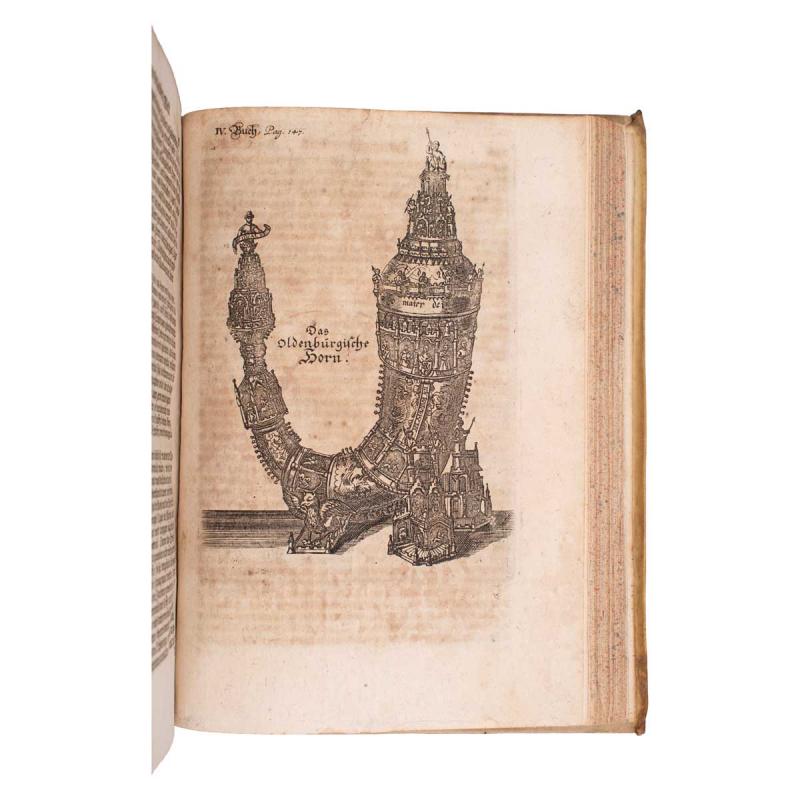
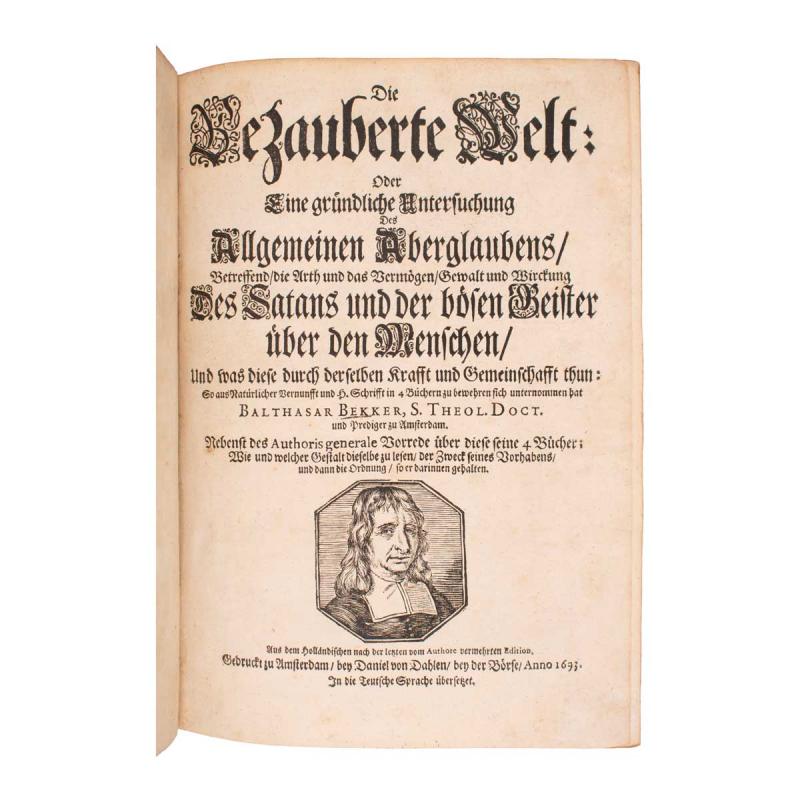
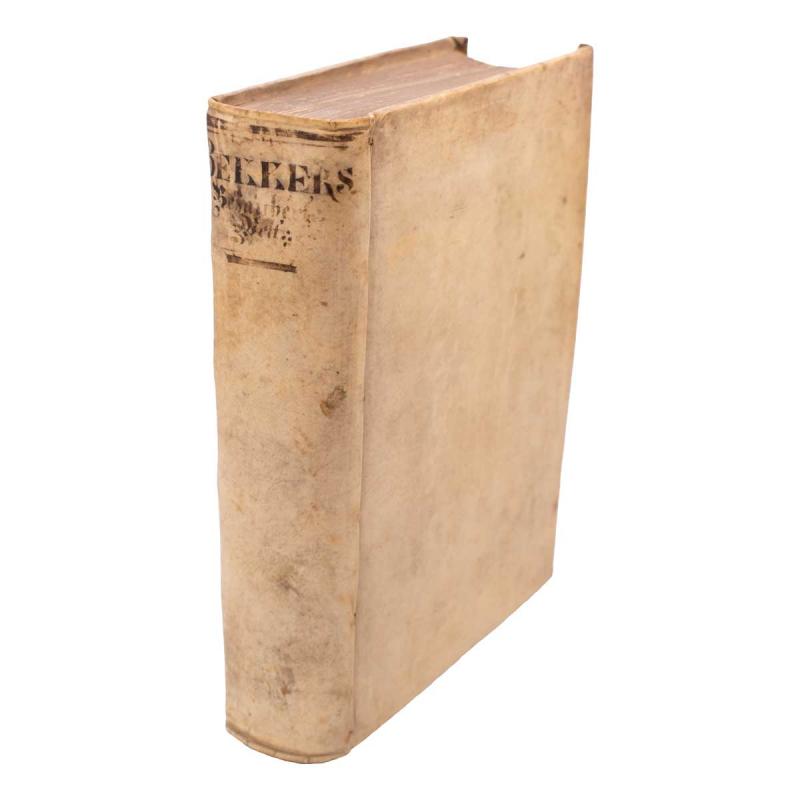
THE MOST IMPORTANT WORK OF THE TIME COMBATING BELIEF IN GHOSTS, WITCHCRAFT, AND SORCERY Die bezauberte Welt: Oder eine grundliche Untersuchung des allgemeinen Aberglaubens. Aus dem Hollandischen (ubers. von J. Lange) First German Edition, 4 parts in 1 vol., 39, [1], 136, 270, [2], 195, [3], 308, [4]pp., 1 woodcut plate, small woodcut portrait to title, text in German Black, woodcut initials and tail-pieces, contemporary vellum over boards, yapped edges, manuscript title to spine, sprinkled edges, 4to (230 x 170mm)“Amsterdam, D. van Dahlen” (i.e. probably Hamberg), 1693. Balthasar Bekker (1634-98) was a Dutch pastor and Cartesian rationalist who wrote what was in many ways the seventeenth century’s most fundamental and influential critique of demonology and witchcraft belief, Die bezauberte Welt or The Enchanted World. He was the last of the Dutch thinkers, from Weyer to Grevius, who kept Holland free from the abuses of the witch hunters. The liberal climate thus engendered had made Holland the only country where Reginald Scot had been translated. He first attracted attention in 1683 after publishing his Inquiry into Comets to show they were not portents of evil. In 1691, first in Dutch, then in 1693 in German, he published Die bezauberte Welt, where he attacked the entire demonological system as a lack of confident faith in the goodness and wisdom of God. Putting his critical reason to work in the areas of scriptural interpretation, formal theology, natural history, and natural philosophy, and offering alternative explanations of generally accepted witchcraft incidents, Bekker was one of a handful of seventeenth-century thinkers preparing the conceptual and intellectual path for a complete renunciation of the demonological beliefs that had stood the tragic test of time for centuries. Since the belief in the influence of spirits had crept into Christianity from paganism, said Bekker, there was no reason to credit the pact between the witch and the Devil, the core of the theory. In fact, Bekker added, the theory of witchcraft was invented by the papacy “to warm the fires of purgatory and to fill the pockets of the clergy,” who burned witches to confiscate their property and to pay the salaries of the inquisitors. Bekker’s work was both widely admired and criticized in its time; within two months of its first Dutch publication the work had sold four thousand copies in the Netherlands alone. However, it cost Bekker his position as a Calvinist minister. Refusing to recant, on August 21, 1692, Bekker was expelled by the Reformed Dutch church, but the Amsterdam magistrates prevented a public burning of his book and continued to pay his magisterial stipend. He was still outside the Church at his death in 1698. Many writers engaged in a war of words, attacking and defending Bekker’s views, especially his denial of demoniacal possession. Bekker himself refused to participate in the debate, but in 1692 defended himself in die Friesche Godgelehrheid. After his death, rumours circulated that he had changed his views, but this suggestion was repudiated by his son, Jan Hendrik Bekker. The engraving shows the so-called "Oldenburg Horn," widely known through its reuse in "Des Knaben Wunderhorn." [ VD 17 3:303184Q. Bircher B 13458. Coumont B 40.7. - Without distinguishing variants: Crowe 43. Hayn/Gotendorf III, 177. Graesse, BMP, 62. FdF 1270. Jouin 857. Caillet 915;Witchcraft in Europe, 1100-1700 / Alan Charles Kors. 1972; The Encyclopedia of witchcraft & Demonology/ Rossel Hope Robbins/ 1984]
2335,- EUR
inkl. 19% USt./incl. 19% VAT
Sachgebiete: Occulta
Kontakt zum