Antiquariat Daniela Kromp
FILM INDUSTRY – JULIUS PINSCHEWER / RUDI KLEMM.  Auf Merkliste setzen
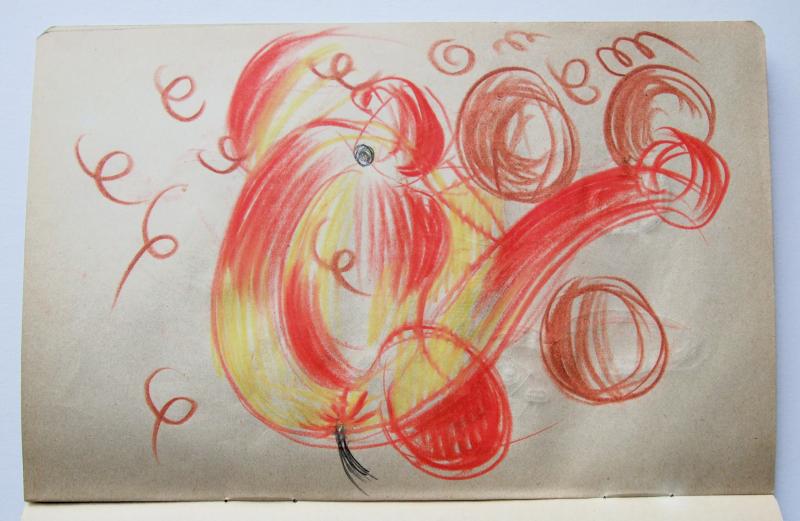
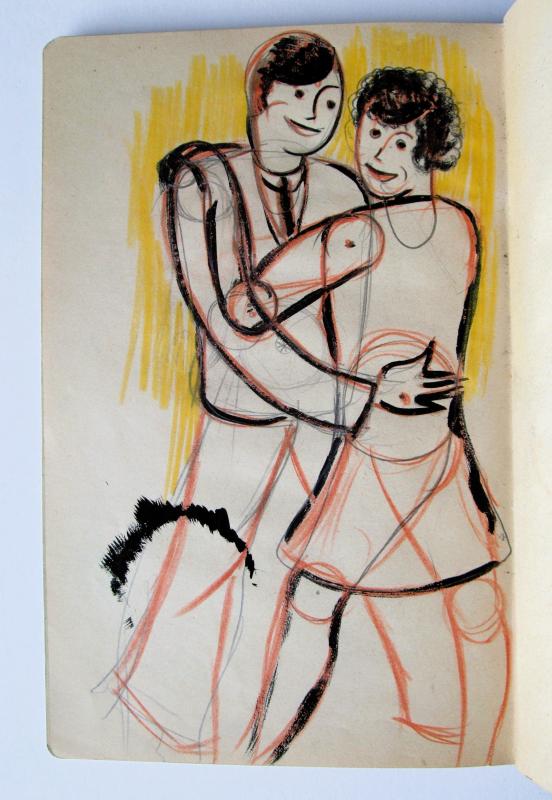
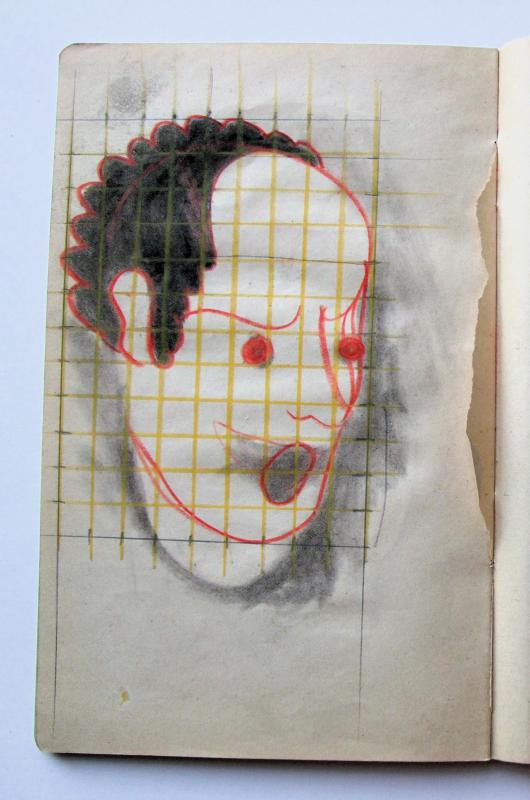
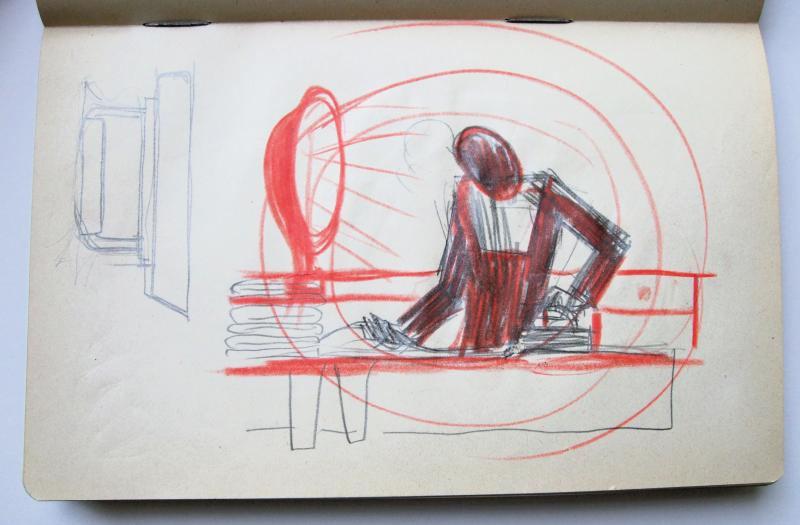
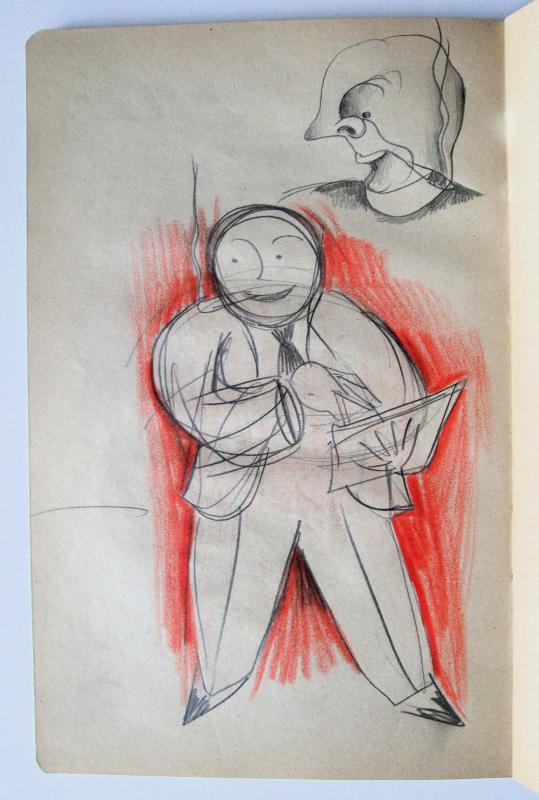
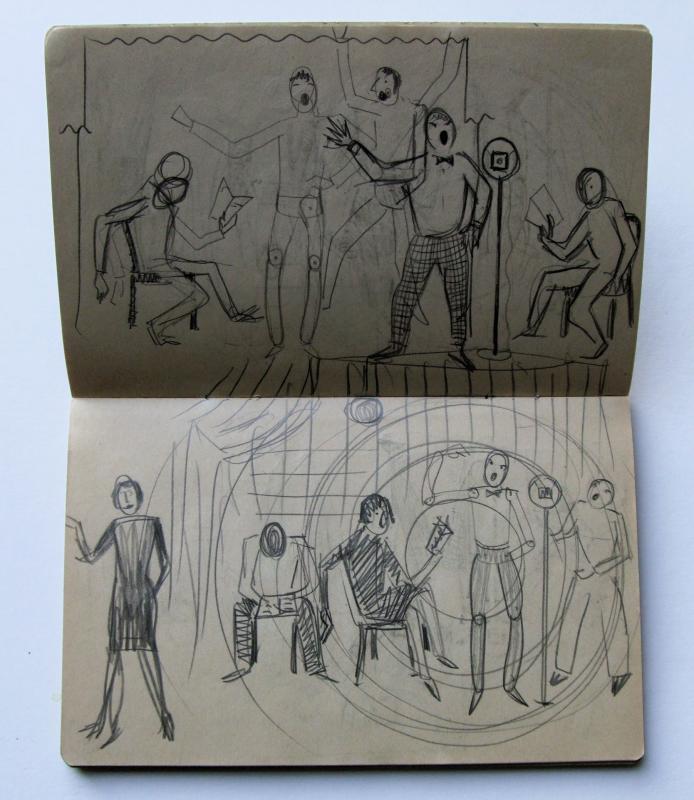
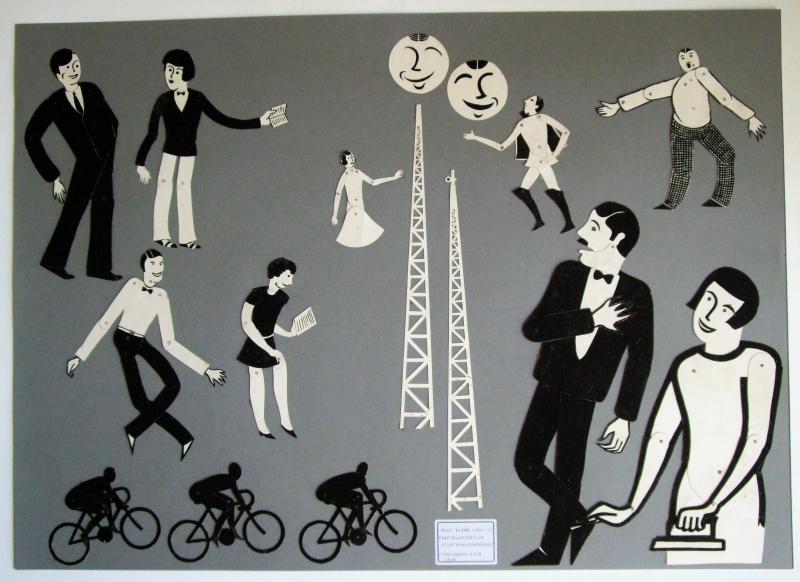
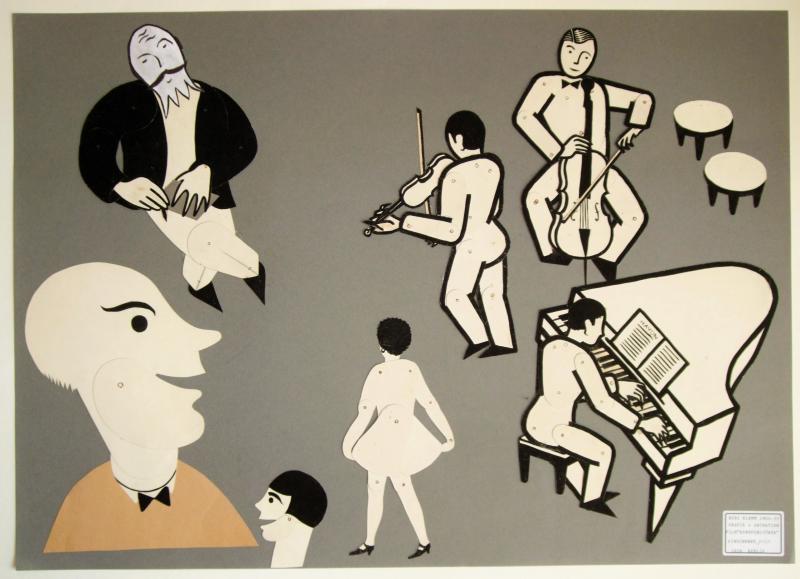
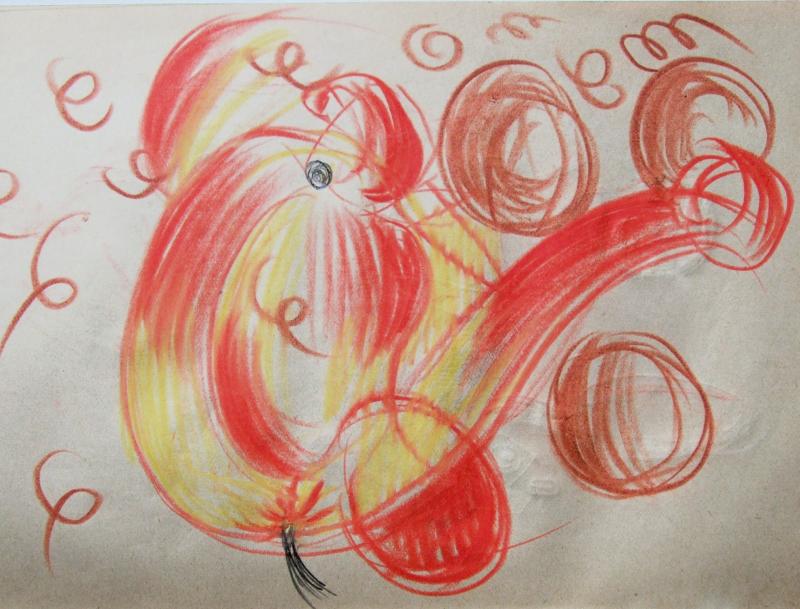
33 original cutout animation figures for the animated cartoon commercial "Rundfunkhörer" [Broadcast Listeners], most of which movable. Berlin, [1928]. White cardboard, gouache and small metal eyelets, tipped to 3 large grey cardboard leaves (50 x 70 cm) later. [With]: Original sketchbook for "Rundfunkhörer". Berlin, [1928]. 66 leaves, including about 80 sketches, about 30 of which in colour pencil, the others in pencil. With Rudi Klemm’s manuscript entry to inner side of front wrapper, including his name (with his forename abbreviated "Rud.") and his then Berlin address. Original black wrappers. 13 x 20 cm.
Rudi Klemm (1904-1955) was senior draughtsman and cameraman at Pinschewer Film in Berlin. It was also him who designed and crafted the figures for the first sound-film advertisement ever produced: Die chinesische Nachtigall [The Chinese Nightingale] (Pinschewer, Berlin 1929; see below). – Julius Pinschewer (1883-1961) was a German Jewish film pioneer, who left Germany for Switzerland as early as in 1933 after having listened to a Hitler speech. Still in Berlin, some key figures of the German film avant-garde realised their first experiments at Pinschewer. For the 1925 promotional film "KIPHO", Julius Pinschewer worked together with the feature film cameraman Guido Seeber. KIPHO, a moving collage on the techniques of photography and film production, is internationally recognised as a top work of the avant-garde (cf. Deutsches Filminstitut DIF). Shortly after Rundfunkhörer, yet in the same year, Pinschewer started producing the world’s first sound-film advertisement ever (cf. DIAF). He "was the first to recognize the possibilities of sound films for screen advertising by making "Die chinesische Nachtigall" (1928/29), a 9 minute sound-film advertisement" (translated from NDB, p. 457). This film was made for advertising Tri-Ergon records, using Hans Christian Andersen’s fairy-tale "The Nightingale", with the animation figures also designed and made by animator Rudi Klemm (cf. Cowan, p. 90). Another source states on "the celebrated advertising film": "Still remembered today as the first sound-film advertisement, the seven-minute film was also an advertisement for sound film technologies: namely the new Tri-Ergon system of optical sound (or "sound-on-film") recording, which promised to replace older forms of mechanical needle recording with photographic sound inscription. In order to tout the superiority of the new system the filmmakers rewrote Hans Christian Andersen’s famous tale The Nightingale to tell the story of a Chinese emperor who offers his daughter in marriage to whomever can most faithfully reproduce the nightengale’s (!) beautiful song" (Cowan, p. 90). – A later manuscript addition to inner side of front wrapper, very probably by Klemm’s widow Anneliese (who is known to have administered and sorted his estate) reads: "Skizzen zu dem Werbefilm von Julius Pinschewer "Rundfunkwerbung" (!) ca. 1929 (!)" [Sketches for the commercial "Broadcast Advertising" by Julius Pinschewer c. 1929]. Each of the three cardboards, which the cutout animation figures have been tipped onto somewhat later, has a typewritten sticky label stating: "RUDI KLEMM 1904-55 / GRAFIK + ANIMATION / FILM "RUNDFUNKHÖRER" / PINSCHEWER_FILM / 1928 BERLIN". – Six leaves torn out from the sketchbook (probably yet during the working process). One small animation figure’s head possibly added later. Else fine. Animation figures tipped to cardboard with a light double-sided tape, which could be removed quite easily in my opinion. – Provenance: Private collection, Munich. Acquired directly from Rudi Klemm’s widow Anneliese in about 2000/2010 by the the former owner’s father. – Cf. Michael Cowan, Fidelity, Capture and the Sound Advertisement. Julius Pinschewer and Rudi Klemm’s Die chinesische Nachtigall, in: Zeitgeschichte 1, (vol. 41, 2014), pp. 90-101. Cf. DIAF – Deutsches Institut für Animationsfilm, Lebende Schatten beim 19. ITFS, online at: diaf.de/kino/lebende-schatten-beim-19-itfs/ Cf. Rolf Aurich, Julius Pinschewer, in: Neue Deutsche Biographie (NDB), vol. 20, pp. 456-458. – Cf. Deutsches Filminstitut DIF, Julius Pinschewer – Der KIPHO-Film, online at: difarchiv.deutsches-filminstitut.de/filme/dt2tb00142i.htm. Cf. Filmwissen Online, at: filmwissen.online/julius-pinschewer/werbefilm-und-avantgarde/. – We thank film scholar Jeanpaul Goergen (Berlin) for his kind help.
5900,- EUR Sachgebiete: Avantgarde, Film, Moderne Kunst, Werbung, Zeichnungen Kontakt zum
inkl. 7% USt./incl. 7% VAT