Antiquariat Daniela Kromp
MINIATURE BOOKS – ALMANACHS – RARISSIMA.  Auf Merkliste setzen
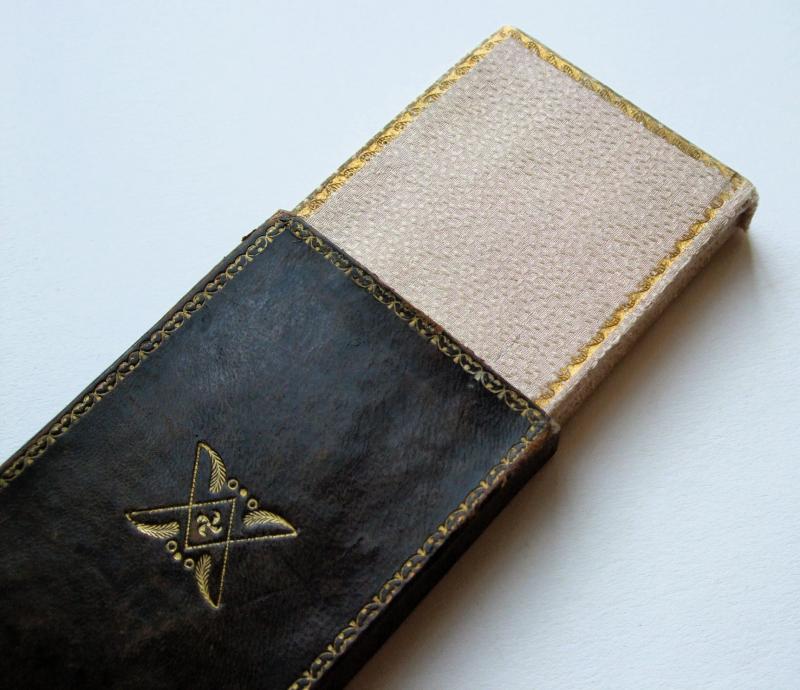
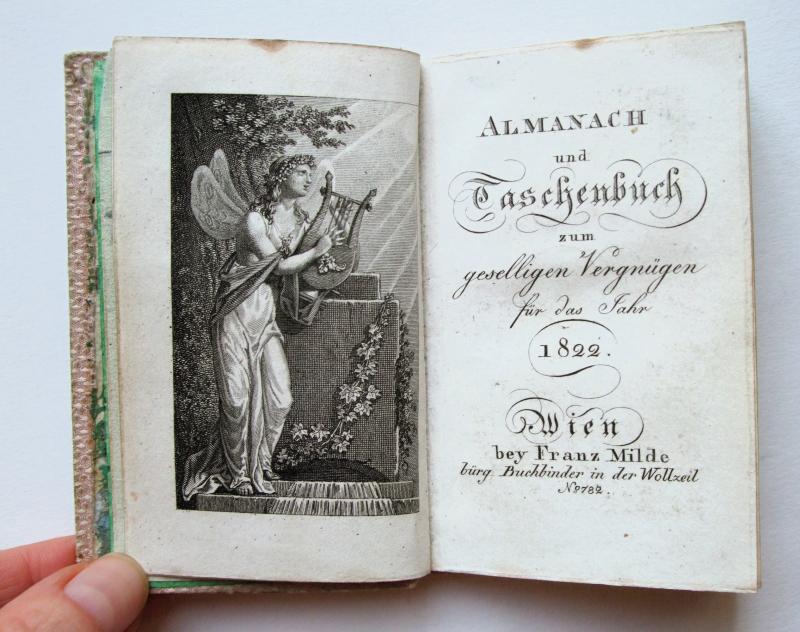
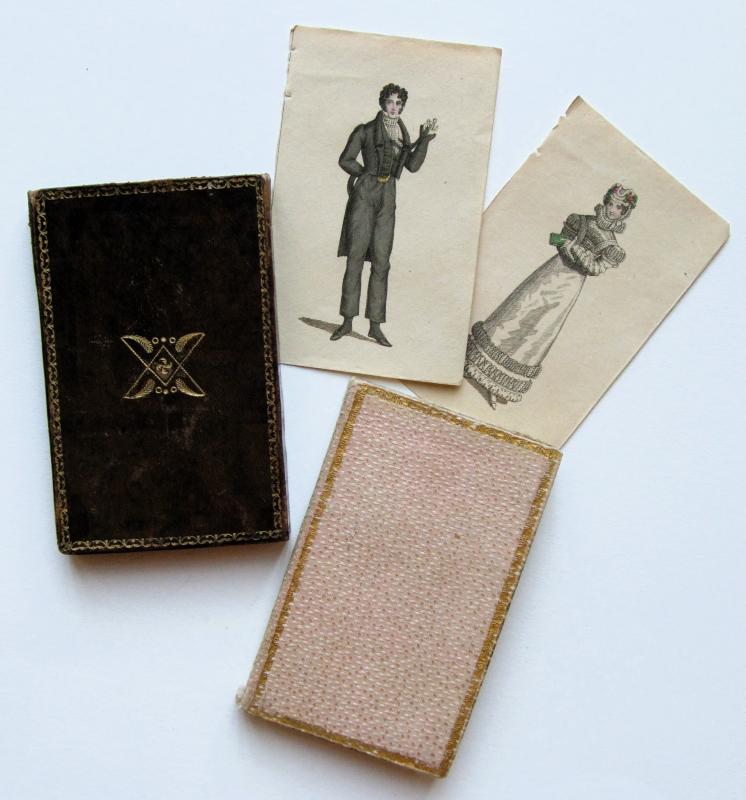
[Anonymous]: Almanach und Taschenbuch zum geselligen Vergnügen auf das Jahr 1822. Wien, Franz Milde, [1821]. Engraved frontispiece, title page, and subhead page, 6 unnumbered leaves including engraved vignettes representing the 12 months of the year [by Caspar Weinrauch (1765-1846)], 12 unnumbered leaves (calendar section printed in black and red) with 6 engraved plates, 48 pages with 2 engraved plates (1 folding), subhead page, 4 engraved fashion plates with hand-colouring (thus apparently complete). Original pale pink structured silk gilt, bright green endpapers, all edges gilt, in its original brown gilt goatskin slipcase. 6,2 x 9,8 cm (binding); 6,4 x 10,1 cm (slipcase).
The present volume for the year 1822 is the only copy known to date, with KVK / OCLC showing no entries in libraries worldwide. Although (according to KVK) this almanach is documented to have run over 43 years (1799-1842), only ten single volumes could be located in libraries and collections (vols. 1799 (2), 1803, 1807, 1816, 1818, 1819, 1826 (2), 1832), and only five volumes have traceably sold at auction in the last 100 years (vols. 1799, 1806, 1811, 1820, 1826), only two of which bound in silk with leather slipcases (and one other in another luxurious binding including lacquer painted boards). – The engravings show views of castles in Austria (5), the ruin of a Hungarian Camaldolese abbey (1), a romantic genre scene at a fountain (1, by Sebastian Langer (1772-1841)), London Westminster Hall (1, folding), as well as four fashion models (3 women and 1 man, all coloured). – Anton Mayer in his Wiens Buchdrucker-Geschichte states on the almanach production around 1800 in Vienna: "Almanache und Kalender bildeten in hervorragendem Maße seit der theresianischen und josefinischen Zeit einen ganz bedeutenden Erwerbs- und Industriezweig in Wien, für welchen nicht allein die Buchdrucker, sondern auch Künstler und Buchbinder beschäftigt waren. (…) Im Jahre 1797 betrug ihre Zahl schon 55 und steigerte sich in den folgenden Jahren fortwährend" (ibid., p. 309). A contemporary source states on the various professions involved in Viennese almanach production: "Der Geschichtschreiber musste interessante Geschichten, der Dichter gute und schlechte Verse, der Kupferstecher niedliche Kupfer und Küpferchen, die Göttin der Mode ihre neuesten Erfindungen, der Sticker seine Dessins und die Geschicklichkeit des Buchbinders ihren ganzen Reichthum am geschmackvollen Einbande liefern" (Beschreibung der Handlung und des Industriefleißes der k.k. Haupt- und Residenzstadt Wien (1803), cited from ibid.). – Provenance: Vienna, through the trade. – Endpapers stained, with old pencil notes (partly erased, unsightly). Binding partly becoming loose at rear (easily reparable). Two fashion plates loose. Some of the months plates with later 19th century pencil notes. The delicate silk with only minor signs of use, slightly dusty, with a small number written to the rear. – Not in Lanckoronska / Rümann, Geschichte der deutschen Taschenbücher und Almanache aus der klassisch-romantischen Zeit. Not in Hans Köhring, Bibliographie der Almanache, Kalender und Taschenbücher 1750-1860. Cf. Anton Mayer, Wiens Buchdrucker-Geschichte 1482-1882, vol. 2, p. 309 (footnotes). Cf. Musenalm nos. Alm4764, Alm4484 and Alm1934.
1200,- EUR Sachgebiete: Almanache, Einbände, Miniaturbücher, Mode Kontakt zum
inkl. 7% USt./incl. 7% VAT