Inlibris GmbH

Biblia Georgiana.  Auf Merkliste setzen
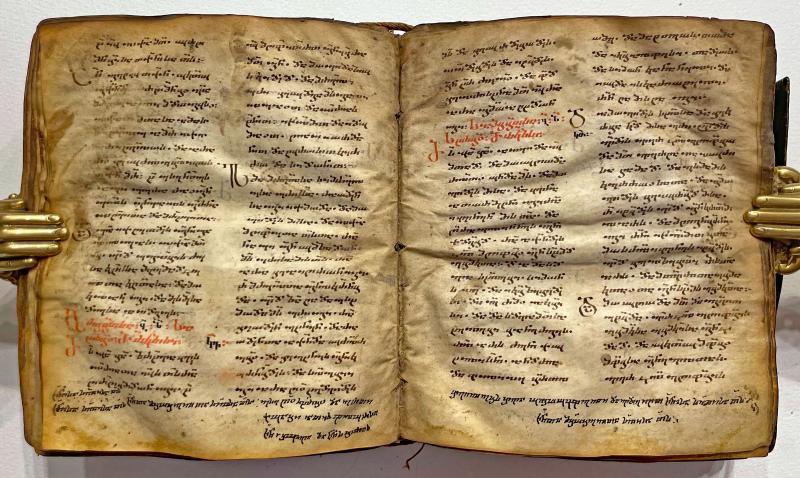
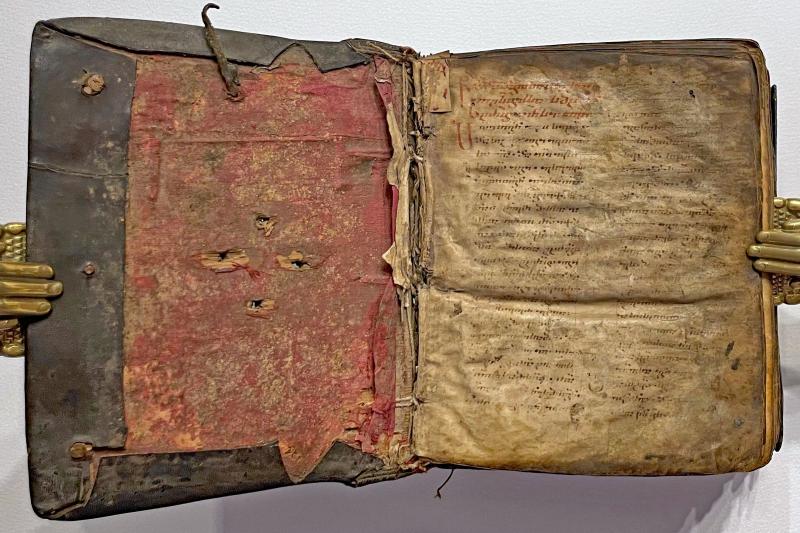
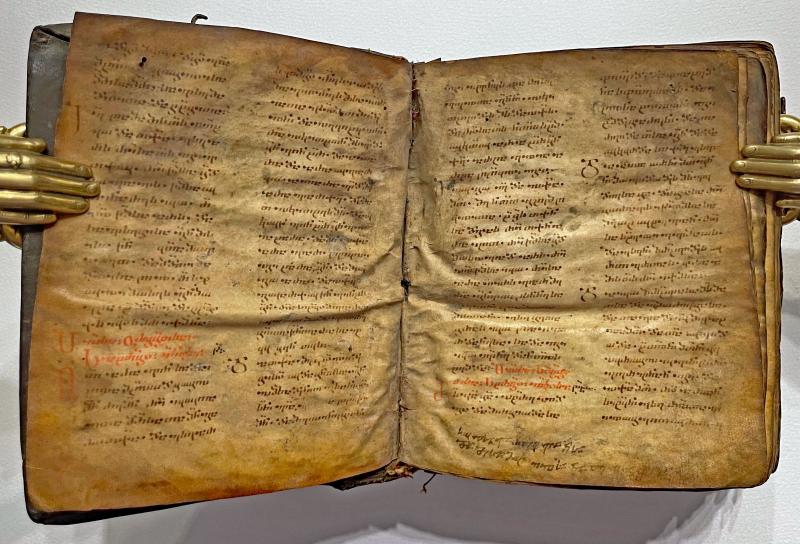
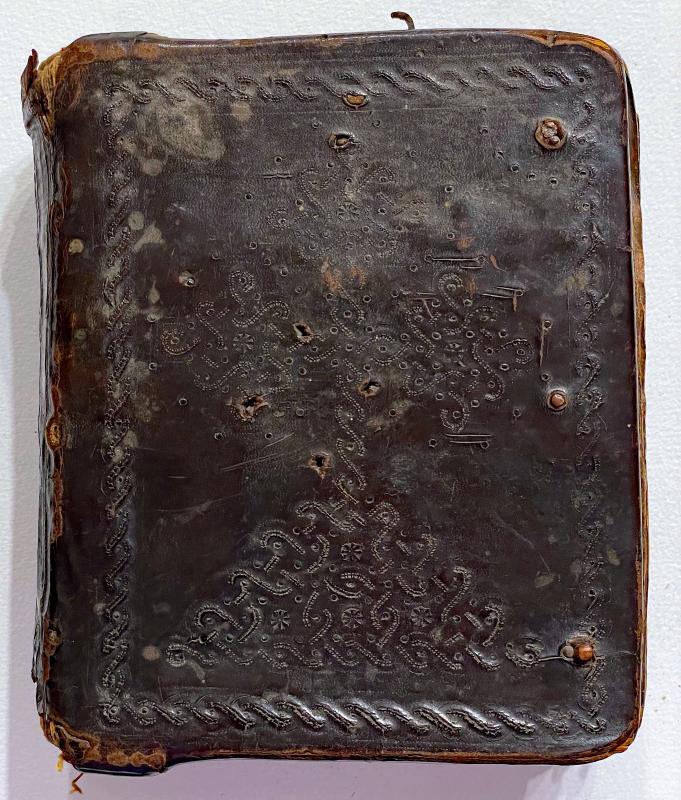
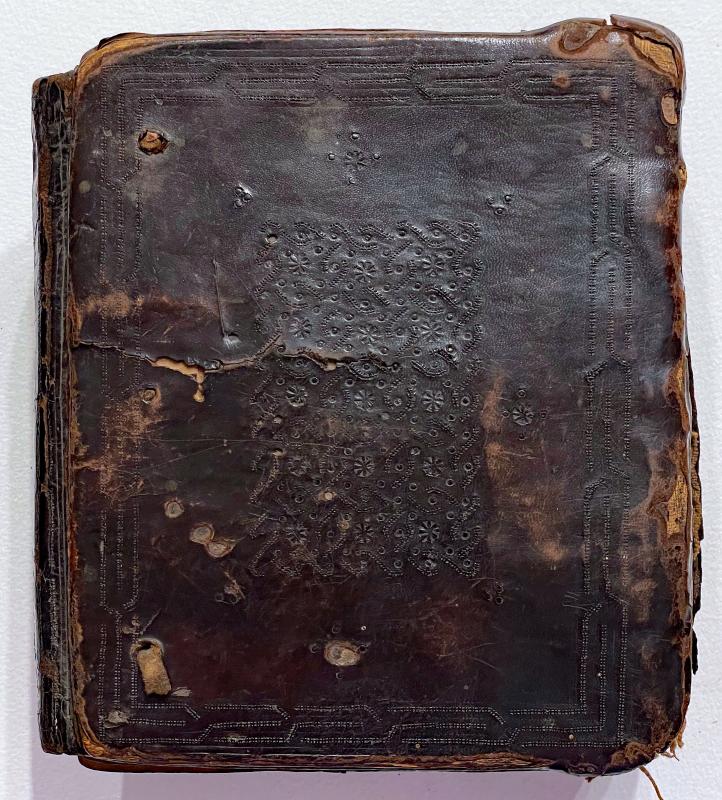
Georgian Gospel Lectionary. Greece or Southern Caucasus, c. 1200. 4to (170 x 192 mm). 226 ff., missing some leaves, including at beginning and end. Georgian manuscript on vellum. Armenian quire-signatures. Written in Khutsuri script, black ink with red initials and rubrics in two columns. Full leather binding of c. 1600 over wooden boards, alla greca style, tooled in blind with a large cross pattern within a decorative border on the front cover. Fore-edge semi-flap, remains of ties. Stored in a custom-fitted black half morocco case with gilt spine title by P. Goy & C. Vilaine. Rescued and restored around 1600 CE as an act of devotion, this Gospel book represents an extremely rare occurrence, namely the appearance of a hitherto unknown medieval Georgian codex. Offering extensive readings from the revised "Athonite" text of the New Testament produced by medieval scholars, this volume is an extremely important witness to one of the most understudied Biblical traditions. "I, Dilana, bought this holy Gospel from some infidels" can be found in an early modern Nuskhuri hand on f. 53v. The price is stated as having been 10 pluri (florins) for the Gospel and a basin. Dilana then had the book rebound, probably in the surviving Greek-style (alla Greca) binding. At some point, quire signatures were written in Armenian numerals. The term "infidels" may point to Muslims, or perhaps also from Roman Catholics: the stated price in "pluri" ("florins") points to an area where western, in particular Italian currency was in circulation. Such coins would have been known in Greece, home to the Georgian monastery Iviron ("of the Iberians", i.e. Georgians) on Mount Athos. It was there that a group of scholars, beginning with Euthymius the Athonite (d. 1024), began correcting the old Georgian Gospel translations against the Greek originals, to provide their countrymen with a more accurate understanding of the Word of God. Although Georgia was one of the first countries to adopt Christianity as an official religion (in 319 CE), the earliest Georgian versions of the Gospels seem to have been translated from Armenian rather than Greek. This volume thus captures the Georgian Gospel tradition at a crucial crossroads. Dr Adam Bremer-McCollum has established the text of our manuscript as that of the Athonite revision and dated it to the thirteenth century, while Dr Timothy Bolton has argued for a slightly earlier dating of the eleventh to thirteenth century on the basis of its palaeographical features. The Khutsuri script used by the scribe arose from the tenth century onwards as a mixture of Asomtavruli, the oldest Georgian alphabet and primarily used for inscriptions, and Nuskhuri, a minuscule which allowed for more fluid writing. Khutsuri was primarily used by clerics and combines the two as capital and lowercase letters. Although today it is exclusively found in liturgical contexts, it was in wider use until the nineteenth century. The Schoenberg Database of Manuscripts lists only two early Georgian manuscripts in institutional collections, at Princeton and Harvard. No Georgian manuscript of even remotely comparable importance is known in private hands; even the Schøyen Collection contained only a handful of single-leaf fragments, two of which are currently offered by us. A unique witness to Biblical tradition in one of the world's oldest Christian cultures.
Missing leaves at beginning and end and around ff. 5-6, 57-62, 118 and 131. Usual signs of age: leaves browned, soiled, stained, cockled and wavy, with some creasing and small marginal defects. Some leaves bound back into manuscript with red stitching. Medieval and early modern marginalia. Binding rubbed, worn and warped, with losses and damage to extremities and professionally restored spine. Provenance: 1) Note in an early modern Nuskhuri hand on f. 53v: "I, Dilana, bought this holy Gospel from some infidels", further stating on f. 54v that the price was 10 pluri (florins). 2) Purchased by a U.S. collector from a New York family who reputedly had the book in their possession for several generations. 3) European private collection.
350000,- EUR Kontakt zum
inkl. 7% USt./incl. 7% VAT