Inlibris GmbH

Gudea, King of Lagash (c. 2144-2124 BCE).  Auf Merkliste setzen
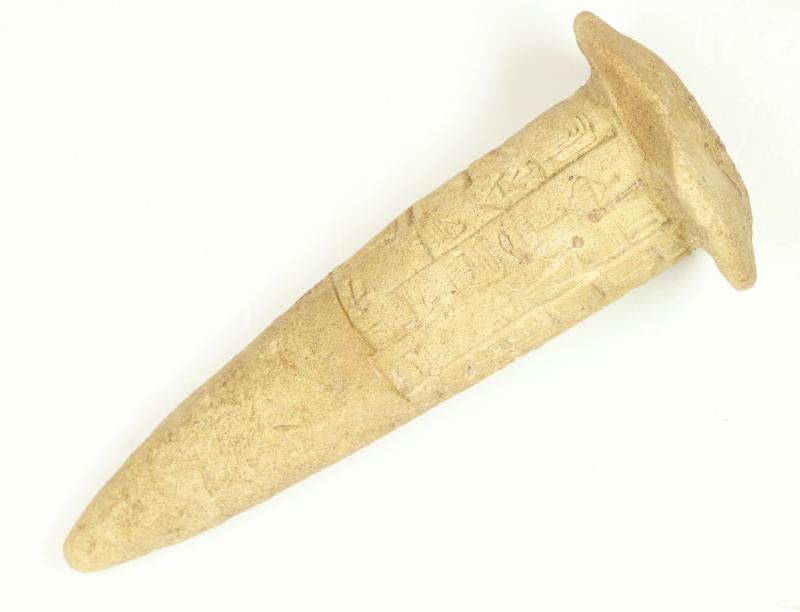
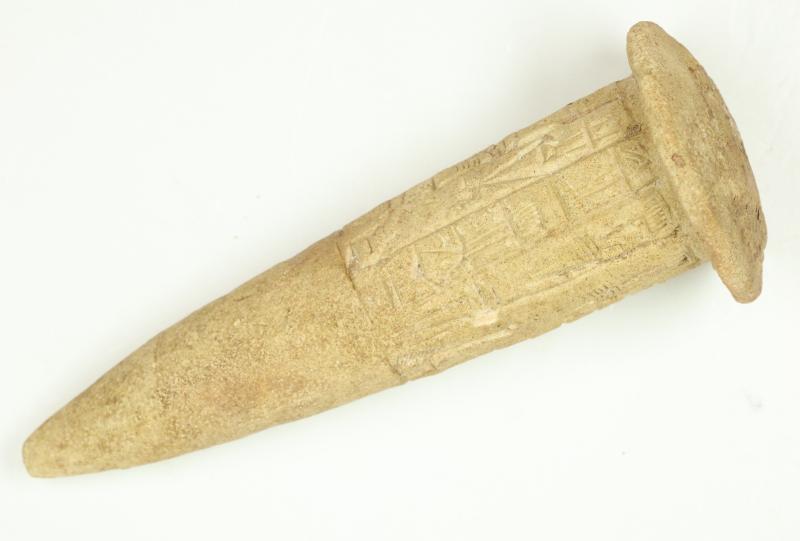
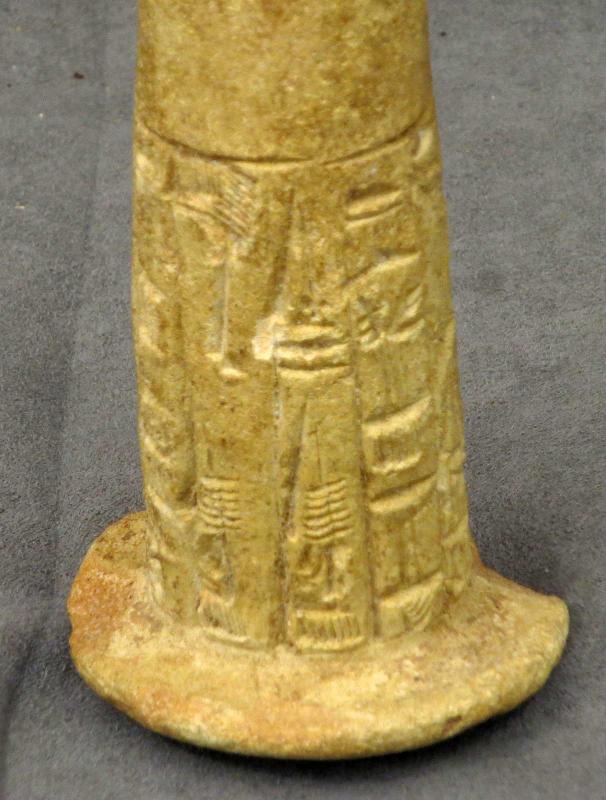
Dedication cone of Gudea for the Temple of Ningirsu at Lagash. Girsu, Lagash, Mesopotamia, c. 2124 BCE. Clay cone (67 x 161 mm). Inscription in Sumerian cuneiform. Housed in a custom velvet-lined full morocco clamshell slipcase. Foundation 'nail' issued by the great king of Lagash, Gudea, whose famous seated statues have made him one of the most recognisable Mesopotamian kings. The occasion was the foundation of the splendid E-Ninnu or Temple of Ningirsu, the festivities for which are described in a semi-mythical manner in our longest surviving Sumerian texts, the so-called "Gudea cylinders". The Sumerian text is written in large, clear and easily distinguishable cuneiform characters on a nail-shaped cone, with the inscription: "[To the God] Ningirsu, the mighty Warrior, Lord of the exalted Temple, Gudea, en-si of Lagash, its foundation he built; the Temple of E-Ninnu to Ningirsu he dedicated, and built; its foundation he established". This and several similar nails would have been buried under the foundations of the building as part of the consecration of the structure. The E-Ninnu ("House of 50") was the great temple that dominated the city of Girsu, in the territory of the state of Lagash. Although first built in the reign of Ur-Nanshe (c. 2520 BCE), the refoundation under Gudea (c. 2144-24 BCE) rendered the complex into its most definitive and impressive state. Lagash was one of the larger Mesopotamian city-states that resurged after the fall of the Akkadian empire, in a reassertion of Sumerian linguistic and cultural identity. During his reign, Gudea ushered in a golden age in Lagash, with his inscriptions testifying to the building of irrigation channels and temples, and the subjugation of Elam and Anshun. In spite of this, he never took the traditional royal title of "lu-gal" (literally, "Great Man") and did not claim divine status during his lifetime, opting instead for the name of "en-si" ("town-ruler"). Several notable finds have been excavated from Girsu since the nineteenth century, many of them associated with Gudea, such as his distinctive square-like seated statues in diorite, and the Gudea cylinders, describing the elaborate rituals involved in his foundation of the E-Ninnu in semi-mythological tones. Many of the foundation nails from the Temple are in the collections of notable museums worldwide. The fine condition of the text and the nail overall make this cone a striking occurrence on the private market, on which it has been documented since 1930 when it appeared in the catalogue of Maggs Bros. A strikingly well preserved artefact of one of ancient Mesopotamia's greatest structures.
Loss of two small fragments to base, tip worn. Inscription fully intact and clearly legible. Provenance: 1) Maggs Bros, London, Catalogue 542: "The Art of Writing, 2800 BC - 1930 AD" (1930), no. 2. 2) European private collection.
25000,- EUR Sachgebiete: Antike, Antiquitäten, Geschichte Kontakt zum
inkl. 7% USt./incl. 7% VAT