Peter Harrington
DACIER, Anne Lefèvre (trans.); HOMER.  Auf Merkliste setzen
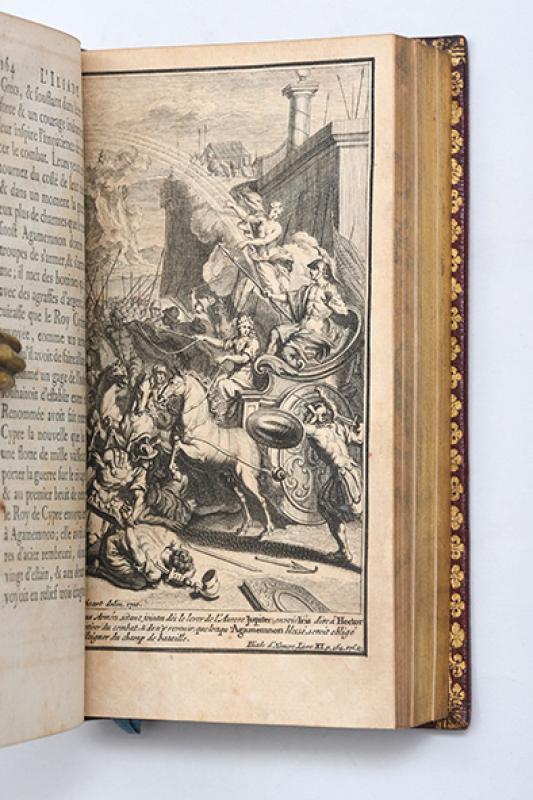
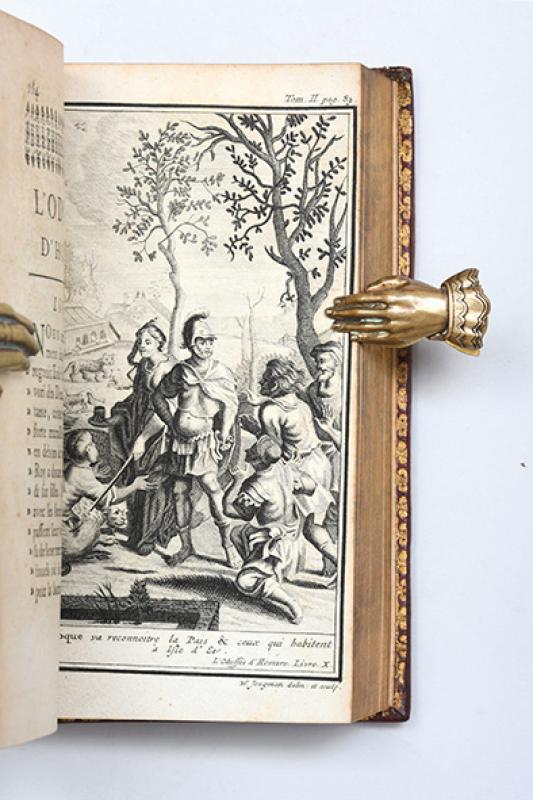
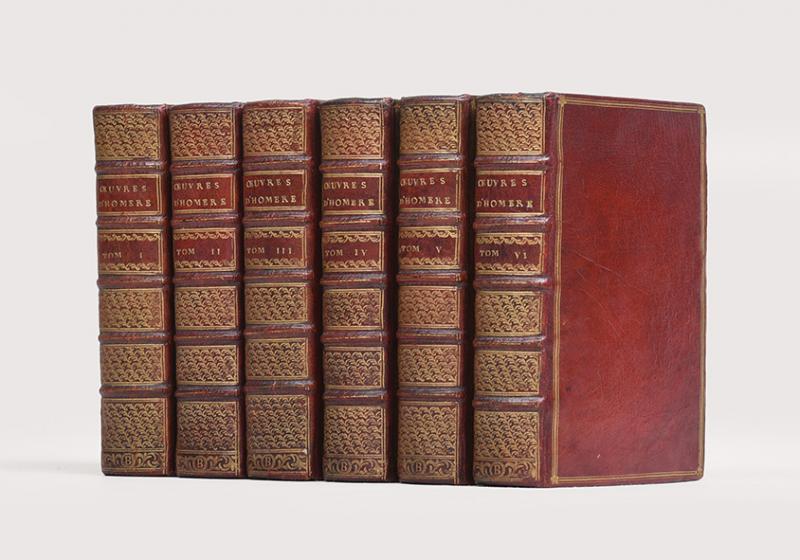
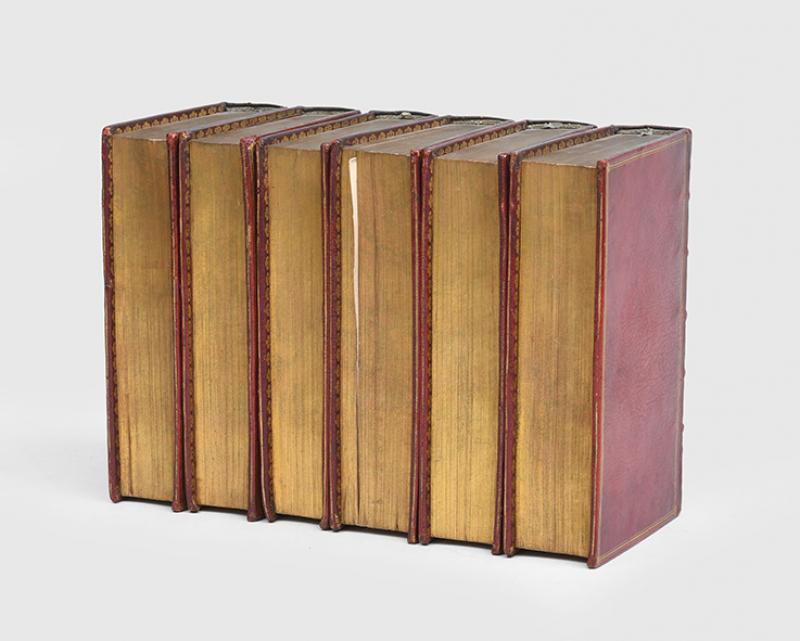
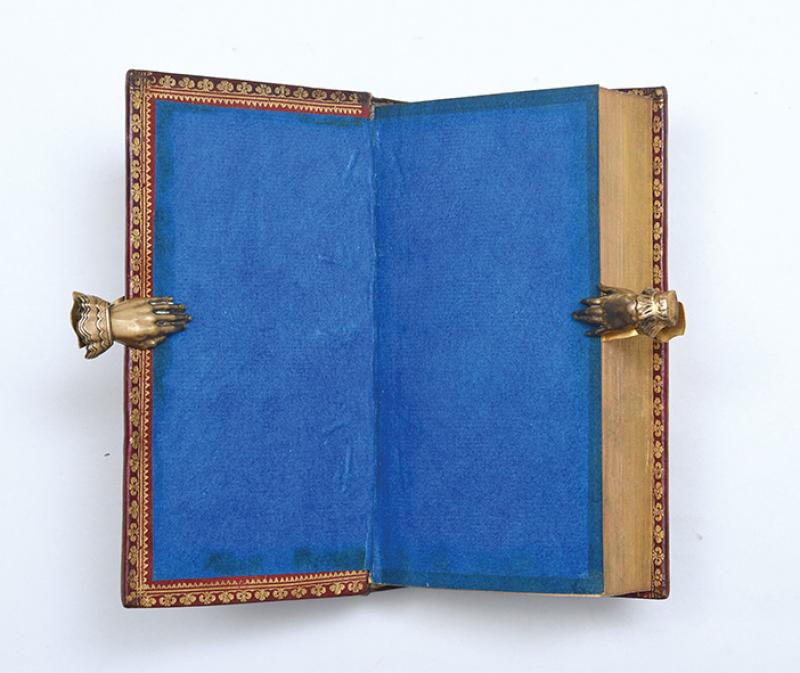
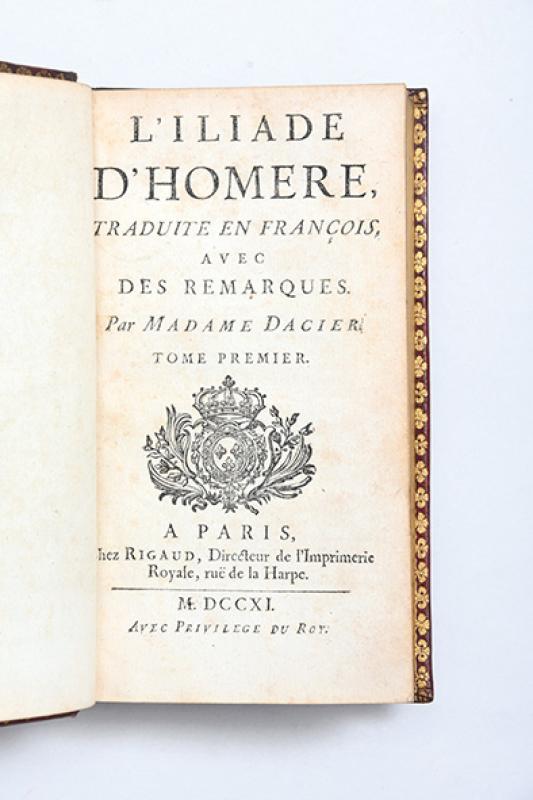
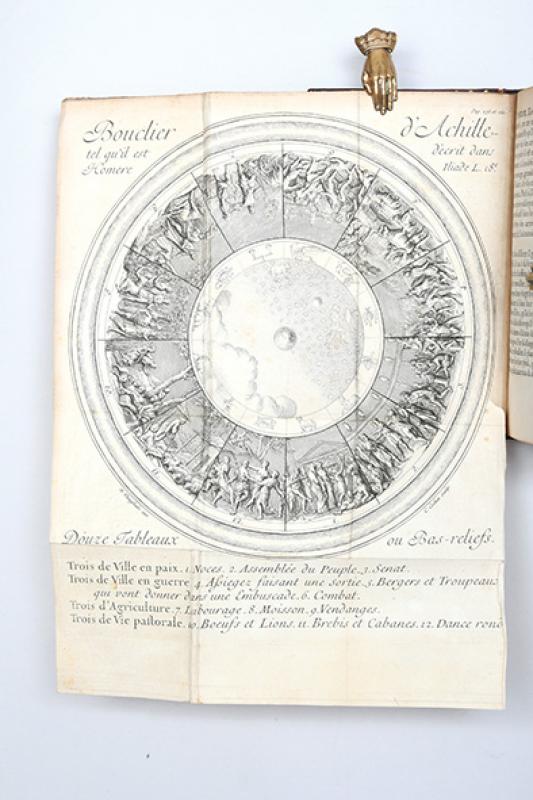
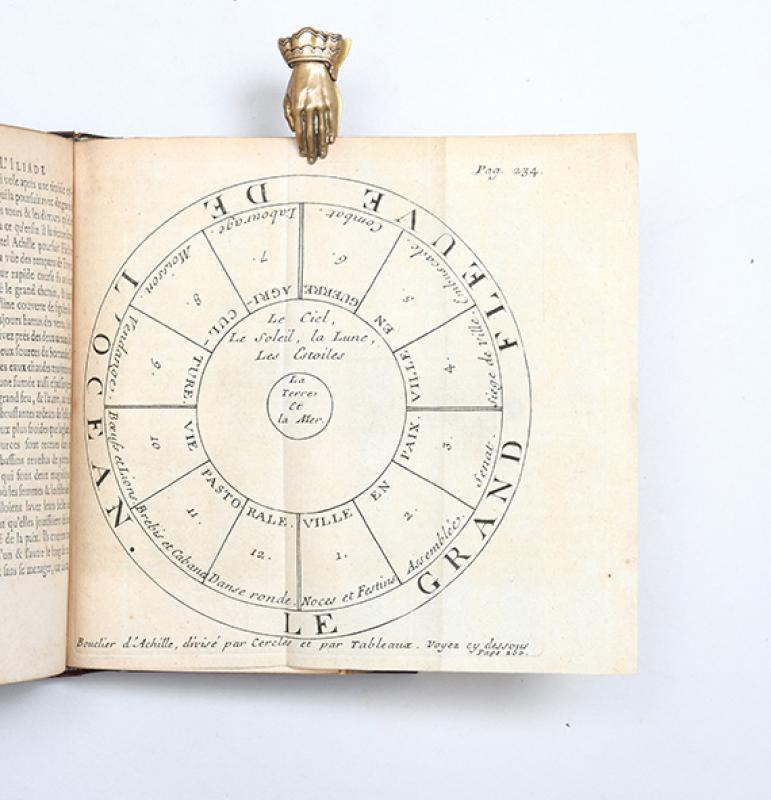
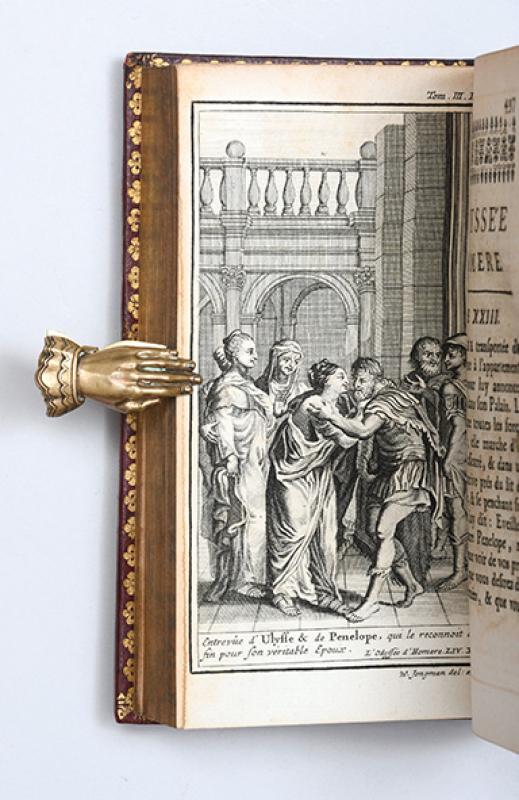
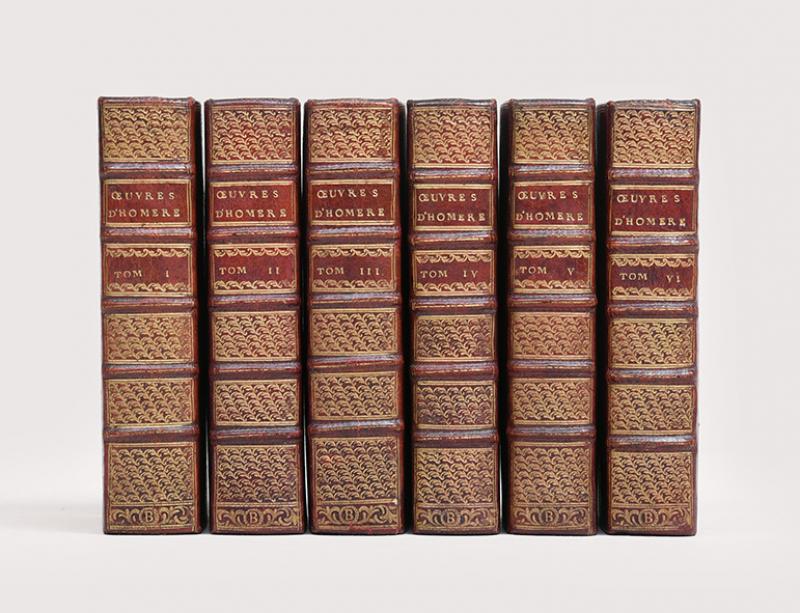
L’Iliade [and] L’Odyséé, traduite en françois, avec des remarques. Paris: Rigaud, 1711-16. ¶ 2 works in 6 vols, duodecimo (158 x 89 mm). Engraved frontispiece to first vols. of both works by Antoine Coypel, Iliad with 25 engraved plates after Bernard Picart, 2 folding plates depicting Achilles’s shield (one after Vleughels), Odyssey with 24 engraved plates after Coenraad Farret and Wouter Jongman, printer’s device of the Imprimerie Royale to title pages, woodcut initials, head- and tailpieces. Near-contemporary red morocco, spines lettered in gilt, compartments filled with a repeated sprig tool, the initial “B” tooled at foot of spines, triple gilt fillet with corner rosettes to boards, gilt inner dentelles, blue coated endpapers, edges gilt, blue bookmarkers. Front inner hinges of vols IV and V cracked but firm, ink mark to fore edge of vol. I pp. iii-xii, lower corner of vol. VI p. 543 chipped, no loss to text. A very good set indeed in the period binding. ¶ First Dacier editions, extra-illustrated, in beautifully preserved early 18th-century morocco bindings. This exceptional set features the full suite of Picart plates, not issued in all copies of the Iliad, two folding plates depicting the Shield of Achilles from Boivin’s Apologie d'Homère (1715), and the plates issued in the Amsterdam 1731 edition of Dacier’s Odyssey. Dacier’s celebrated translation into French of the Homeric epics, the first by a woman, cemented her place among the foremost classical scholars of her day. The only daughter of the noted Hellenist Tanneguy Lefèvre, Dacier (c.1654-1720) began translating classical works from an early age, beginning with Callimachus and progressing to versions of the poems of Anacreon and Sappho. In 1683 she married her father’s protégé André Dacier, who was a member of the French Academy and who also produced a number of translations, though acknowledged to be of inferior quality to his wife’s works. She was a staunch champion of Homer in the Ancients and Moderns debate, in which she defended his works against what she saw as the contemporary decline in standards of taste. Despite her literary feuds with fellow figures such as Antoine Houdar de la Motte and Thémiseul de Saint-Hyacinthe, and her differences with Alexander Pope, with whom she fundamentally disagreed on how best to approach translating Homer, she was held in extremely high regard by her contemporaries. Even those with whom she fell out “demonstrably regarded her as the eminent authority she deserved to be” (Weinbrot, p. 1). Her professional accomplishments and fine translations were referred to whenever an argument was made in favour of scholarly female education, and she is one of the “distinguished women” featured in Mary Hay’s Female Biography (1803). ¶ H. D. Weinbrot, “Alexander Pope and Madame Dacier's Homer”, Huntington Library Quarterly 62, no. 1/2, 1999.
9000,- EUR Sachgebiete: Antike, Altphilologie, Griechenland, Illustrierte Bücher, Literatur bis ca. 1900 Kontakt zum
Differenzbesteuert/Subject to margin taxation