Peter Harrington
DIX, Otto.  Auf Merkliste setzen
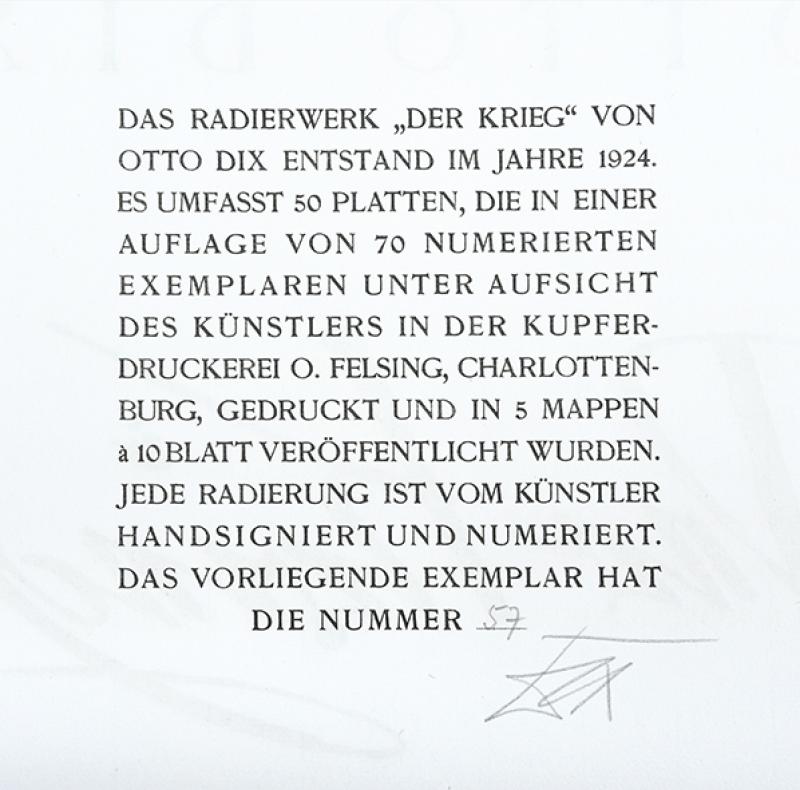
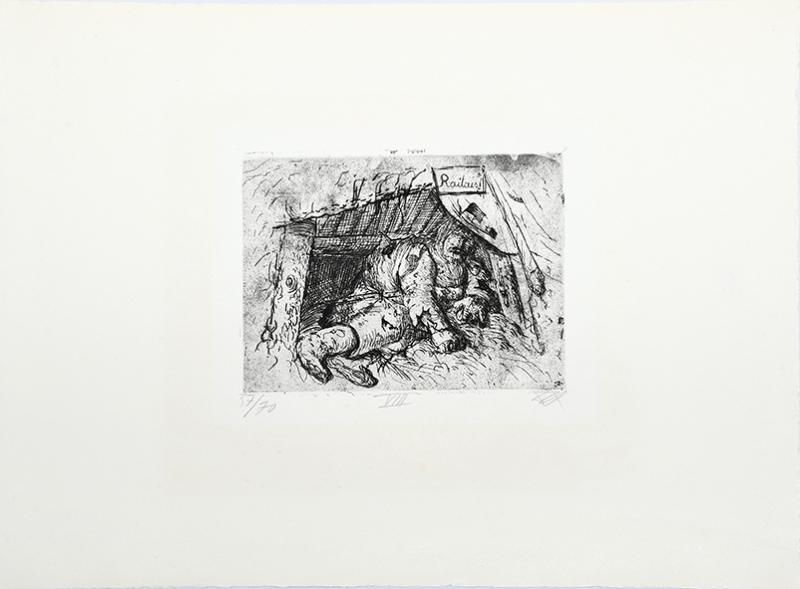
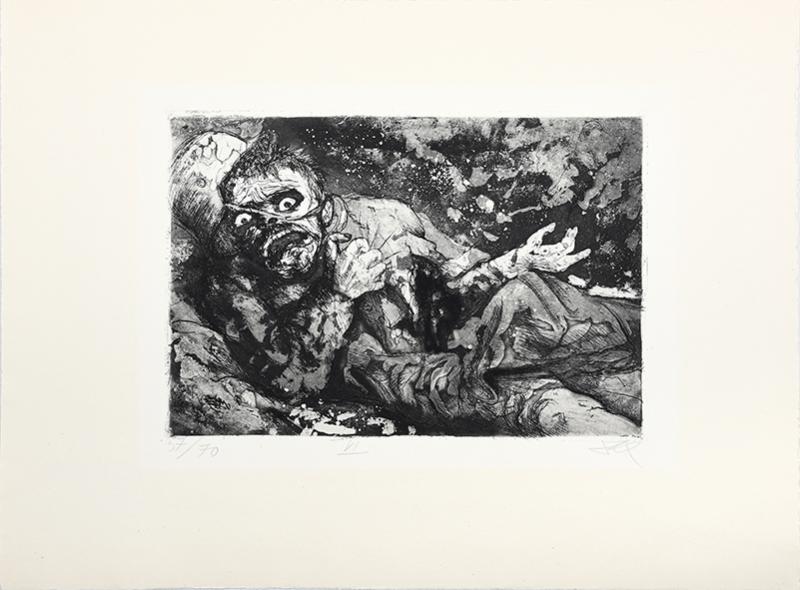
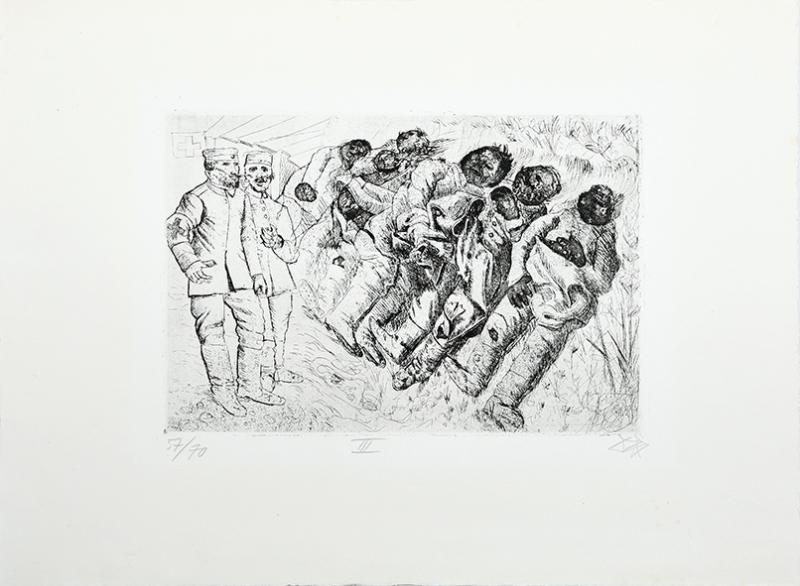
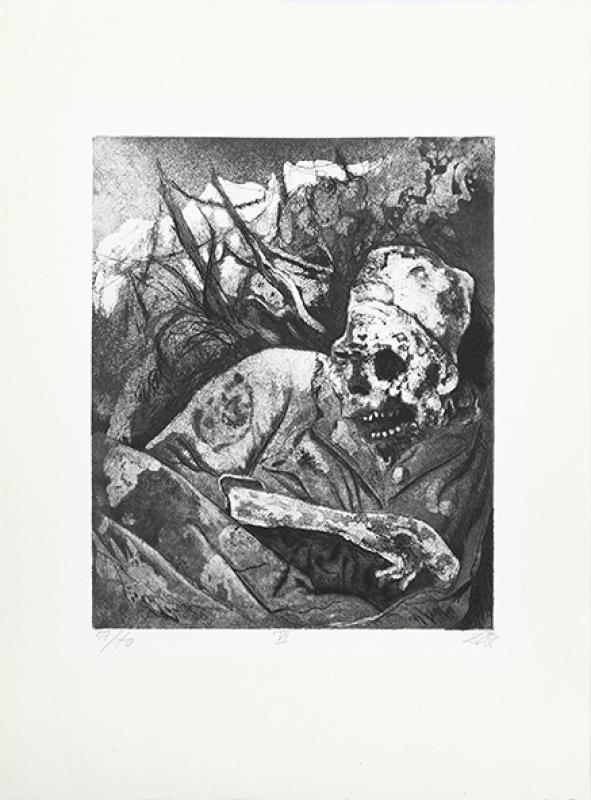
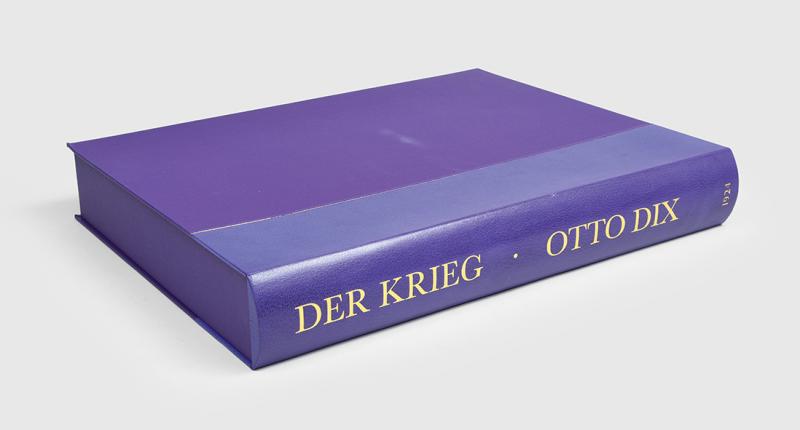
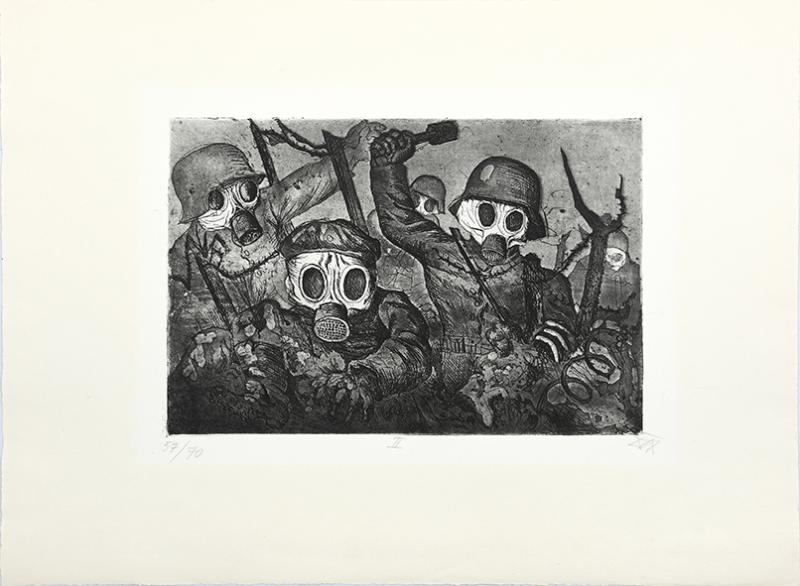
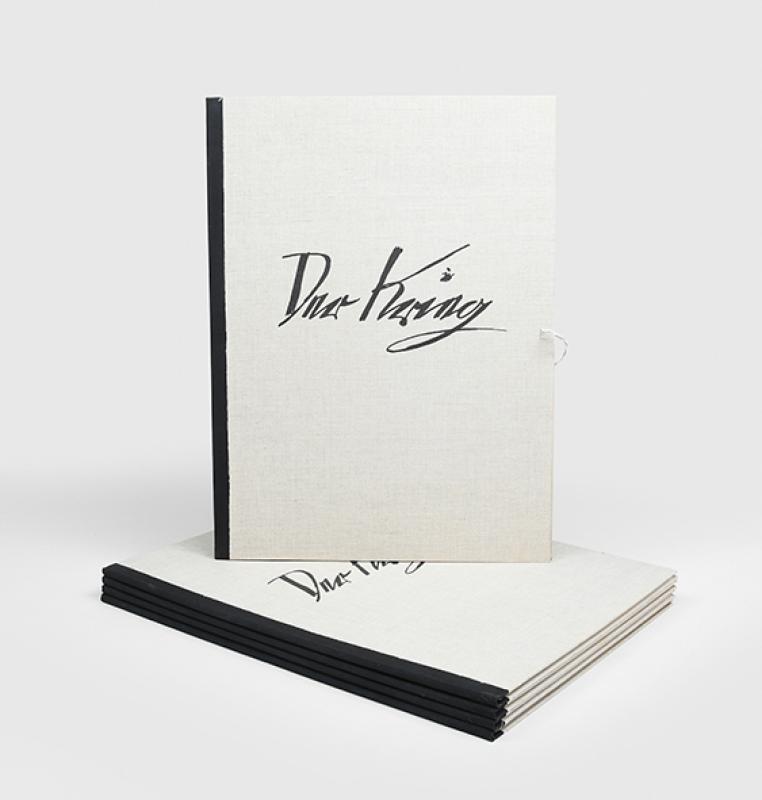
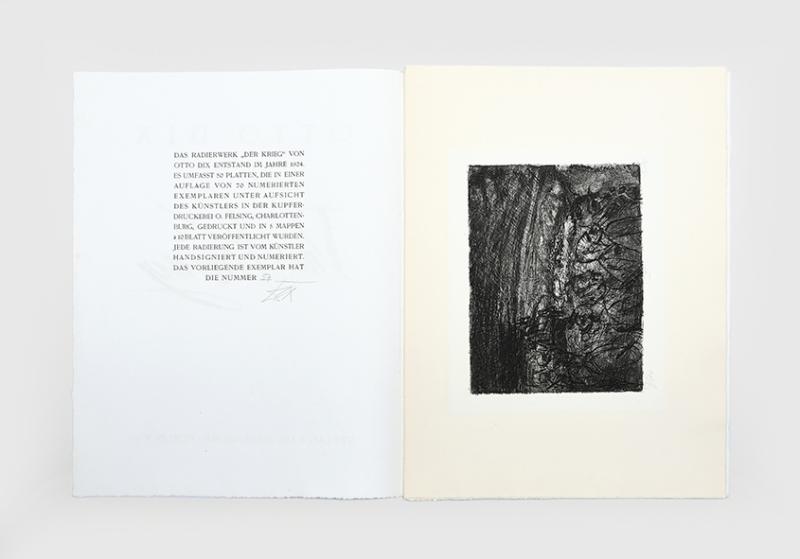
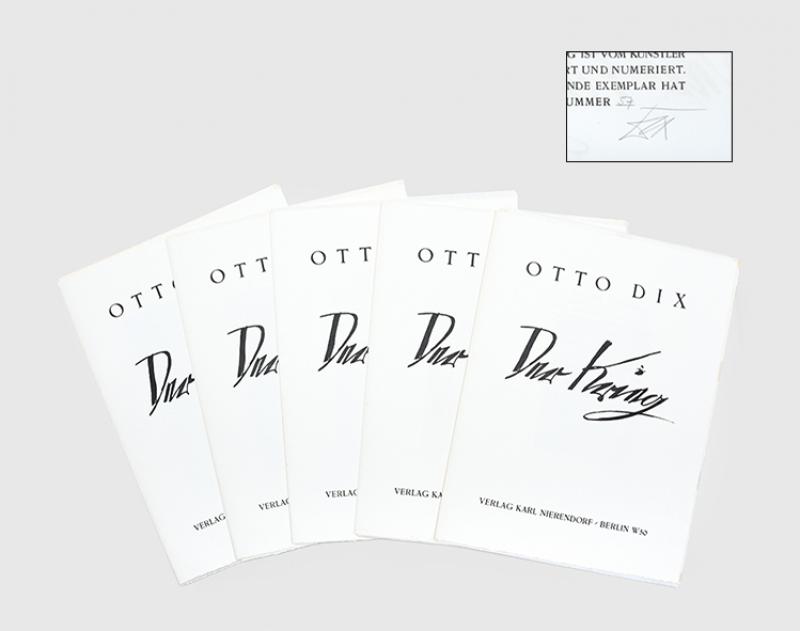
Der Krieg. Berlin: Karl Nierendorf, 1924. ¶ Folio. Comprising 51 etchings with drypoint and aquatint, in 5 paper wrappers, with tissue guards. In the five original grey cloth boxes, string-ties, front covers lettered in black. All housed in a custom purple quarter morocco solander box by the Chelsea Bindery. “Soldat und Nonne” print with residue from mounting, all other plates, wrappers, and boxes in fine condition; some creasing to tissue guards. ¶ First edition, number 57 of 70 portfolios, comprising the full published suite of 50 etchings and the additional 51st print, “Soldat und Nonne”, all signed by the artist; in the five original paper wrappers (each signed and numbered) and boxes as issued. Der Krieg is perhaps the most significant artistic response to the First World War, the 20th-century equivalent of Goya’s Disasters of War. Published on the tenth anniversary of the outbreak of the First World War, the sequence was based on Dix’s service as a front-line gunner in the German Army from 1915 to 1918. “The fifty etchings of this cycle represent Dix's central achievement as a graphic artist... nihilistic landscapes, brutalised soldiery, obscene prostitutes and decaying corpses transmuted into figures of Death, are portrayed with a merciless candour. One print, “Soldat und Nonne”, depicting a nun endeavouring to repel a soldier intent on raping her, was evidently too disturbing and had to be withdrawn from the published edition... Critical acclaim for the prints was enormous, and the portfolios were exhibited in Berlin, Vienna, Breslau, Wiesbaden and elsewhere. More than any other comparable publication, it was regarded as capturing the traumatic experiences of the First World War, which had been horrific, bitter, revolting and occasionally wryly humorous, but never glorious” (Carey, p. 184). It met with fierce resistance from German nationalist circles; in 1937, a complete set was included in the Nazi “Degenerate Art” exhibition. ¶ The “Soldat und Nonne” print is numbered 56 of 70; they do not typically match the portfolio number. ¶ Provenance: Richard Harris, collector of works on death and mortality, who acquired it from C. G. Boerner of Düsseldorf; exhibited at the London Wellcome Collection’s “Death: A Self-Portrait”, 15 November 2012 to 24 February 2013 and the New York Metropolitan Museum of Art’s “World War I and the Visual Arts”, 31 July 2017 to 7 January 2018; sold at Harris’s sale at Bonhams, 9 May 2023, lot 6. ¶ Karsch, Otto Dix: Das graphische Werk, 70-120. Frances Carey, The Print in Germany, 1880-1933, 1984.
450000,- EUR Sachgebiete: Deutschland, Geschichte, Illustrierte Bücher, Moderne Kunst, Weltkrieg Kontakt zum
Differenzbesteuert/Subject to margin taxation