Peter Harrington
TANAKA, Yoshio.  Auf Merkliste setzen
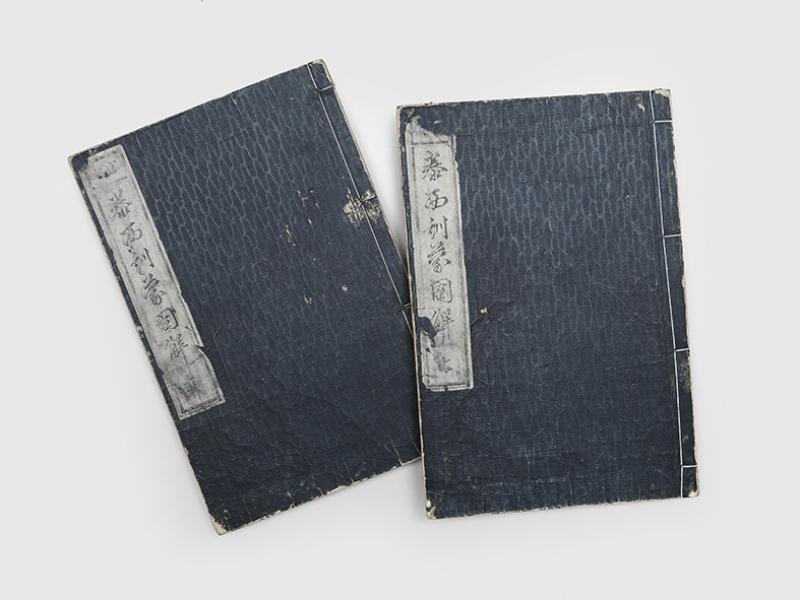
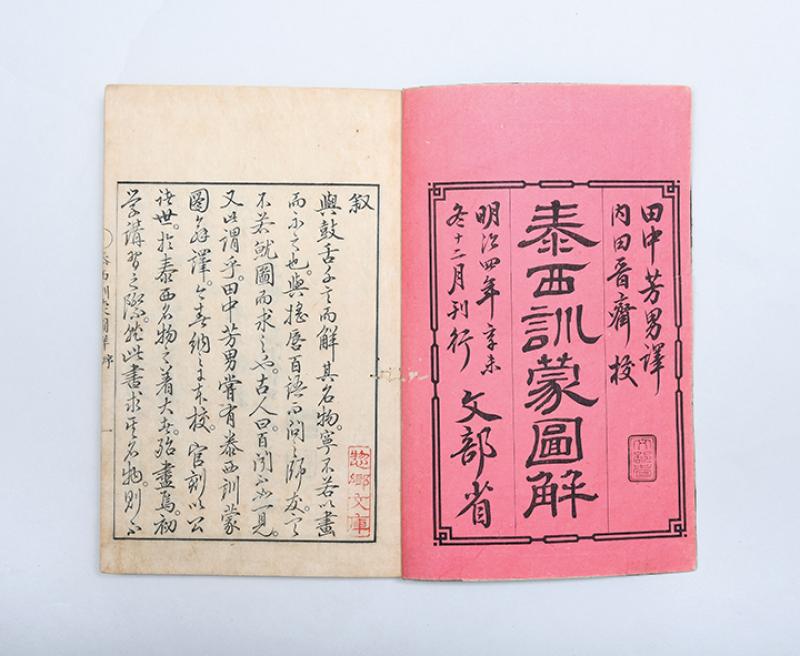
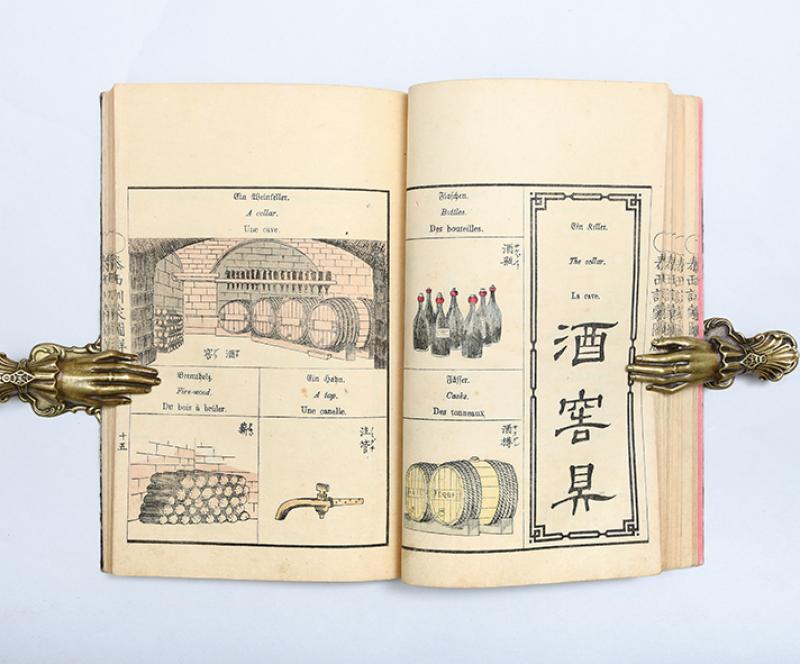
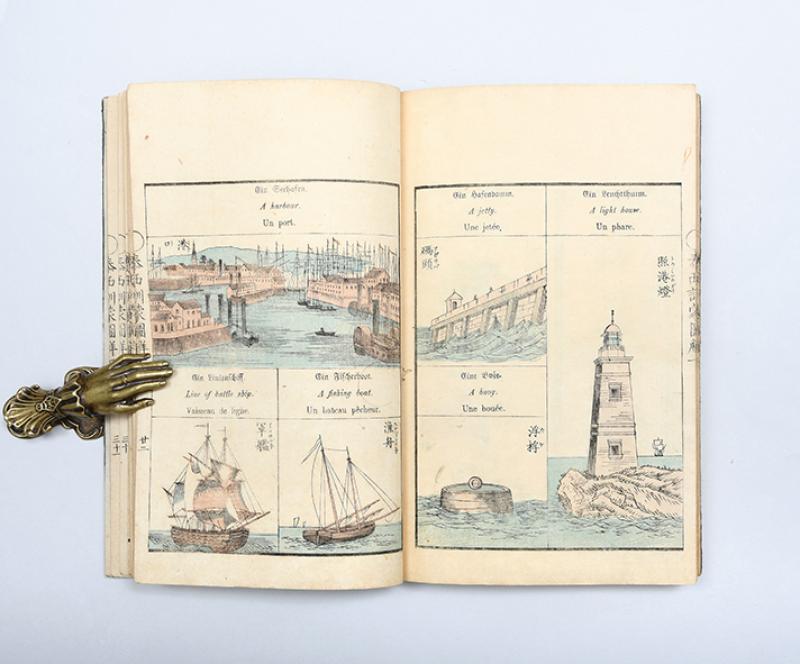
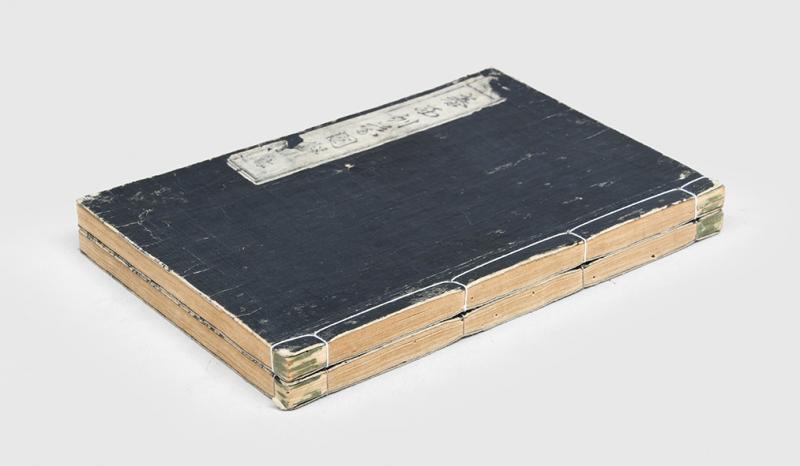
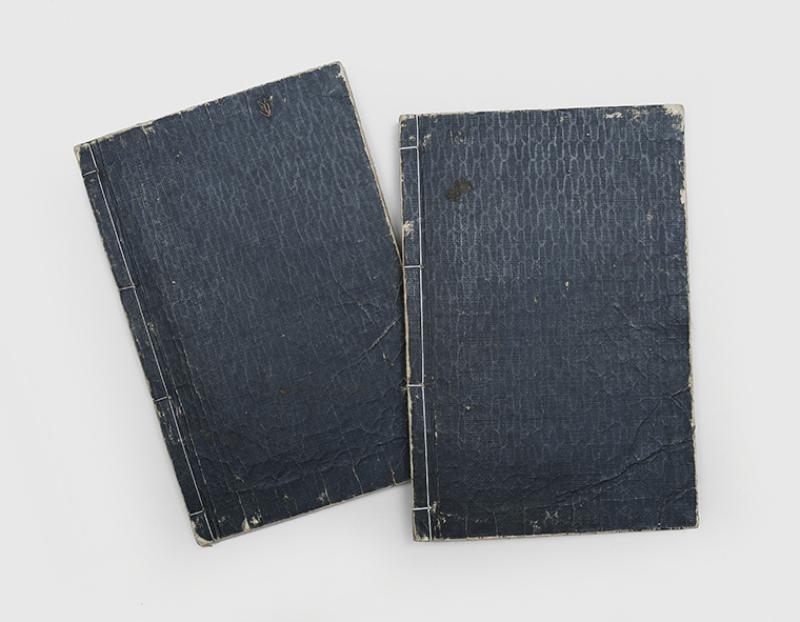
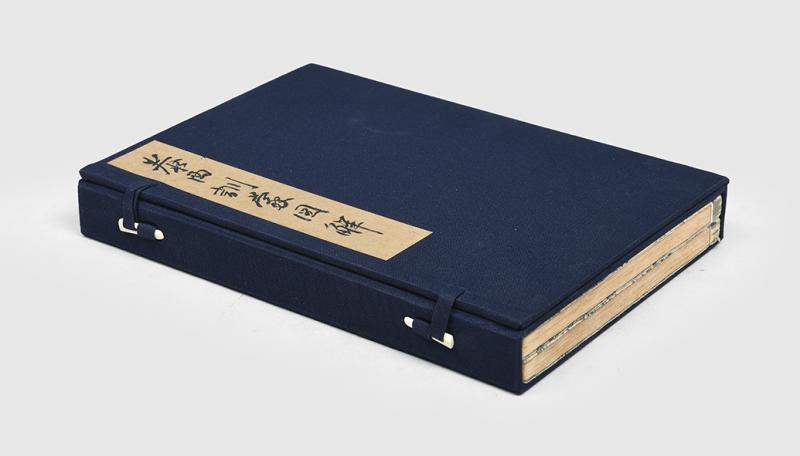
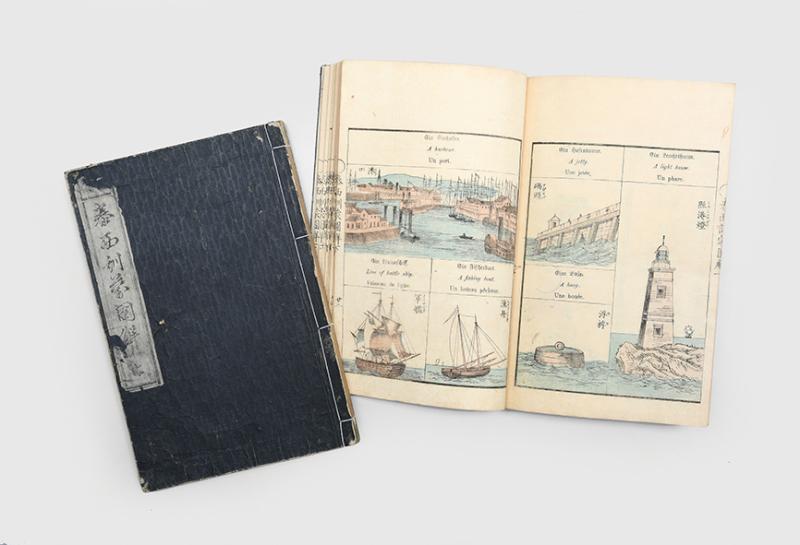
Taisei kunmo zukai (“An Illustrated Encyclopaedia of the West”). [Tokyo:] Monbusho, 1871. ¶ 2 vols, octavo. Colour woodblock and copperplate illustrations throughout; text in Japanese, English, French, and German. Original black patterned wrappers, renewed white string fukuro-toji binding, original printed label on front wrappers. Housed in modern blue cloth folding case with manuscript title label. Red ink seals of the English literature scholar Masaaki Sogo (1912-1993), remains of former printed label on inner rear wrapper of vol. I. Wrappers generally rubbed and creased, a little loss to labels, contents bright with minor worm-holing repaired: a very good copy. ¶ First edition of this colourful illustrated encyclopaedia, produced by the Ministry of Education to introduce various Western items and their names in English, French, and German. It was released only four years into the Meiji period by Tanaka Yoshio, a prominent naturalist and zoologist who oversaw the founding of the National Museum of Natural History and Ueno Zoo. Taisei kunmo zukai adopts the format of traditional Japanese encyclopaedias but applies multi-lingual captions. It opens with examples of European architecture, houses, and furniture, before moving to kitchen utensils, tools, clothing, gardening equipment, domestic animals, sports, railways, ships, and weaponry. The categorisation reflects the ongoing process of modernising scientific and technical knowledge in Japan. For example, as noted by W. Puck Brecher, the separation of animals into “domesticated” and “wild” subsections was a holdover from the early modern period, where animals were classified by their usefulness or danger to society. Taisei kunmo zukai “interprets ‘wild’ not simply as undomesticated, but as unmanageably savage and ferocious... The wildlife section includes illustrations of a hunter and a forest to instruct readers about the propriety of human dominion over the wild” (Brecher, p. 86). This contrasts with emerging Western models of zoological classification, showing how the late 19th century was in a state of flux between traditional and modern ideas. ¶ W. Puck Brecher, Loving and Loathing Wildlife in Japan, 2025.
3300,- EUR Sachgebiete: Asien, Lexika, Illustrierte Bücher, Japan Kontakt zum
Differenzbesteuert/Subject to margin taxation