Peter Harrington
VIENNA SECESSION.  Auf Merkliste setzen
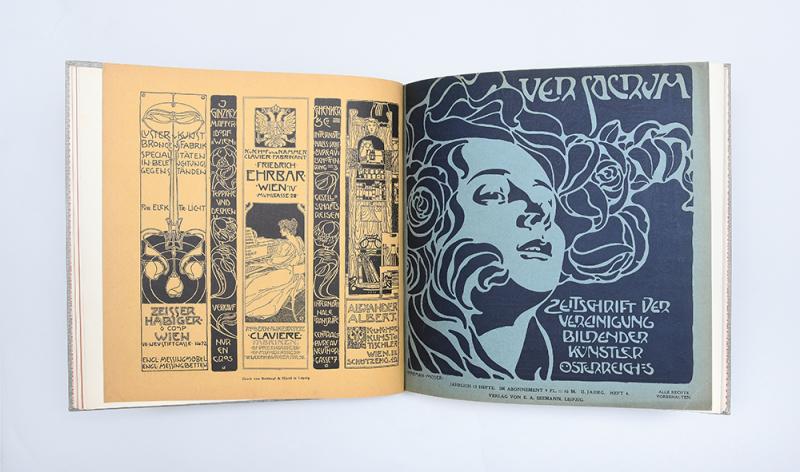
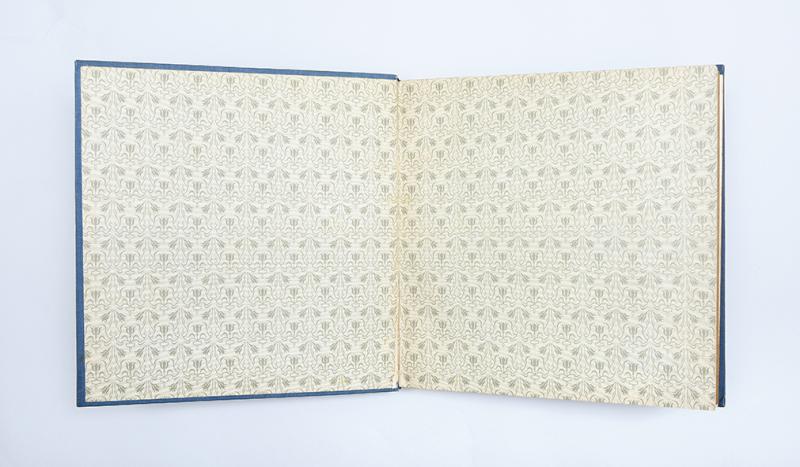
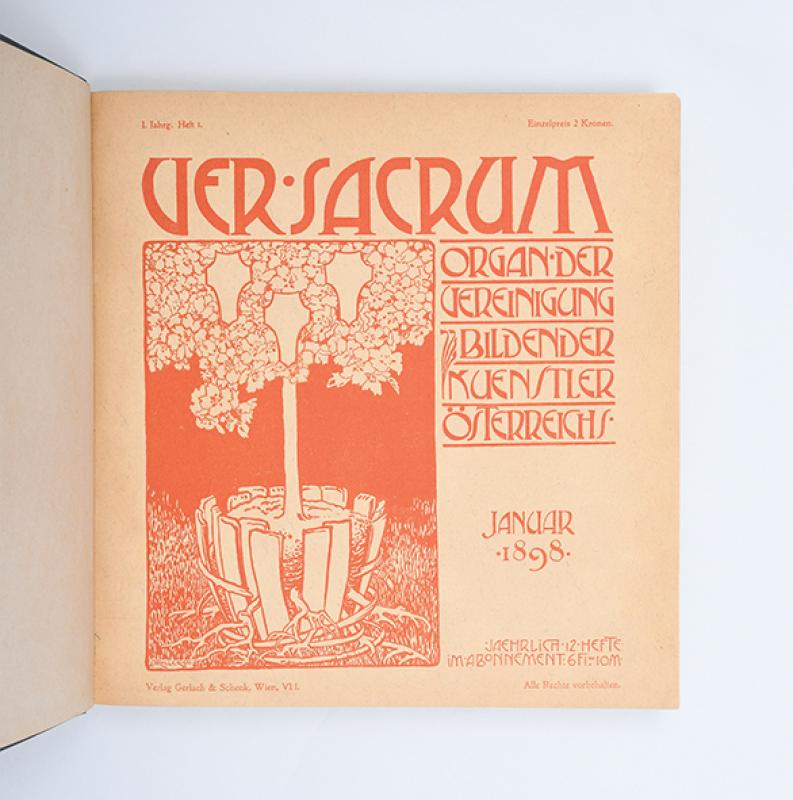
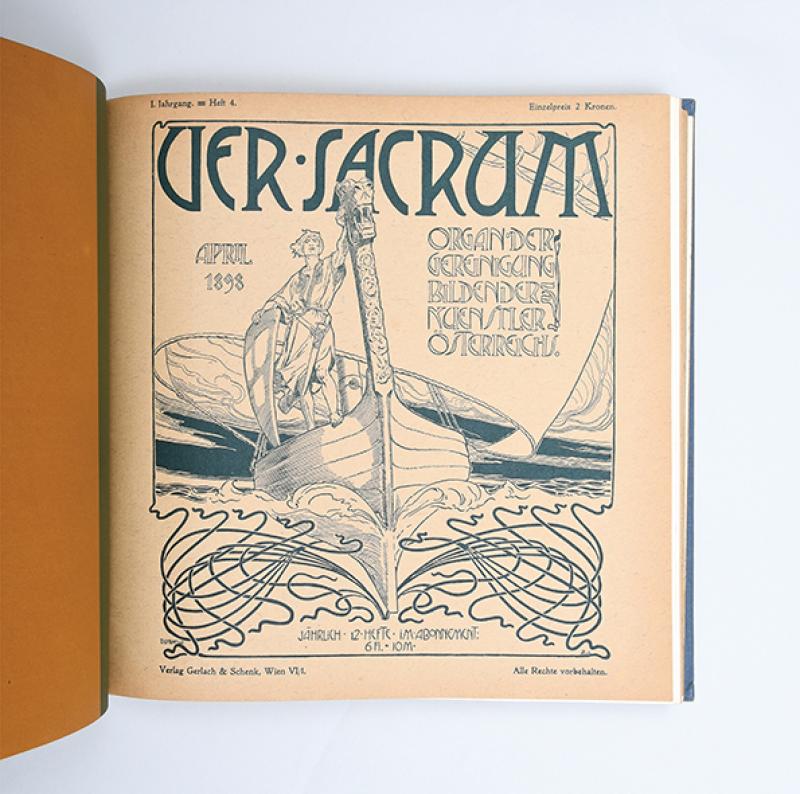
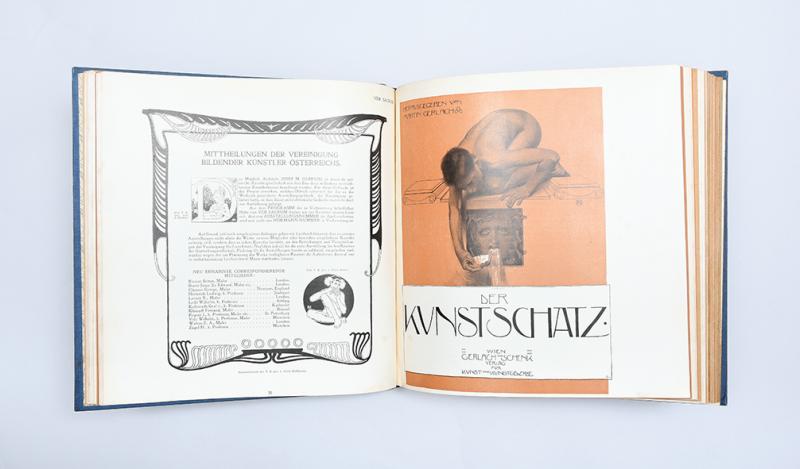
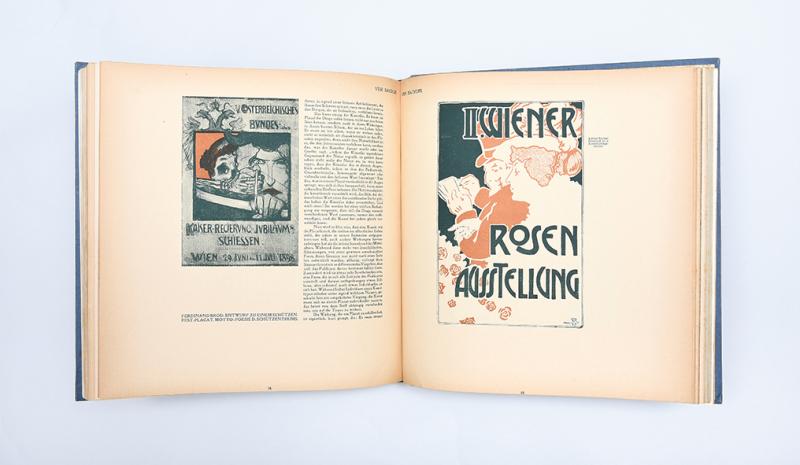
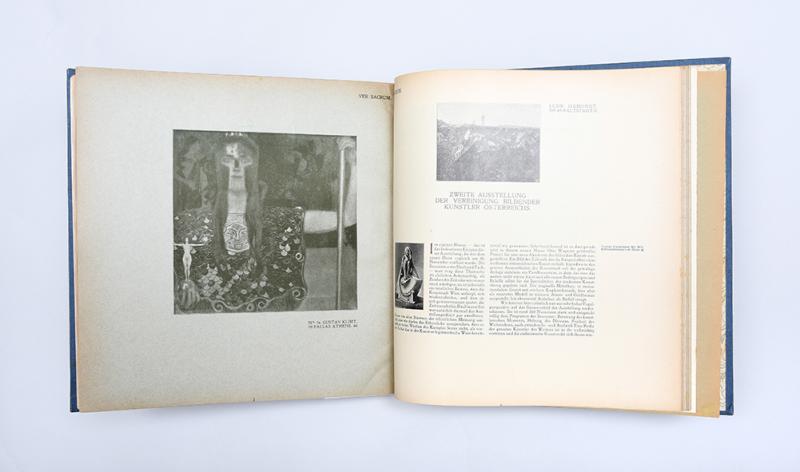
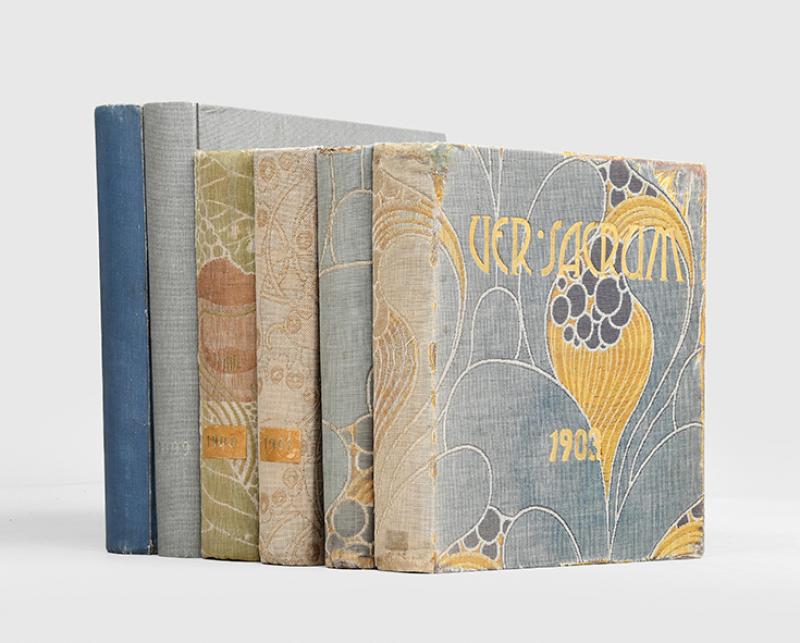
Ver Sacrum: Organ der Vereinigung Bildender Künstler Österreichs. Vienna and Leipzig: Gerlach & Schenk; E.A. Seemann, 1898-1903. ¶ 120 numbers bound in 6 annual volumes, quarto; the first two volumes 289 x 282 mm, the latter four 254 x 238 mm. Illustrated with 471 reproductions of drawings, 55 lithographs, and 216 woodcuts (most printed in colour). This set includes the extra number for the first year (catalogue of the Second Secession Exhibition) and the Calendar number for the sixth year. Vols. I-II in 20th-century blue and grey cloth, front covers lettered in gilt, patterned endpapers, top edges gilt, others trimmed; Vols. III-VI in floral-patterned cloth, patterned endpapers, top edges gilt, other uncut. Original wrappers bound in vols. I-III. Vols. II and IV with “Feuerbacher Heide” bookplate of industrialist Hans Lutz Merkle (1913-2000). Slight fraying at extremities and minor sunning to spines, contents with some spotting and toning but generally clean and bright, Vol. I with some cropping of pagination at foot and minor loss to wrapper of August 1898 issue. An excellent set. ¶ First editions, a very scarce complete run of one of the most consequential artistic journals ever published, the organ of the Vienna Secession, bound in annual volumes, the latter four in floral cloth bindings likely by the Wiener Werkstätte. The Vienna Secession was a group of Austrian artists, led by Gustav Klimt, who, in 1897, broke away from the conservative Künstlerhaus to promote modern art and the ideal of the Gesamtkunstwerk, or total work of art. Ver Sacrum (“Sacred Spring”) was their journal, which sought to integrate ornament, typography, layout, design, and text into a unified artwork. It included photographs of the Secession’s own exhibitions, and texts were contributed by many leading poets and writers of the day. Literary and artistic contributors included Max Kurzweil, Rainer Maria Rilke, Maurice Maeterlinck, Hugo von Hofmannsthal, Alphonse Mucha. “Ver Sacrum remains a document of the first importance for any student of the period, and one without which it would be impossible to obtain a complete picture of the activity of the Secession” (Vergo, p. 44). The introductory essay declared that it “aims to show other countries for the first time that Austria is an independent artistic entity... it is meant to be a clarion call to the artistic sense of the people, to inspire, promote, and spread artistic life and artistic independence” (translated). The bindings of the latter four volumes are in the style of the Wiener Werkstätte, founded in 1903 to promote high standards of Austrian craft. They were likely designed by Koloman Moser, who organized Ver Sacrum and later co-founded the Werkstätte. Their floral patterns, indebted to the English Arts and Crafts movement, reflect the aim of uniting binding and contents in keeping with the Gesamtkunstwerk ideal. A total of 120 numbers were issued from January 1898 to December 1903, forming six annual volumes: monthly for the first two years, and bimonthly thereafter. The print run of the early issues is unknown, though there were 300 subscribers by 1900, and 600 copies were printed for the sixth year (Nebehay, p. 32). ¶ Christian M. Nebehay, Ver Sacrum, 1977; Peter Vergo, Art in Vienna, 1993.
78000,- EUR Sachgebiete: Österreich, Design, Illustrierte Bücher, Moderne Kunst Kontakt zum
Differenzbesteuert/Subject to margin taxation