Arcadia Art
Abraham Ortelius (1527 Antwerpen - 1598 ebd.)  Auf Merkliste setzen
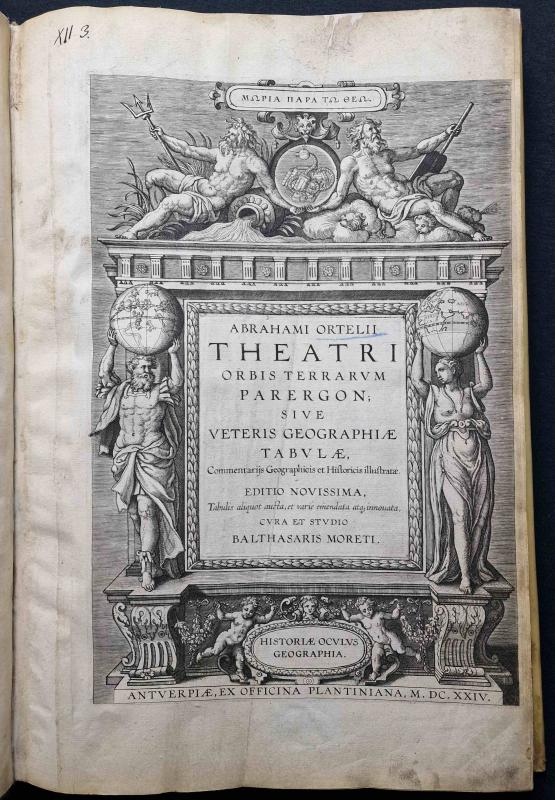
Parergon: Atlas der antiken Geographie von Abraham Ortelius. Gedruckt 1624 bei Plantin-Moretus in Antwerpen / Parergon: Atlas of ancient geography by Abraham Ortelius. Printed in 1624 by Plantin-Moretus in Antwerp -- Abrahami Ortelii Theatri Orbis terrarum parergon; sive veteris geographiæ tabulæ, Commentarijs Geographicis et Historicis illustratæ. Editio novissima, Tabulis aliquot aucta, et variè emendata atq[ue] innovata, cura et studio Balthasaris Moreti, Officina Plantiniana / Balthasar Moretus, 1624, Antwerpen.
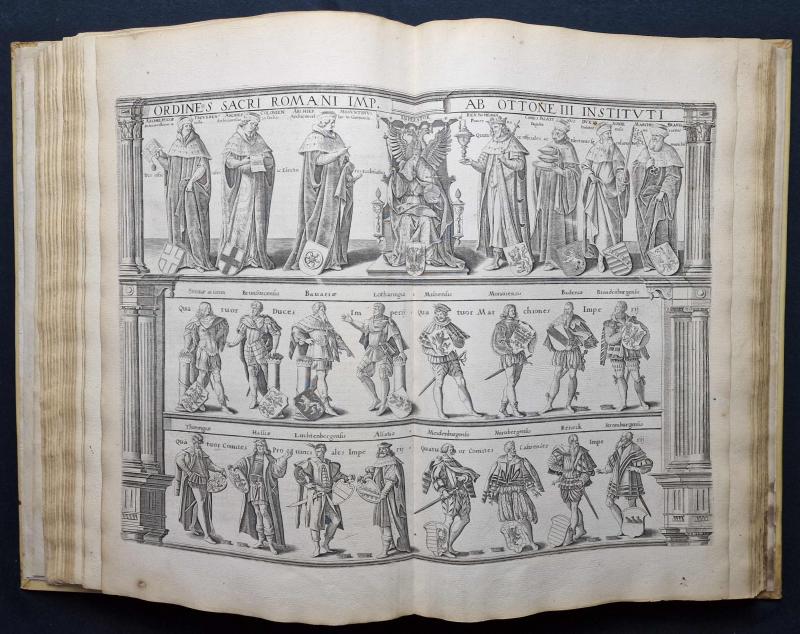
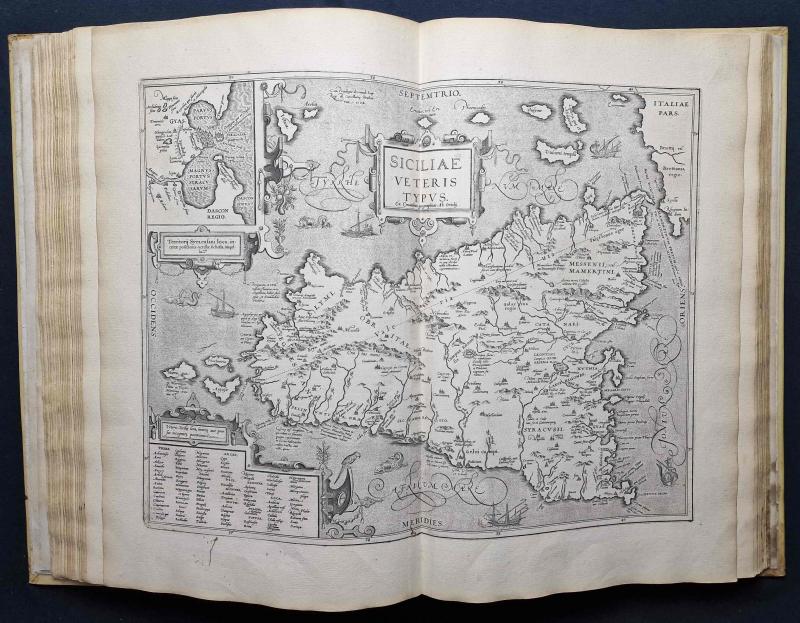
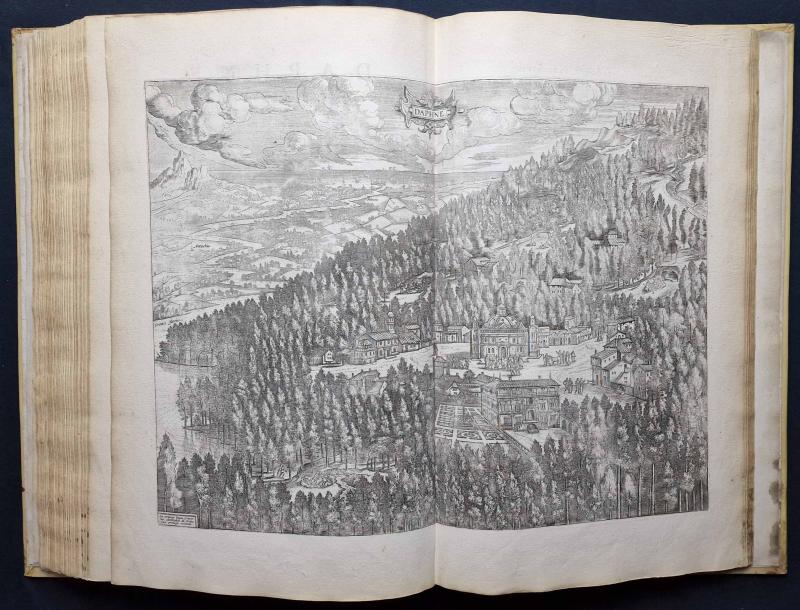
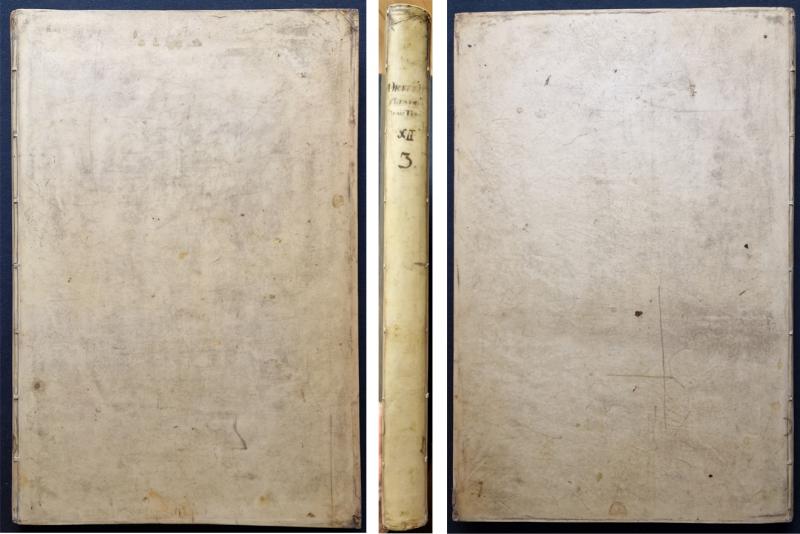
gr 2°, Imperial Folio (48 x 33 cm), Ganzpergamenteinbd. d. Zeit, 6 Bl., 103 in den Tafelteil integrierte nicht paginierte S., 32 S., 2 Bl. Mit gestochenem Titel und verso gestochenen Wappen, jeweils doppelseitig: 39 Kupferstichkarten, 2 Kostümtafeln, 3 Ansichten (Tempe, Daphne u. Escorial), Schlussvignette m. dem Motto von Plantus-Moretus Vollständige letzte und einzige separat erschienene Ausgabe des Parergon-Atlas, der ursprünglich als Anhang zum "Theatrum Orbis Terrarum" erschienen ist und 1579 einzig drei Karten enthalten hat. Über die Zeit ist das Supplement zur eigenständigen Publikation angewachsen und umfasst Karten, die klassische und biblische Themen wie die Reisen von Odysseus, die Wanderungen von Abraham und Paulus darstellen. Cornelis Koeman bemerkt hinsichtlich des Parergon-Werks: “This atlas of ancient geography must be regarded as a personal work of Ortelius. For this work he did not, as in the 'Theatrum', copy other people's maps but drew the originals himself […]. The maps in the Parergon have to be evaluated as the most outstanding engravings depicting the wide-spread interest in classical geography in the 16th century.” - Der Einband und das Titelblatt würden jüngst behutsam fachmännisch restauriert. Einband, vordere Vorsätze u. Titelblatt angestaubt u. an den Randbereichen teilw. hinterlegt, vereinzelt marginal finger- und stockfleckig, sonst in sauberem Zustand mit kräftigem Druckbild. Complete last and only separately published edition of the Parergon Atlas, which originally appeared as an appendix to the "Theatrum Orbis Terrarum" and only contained three maps in 1579. Over time, the supplement has grown into an independent publication and includes maps depicting classical and biblical themes such as the voyages of Odysseus and the wanderings of Abraham and Paul. “This atlas of ancient geography must be regarded as a personal work of Ortelius. For this work he did not, as in the 'Theatrum', copy other people's maps but drew the originals himself […]. The maps in the Parergon have to be evaluated as the most outstanding engravings depicting the wide-spread interest in classical geography in the 16th century.” Cornelis Koeman - Binding and title page have recently been carefully and professionally restored. Binding and title page dusty and partially backed in the margins, occasional marginal fingerstains and foxing, otherwise in clean condition with a strong printed image.
12000,- EUR Sachgebiete: Atlanten Kontakt zum
inkl. 7% USt./incl. 7% VAT