HEARTFIELD, John.  Auf Merkliste setzen
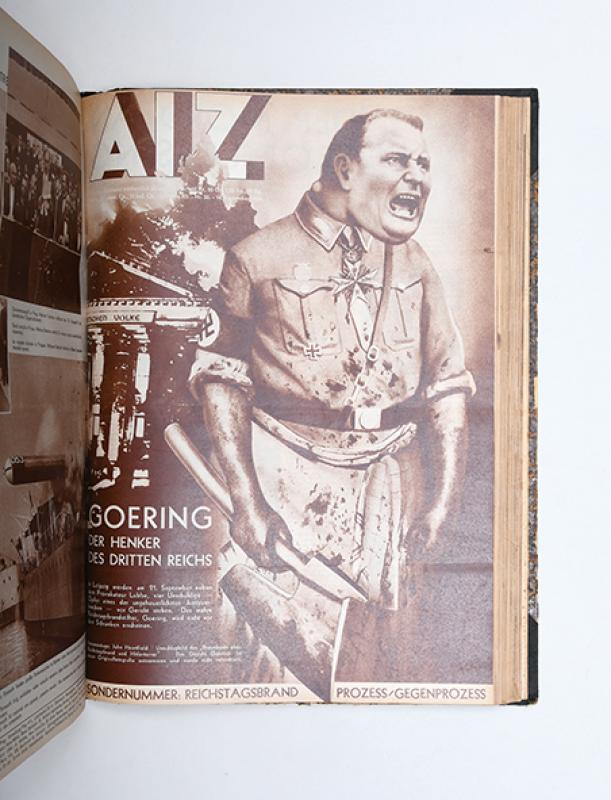
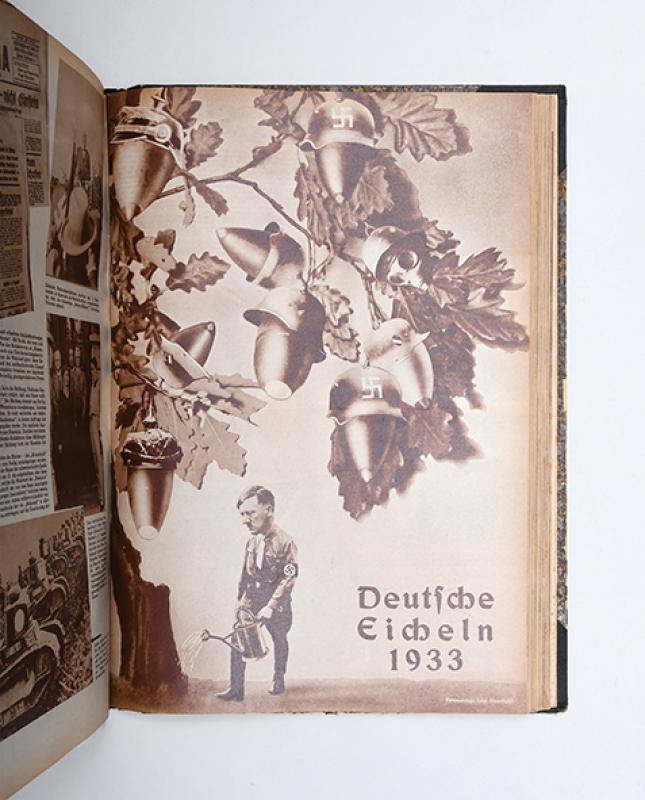
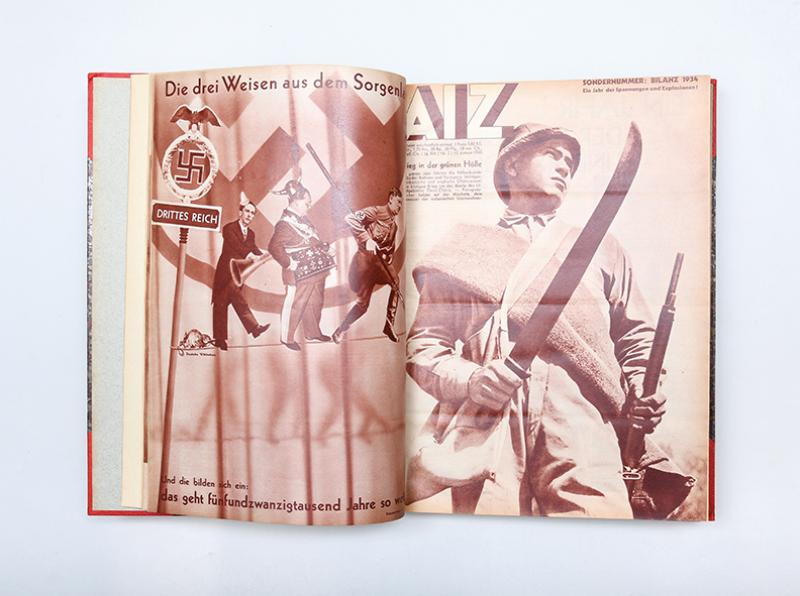
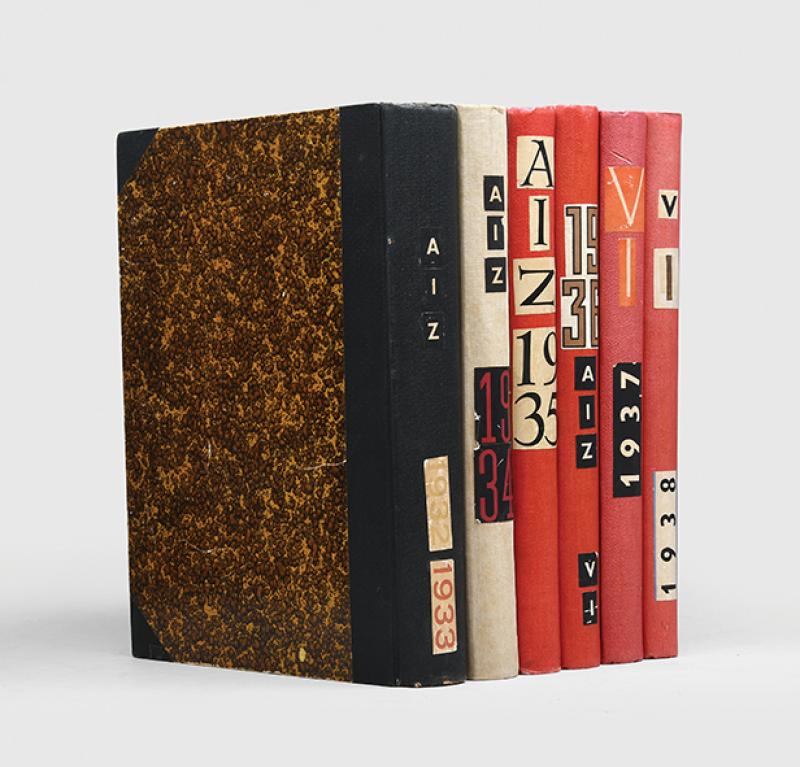
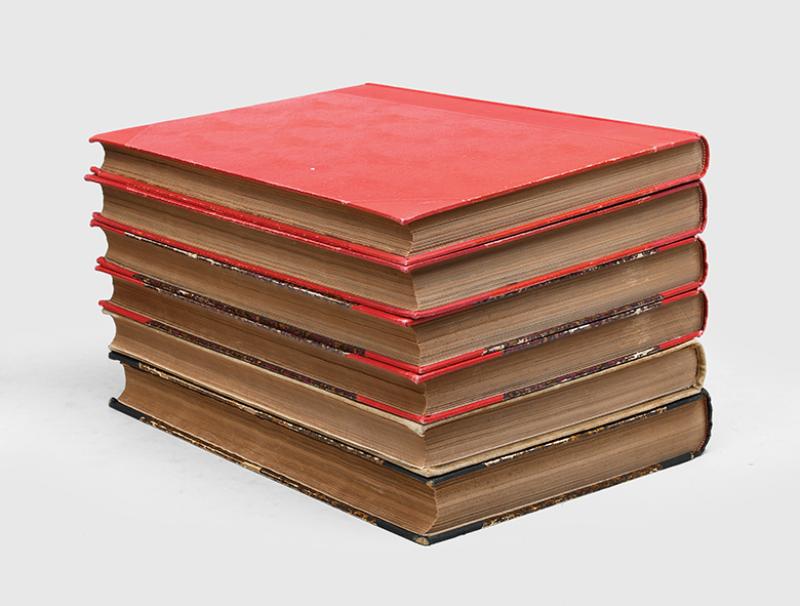
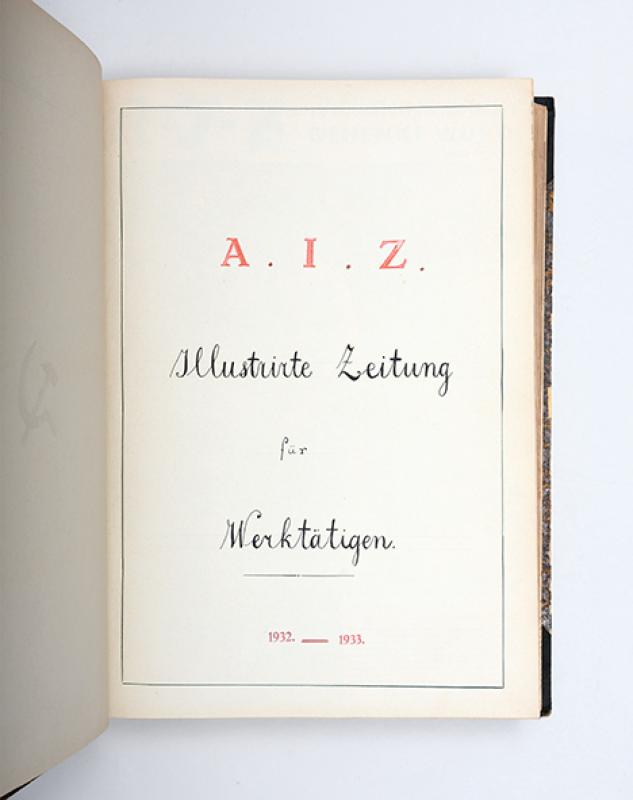
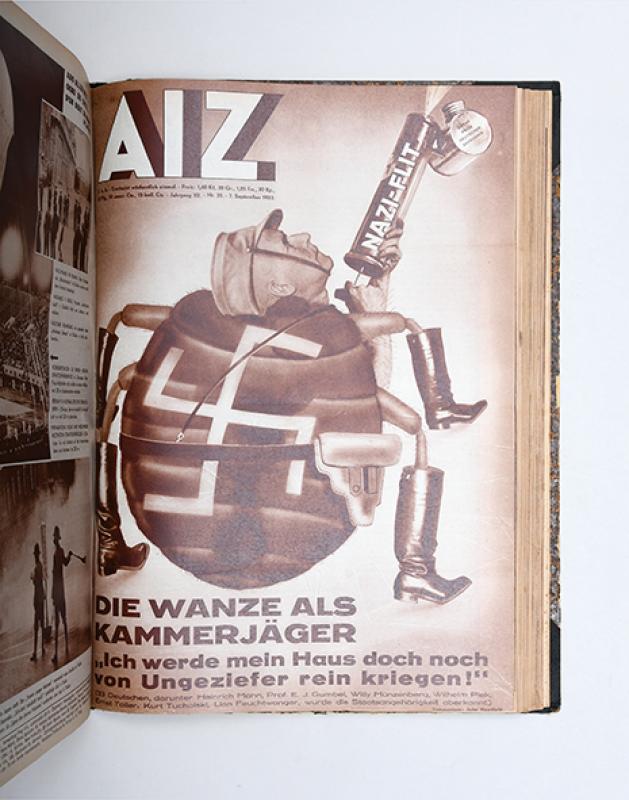
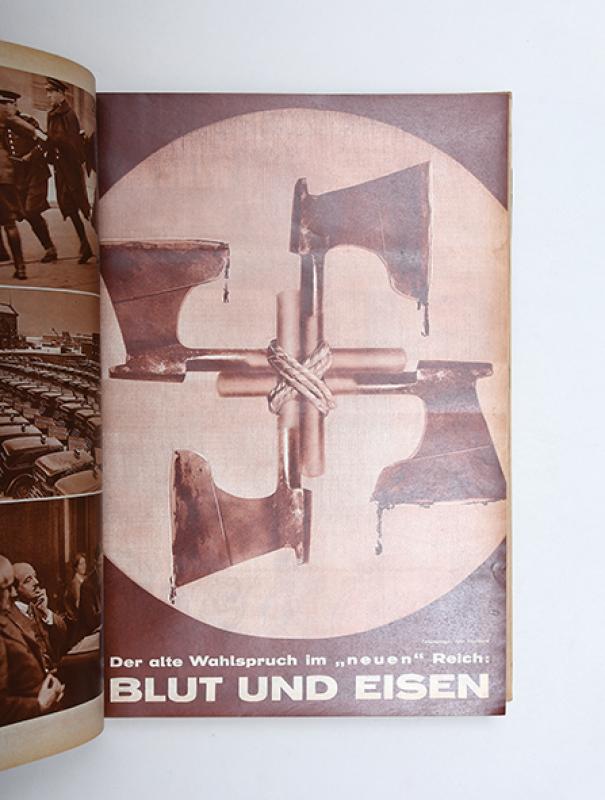
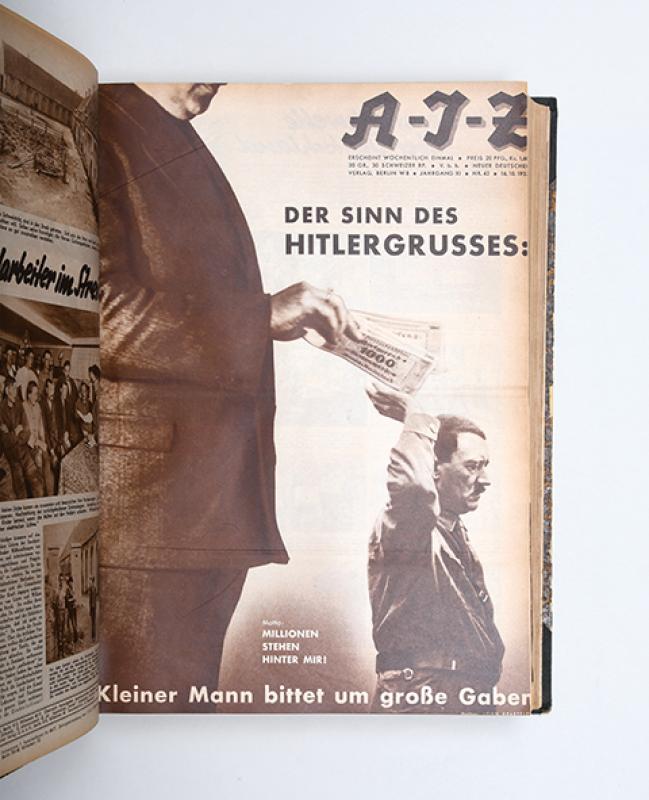
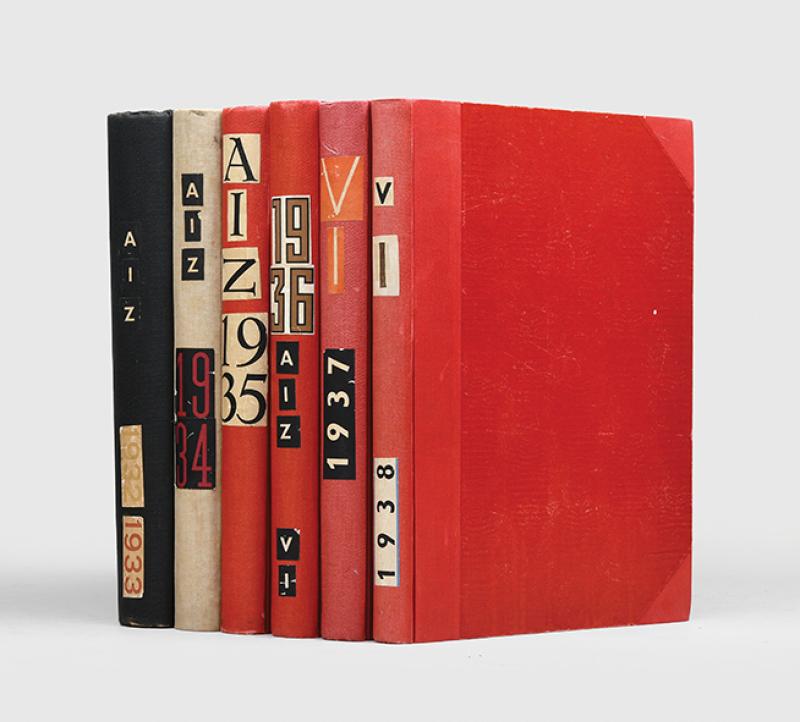
Arbeiter Illustrierte Zeitung & Die Volks-Illustrierte. Berlin: Neuer Deutscher Verlag, & Prague, P. Prokop, 1932-38. ¶ Together, 314 issues bound in 6 vols, folio (375 x 265 mm). With photographic illustrations throughout. Contemporary black, red, or white quarter cloth, paper-covered boards, printed paper labels to spines; each volume with manuscript half-title and title in German, vols. I and II with manuscript German table of contents. Contemporary label of the Dutch Communist Party to front free endpapers of vols. I & II. Light browning due to paper quality, very occasionally slightly trimmed (with minor loss of letters), a few pages creased, and occasional small tears; 3 leaves with longer tears and 2 with minor loss. Still, a very good set.¶ An exceptional run of one of the main organs of political opposition to the Nazi Party, illustrated with photographs throughout. It includes over 200 of John Heartfield’s iconic photomontages, pioneering works of graphic design and illustration which were extraordinarily influential.¶ The Arbeiter Illustrierte Zeitung, renamed Die Volks-Illustrierte in 1936, was a socialist photographic weekly magazine. Founded in Berlin in 1921, it took a leading role in opposing the growing Nazi movement. After the Nazis came to power, its publishing operation fled to Prague, where it was distributed across Europe to opponents of the new regime and to émigrés, as well as being smuggled into Germany. As the German occupation of Prague loomed, the magazine ceased publication. This set comprises the full run from 1932 through to the magazine’s closure in 1938, with the exception of a single issue in 1935 that was suppressed, and the few issues of the aborted attempt to revive the magazine in Strasbourg in 1939. It has the label of the Dutch Communist Party, which was itself later suppressed under Nazi occupation. The 314 issues contain several thousand photographs illustrating inter-war Europe and the Nazi movement and regime. Its journalism is a crucial record of Nazi repression at a time when the domestic press was rigidly controlled by Goebbels’s propaganda apparatus. There are also articles for children, sports coverage, caricatures, fiction, and essays about art and technology. Heartfield’s illustrations have secured the magazine’s lasting fame. “In the search for new forms to express a new conviction, Heartfield and his friends discovered photomontage. Originally, it seems that the soldiers on the Western Front, unable to get their reports of butchery past the censors, turned to pasting together photographs and cutouts from illustrated papers to tell their tale of horror to their families and friends back home. Using this ingenious technique, as well as the collage of the cubists, Heartfield and his close friend, George Grosz, invented the new technique” (Selz, p. 310). The rise of National Socialism gave Heartfield his defining subject, and his work for the Arbeiter Illustrierte Zeitung and Die Volks-Illustrierte includes many of his most famous images. ¶ Peter Selz, “John Heartfield’s ‘Photomontages’”, in The Massachusetts Review, Vol. 4, No. 2, 1963.
45000,- EUR
Differenzbesteuert/Subject to margin taxation
Sachgebiete: Deutschland, Militaria, Photographie, Weltkrieg
Kontakt zum