KLEE, Paul.  Auf Merkliste setzen
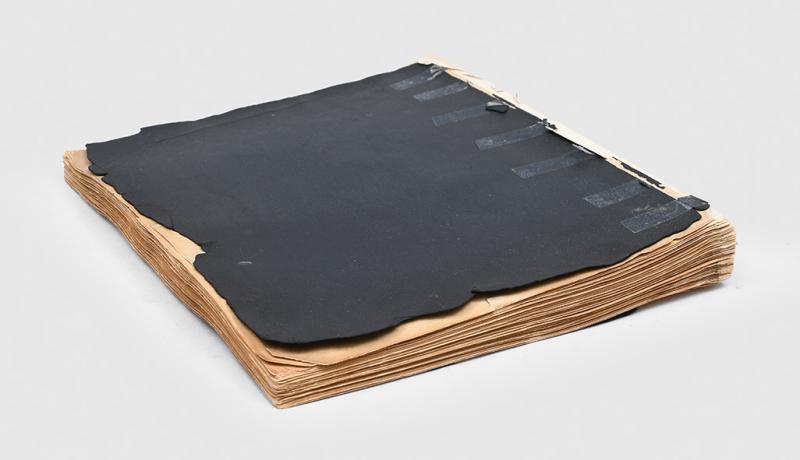
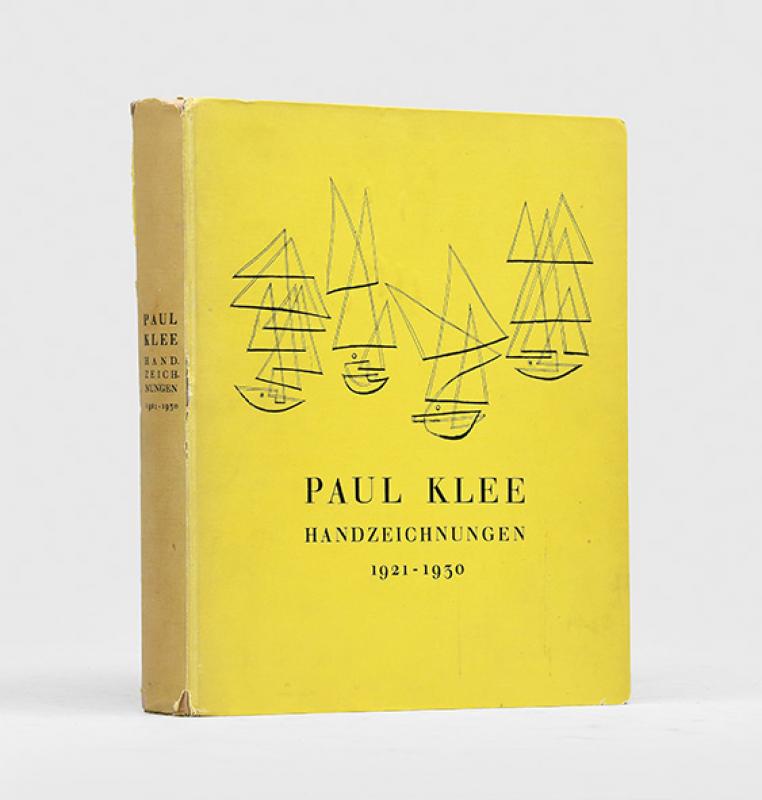
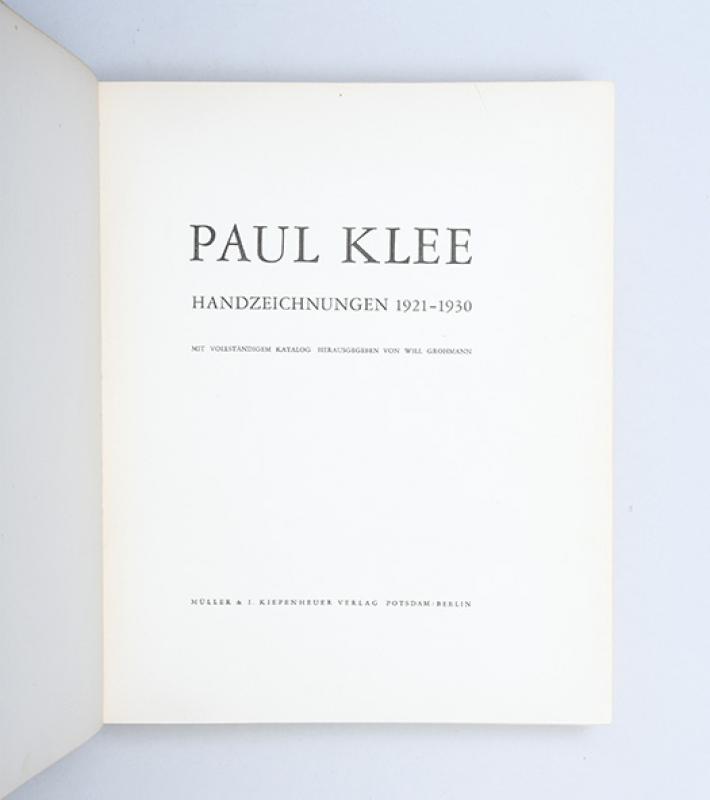
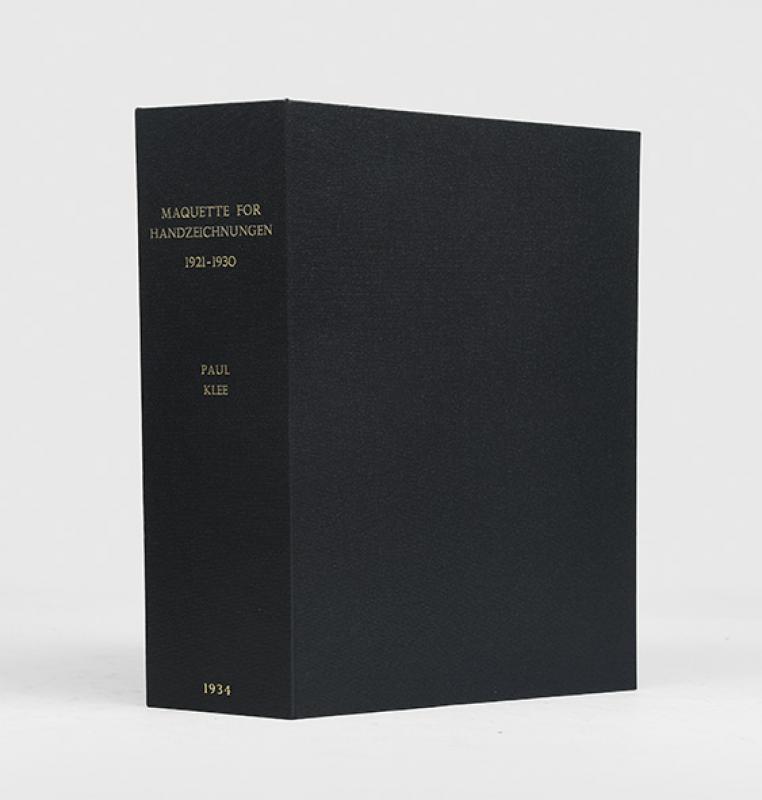
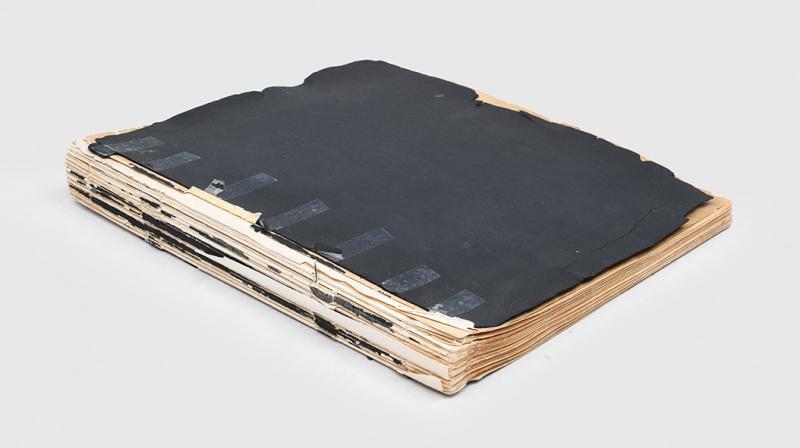
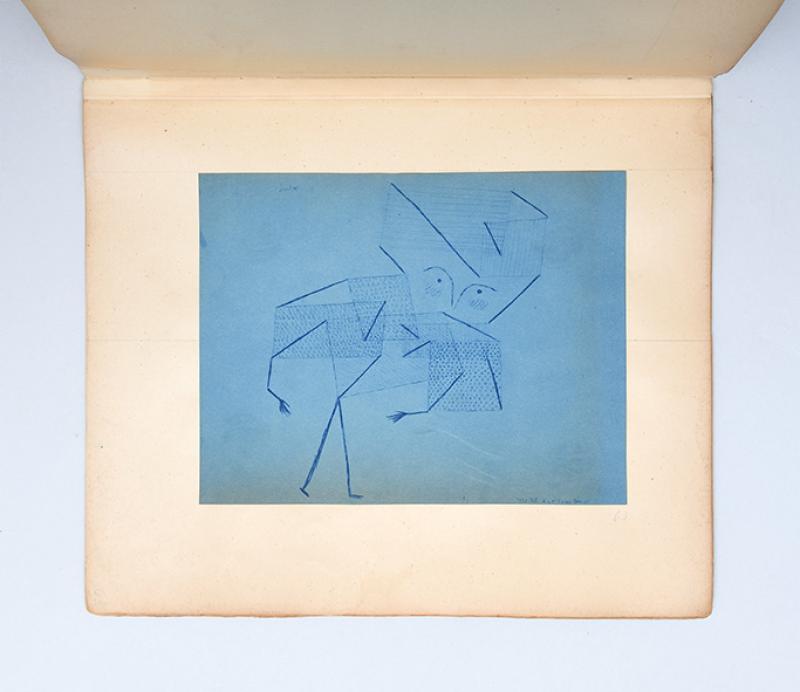
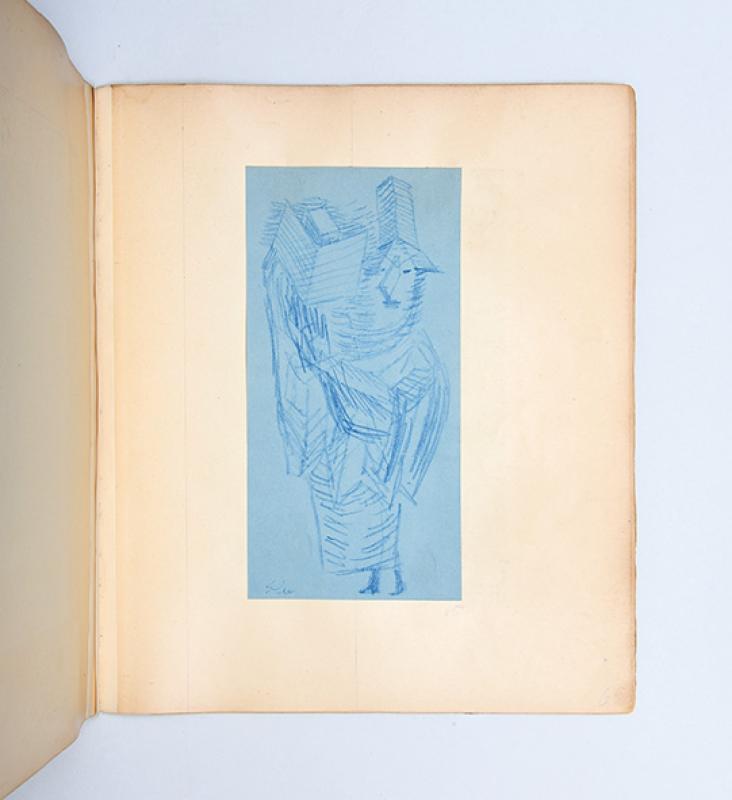
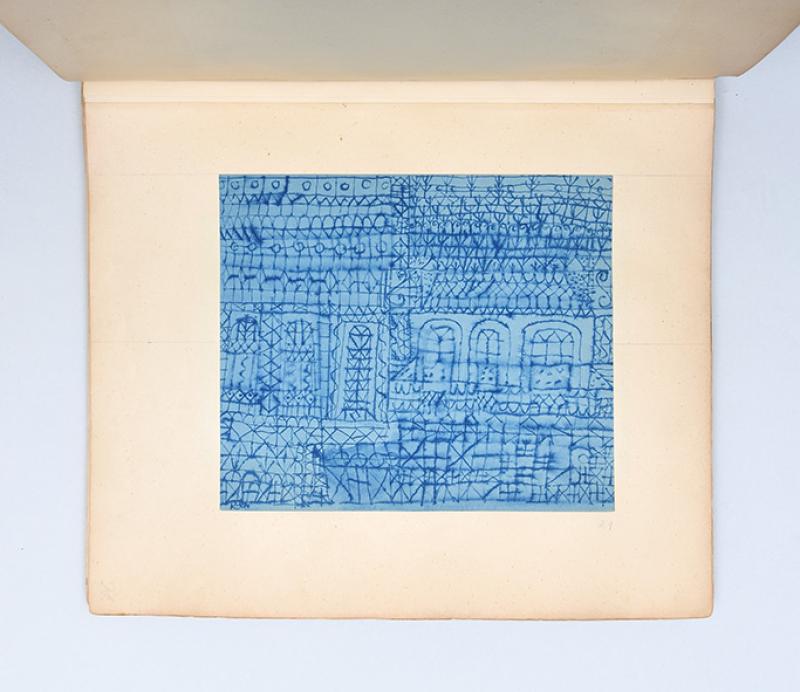
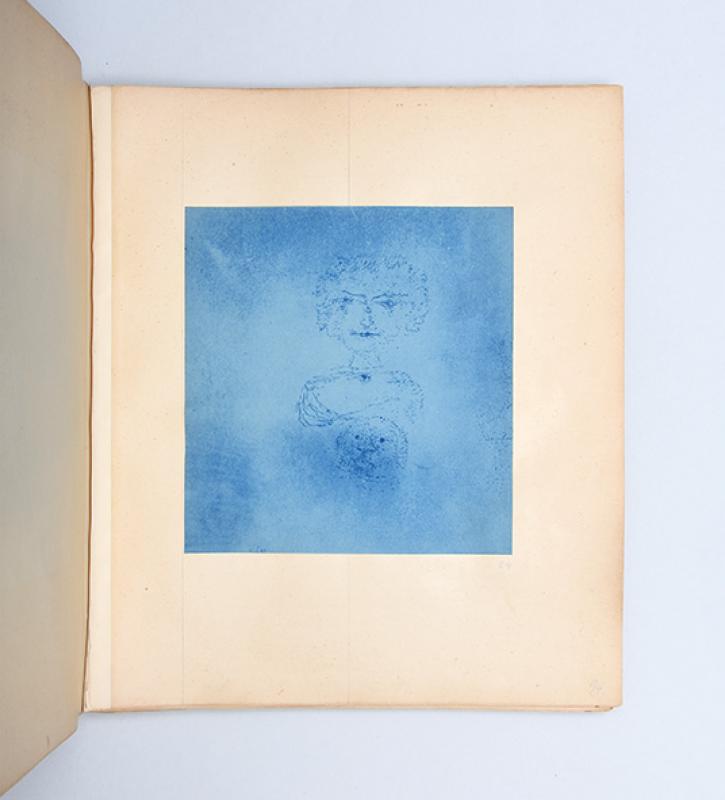
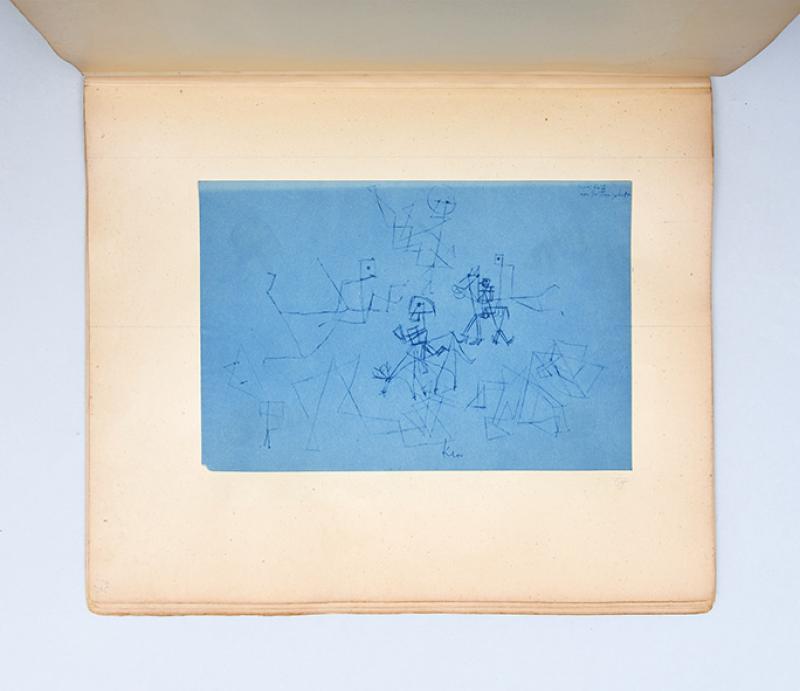
Maquette for Handzeichnungen 1921-1930. Düsseldorf: 1934. ¶ Maquette: Quarto. Original hand-bound black card covers (28.1 x 24.2 cm). With 69 cyanotypes of different sizes mounted on card after original drawings by Klee. Book: Quarto. Original yellow boards, spine and front cover lettered in black, illustration after Klee on front cover in black. With 72 full-page illustrations after original drawings printed on heavy card with perforation to the inner margin. Housed in a black cloth flat-back box by the Chelsea Bindery. Maquette: covers and most pages disbound with small loss to corners and edges, lacking pages 16, 26, and 27. Book: small loss to joints of spine, otherwise clean and bright, a very good copy. ¶ Original maquette for the first volume of Klee's Handzeichnungen, accompanied by a first edition of the book, number 33 of 525 copies. Most of the edition was later confiscated by the Nazis. The maquette is signed by the art critic Will Grohmann, author of the introduction, and both maquette and book were owned by two expressionist dancers associated with the 1936 Berlin Olympics. ¶ Grohmann planned a three-volume catalogue raisonné of Klee’s work, despite mounting criticism from the Nazi Party. In 1933 Klee was dismissed from his teaching post in Düsseldorf and fled to Switzerland. The first volume appeared in October 1934; by spring 1935 the remaining copies were seized by Nazi officials, and Grohmann was forced to suspend publication of the projected second and third volumes. In 1937 Klee’s work was included in the Nazi exhibition of so-called “degenerate art”. The first edition bears the ownership inscription of the dancer and choreographer Mary Wigman, together with a presentation inscription in Grohmann’s hand: “Mary Wigman, Im Alter treu ist Freundschaft ("loyal friendship in old age"), 13 Nov. 1934”. Wigman was a pioneering figure of expressionist dance and a cultural icon of Weimar Germany. She later collaborated with the Nazi regime, accepting a commission for the 1936 Olympics; although privately sympathetic to Jewish students, she complied with orders to dismiss Jewish dancers from her company. The maquette was presented to the dancer Mathilde Thiele (b. 1907), who typed Grohmann’s introduction. Thiele studied under Gret Palucca, later taught Dore Hoyer, and in the 1960s joined the staff of Wigman’s school. When Palucca was summoned to dance for Hitler at the 1936 Olympics, Thiele accompanied her as rehearsal director. Thiele later recalled the dinner with Hitler, noting the mortal danger had Palucca’s Jewish background been known. "After dinner, Palucca and I were so relieved we drank a whole bottle of wine in our room. We considered that Herr Goering might help Palucca escape if needed. We had word that he helped artists (even Jews) through an underground operation, despite his close relationship to Hitler" (Fraleigh). ¶ Grohmann 2226 & others. Sondra Fraleigh, “Mathilde Thiele, A Life in Dance and War”, 2021.
60000,- EUR
Differenzbesteuert/Subject to margin taxation
Sachgebiete: Handzeichnungen, Deutschland, Moderne Kunst, Politik, Weltkrieg
Kontakt zum