[BODONI]. TASSO, Torquato.  Auf Merkliste setzen
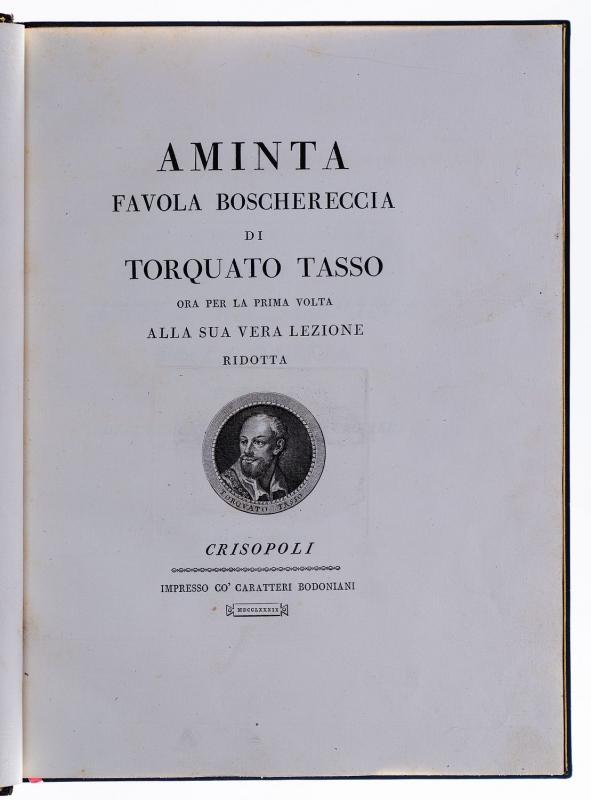
Aminta. Favola Boschereccia di Torquato Tasso ora per la prima volta alla sua vera lezione ridotta. Crisopoli [Parma]: Impresso co’caratteri Bodoniani,1789.
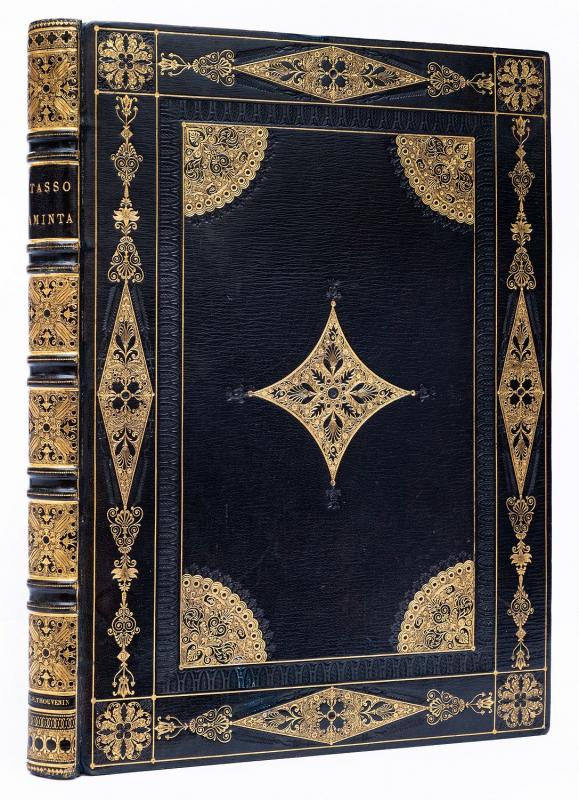
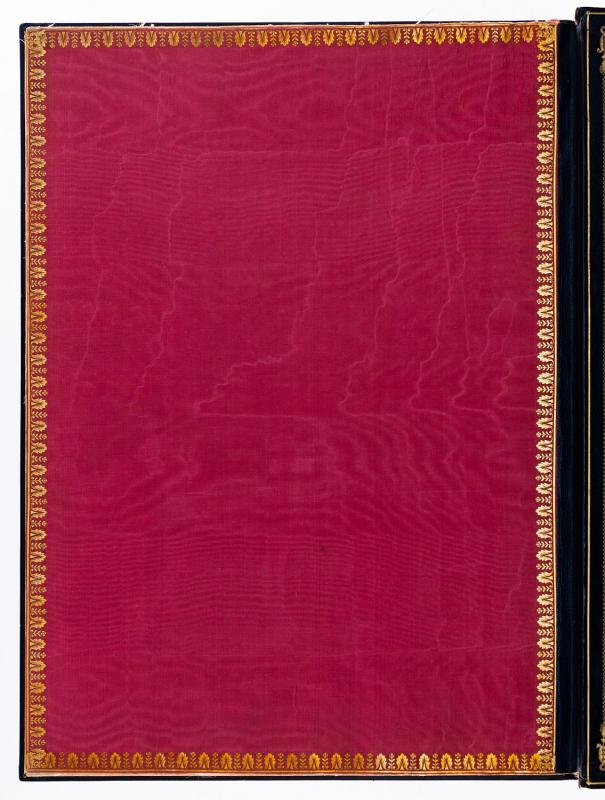
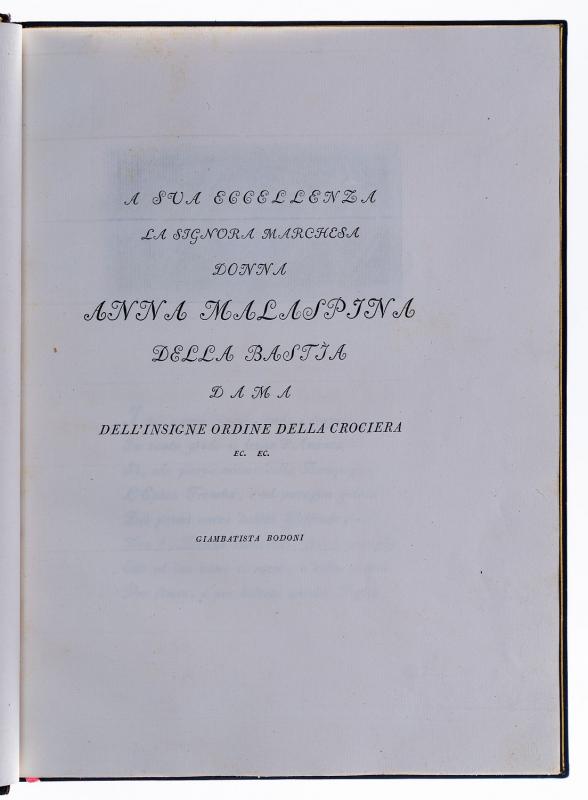
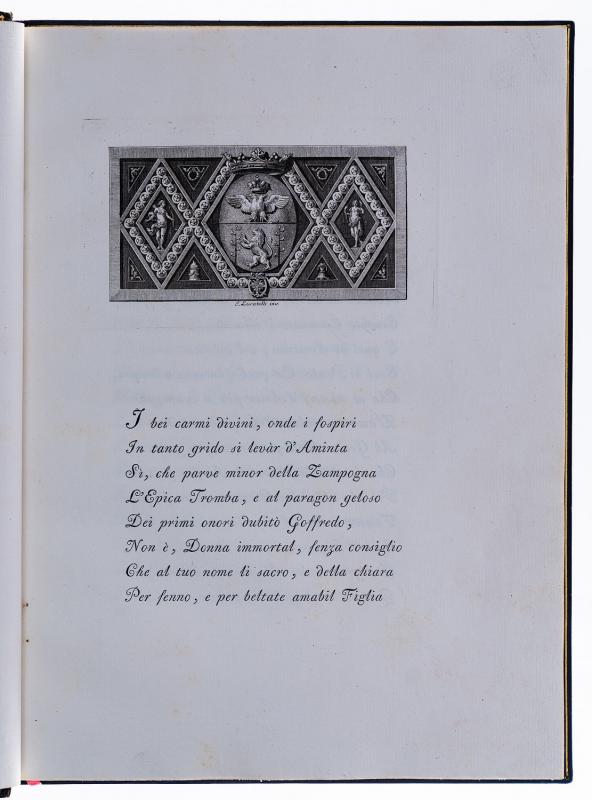
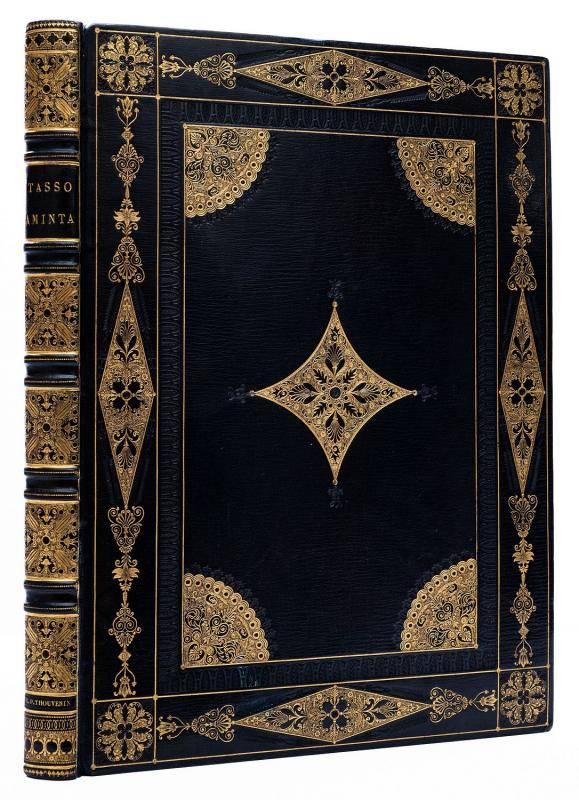
FIRST BODONI EDITION, FIRST ISSUE, ONE OF ONLY 50 COPIES ON VÉLIN PAPER. 4to. (29.5 x 21.5 cm). 7 ff., 14 pp., 1 f., 142 pp., 1f. Printed in italic an roman type. In a sumptuous Parisian binding by Joseph Thouvenin l'Aîné (c.1820 or before)* of dark blue straight-grained morocco elaborately tooled in gilt and blind; the sides ruled with broad border of arabesques, stylised flowers and acanthus leaves, the four corners with quatrefoil ornaments; inner blind-stamped border of palmettes enclosing fan-shaped pointillé corner pieces composed of arabesques, acanthus and foliate tools, the centres with large lozenge shaped ornament; the spine with five double-raised bands, the second compartment lettered in gilt, the others richly gilt with foliate tools on pointillé backgrounds, Thouvenin’s name gilt to foot of spine “R.(ELIÉ) P.(AR) THOUVENIN”; gilt inner dentelles, doublures and endleaves of pink watered-silk surrounded by gilt borders, all edges gilt. Housed in a silk-lined cloth drop-back box. Engraved portrait vignette and engraved coat-of-arms. A fine copy in a sumptuous binding. Aminta is a play written by Torquato Tasso in 1573, represented during a garden party at the court of Ferrara. Both the actors and the public were noble persons living at the Court, who could understand subtle allusions the poet made to that style of life, in contrast with the life of shepherds, represented in an idyllic way. A magnificent copy of this celebrated typographic masterpiece by Bodoni. Brunet cites this as "une des plus belles éditions de Bodoni" produced by the legendary printer-typographer. Dedicated to the Marchesa Donna Anna Malaspina della Bastia with a poem by Vincenzo Monti, printed in Bodoni's elegant italics, underneath her engraved coat of arms and with a preface by the Abate Pierantonio Serassi. While it was subsequently reprinted in 1792 with a frontispiece bearing the original printing date of 1789, this example is identifiable as the first issue (with the small signature number on p. 13 of the preface, and the correct "novi snow" is p. 38). The sumptuous binding, by Joseph Thouvenin l'Aîné, was likely executed before 1820. Born In 1791, the son of a bookseller, he learned bookbinding from 1802-1813. He started to work with Bozerian and had acquired great competence by 1806. He set up on his own in 1813, apparently to learn the gilding which Bozérian Jeune had been unwilling to teach him. His submission of 11 bindings at the Exhibition of 1819 was rewarded with an honourable mention while at that of 1823, he gained a silver medal. He became one of, if not the most respected and sought-after binders of the period but died in his binding prime in 1834. “This binder shows first class technical skills: he pays attention producing fashionable bindings provided with fillet borders, French Restoration panel stamps of little, middle and big sizes and à la cathédrale. He is one of the first workers to adopt the retrospective style, which appealed to Nodier” (BL). His name has been immortalised by mentions in the pages of Balzac and Stendhal, and his connection with Charles Nodier has added a lustre to both their names, often inscribed on shields on the sides of books bound for and by them respectively. *According to the British Library: “The signature R.(ELIÉ) P.(AR) THOUVENIN appeared on works produced before 1820; after this date, it became THOUVENIN”.
14040,- EUR
Differenzbesteuert/Subject to margin taxation
Kontakt zum