Königsmarck. TORQUATUS a FRANGIPANI, Alexander Julius.  Auf Merkliste setzen
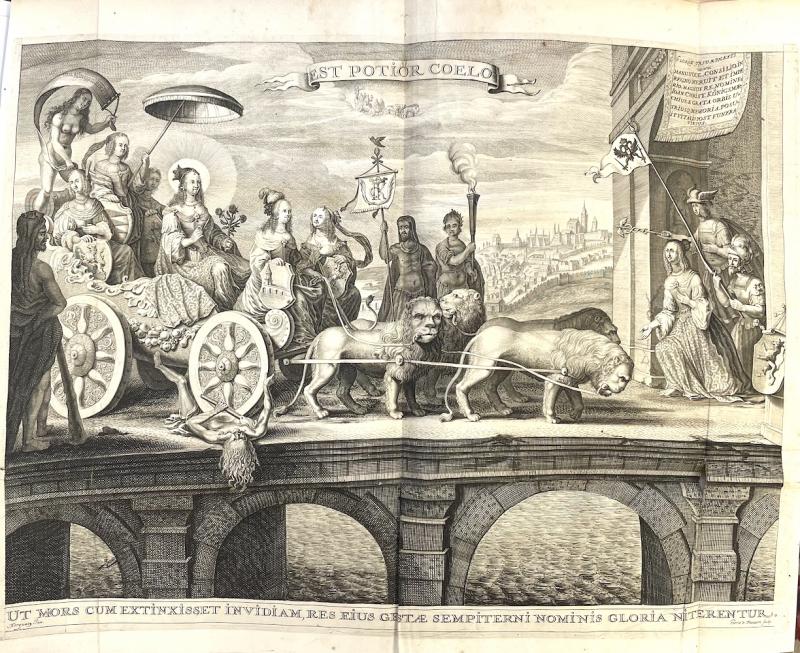
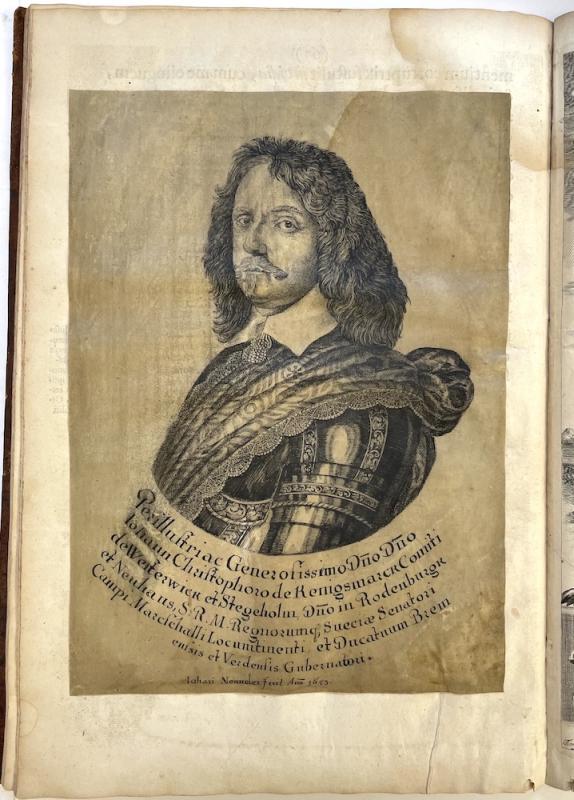
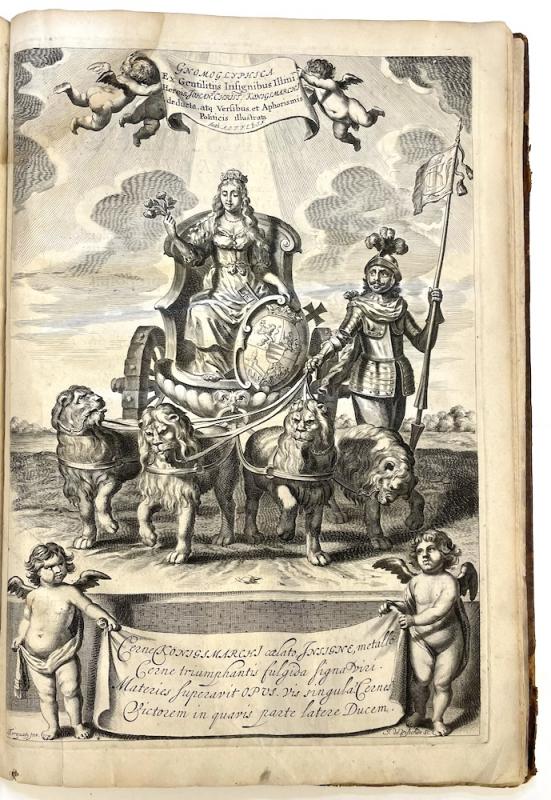
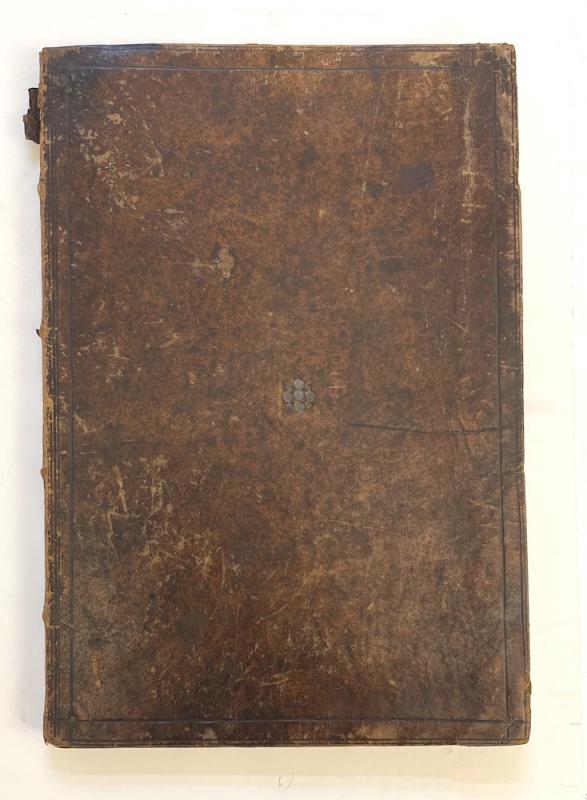
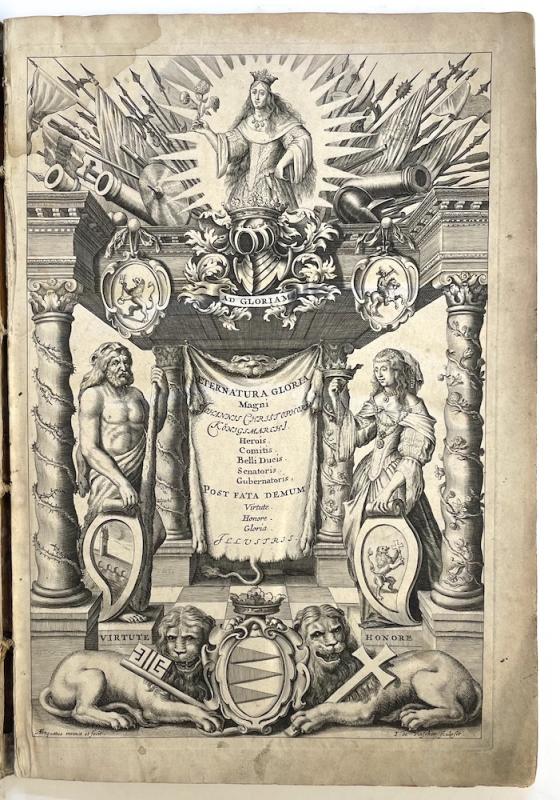
Panegyricus aeternaturae gloriae invictissimo semper hostium triumphatori fortunatissimo sagotogas suorum asirtori pio forti felici Joanne Christophoro Königsmarchio gottico Hannibali victoriae Herculi virtutum Atlanti. (Amsterdam?, 1663). Folio. Engr. extra title,+ (6),+ 67,+ (blank),+ (38) pp.+ 4 large double page and folding engr. plates. The first part with engr. title page, engraved dedication page and an engraved portrait. The last section with an engr. titlepage and with 12 engr. illustrations in the text. With an extra engraved portrait by Johan Neaucler 1653 printed on vellum pasted on the blank leaf R2 recto. Stain in upper inner margin throughout, spotting, the four large plates with tears in foldings. Contemporary full calf, spine defective with holes, boards with blind stamped frames and fleurons in middle. Long gift inscription in ink on front paste down, dated Hamburg 1667, and from the library of of Per Hierta with his signature and comment in pencil.
VD17 1:649553E. Warmholtz 7357. Rare complete copy of the large panegyrical to the Swedish general Johannes Christoffer von Königsmarck (1605-63), with an extra unique portrait on vellum. No imprint, but a laudatory poem to Torquatus at the end is addressed "Ad Amstelam, Ipsis Sextilis Idibus MDCLXIII". The first title is engraved by I. de Vischer after Torquatus, the others are engraved by J. von Meurs and G. G. von Feenham. The work consists of two parts. The first is with the actual biographical text on 67 pages. The second with a separate titlepage: ”Gnomoglyphica, ex gentiliis insignibus illmi. herois Johan. Christ. Königsmarchi deducta, atq. versibus et aphorismus politicis illustrata. Auth: A.J.F.T.L.B.J.N.”. It consists of (26) pp. with a separate title leaf engraved by Jan de Visscher after Torquatus and 12 emblematic illustrations together with latin devices, verses and explanations, followed by texts by Joan Leon Blasius’ ”Lachrymae regales”, ”Gottici Hannibalis”, ”Arcus trumphalis virtutis” and ”Mausolaeum sepulchrale” together with the four very large symbolic plates, including the imaginative mausoleum. All to the glory of Hans Christoffer von Königsmarck (1605-63), Swedish commander in the Thirty Years’ War and the conquerer of Praha in 1648.
4100,- EUR
Differenzbesteuert/Subject to margin taxation
Sachgebiete: Deutschland, Dreißigjähriger Krieg, Geschichte
Kontakt zum