Constitutiones monachorum...  Auf Merkliste setzen
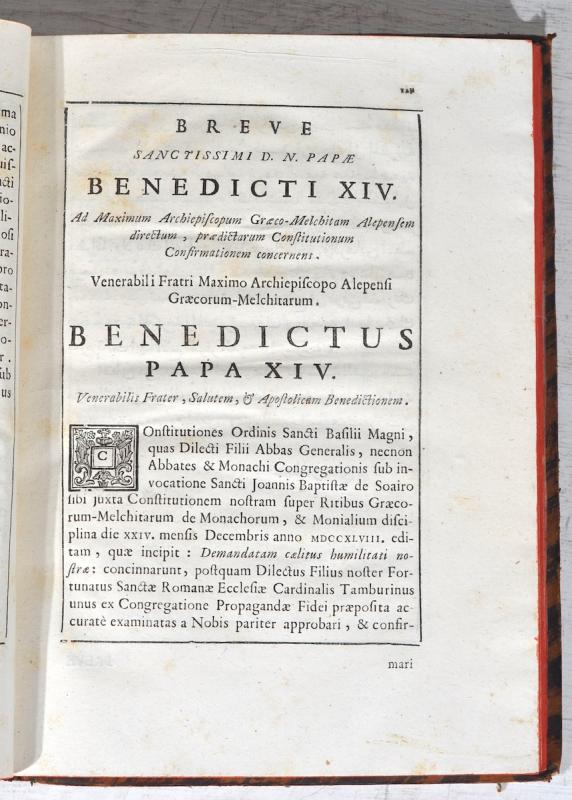
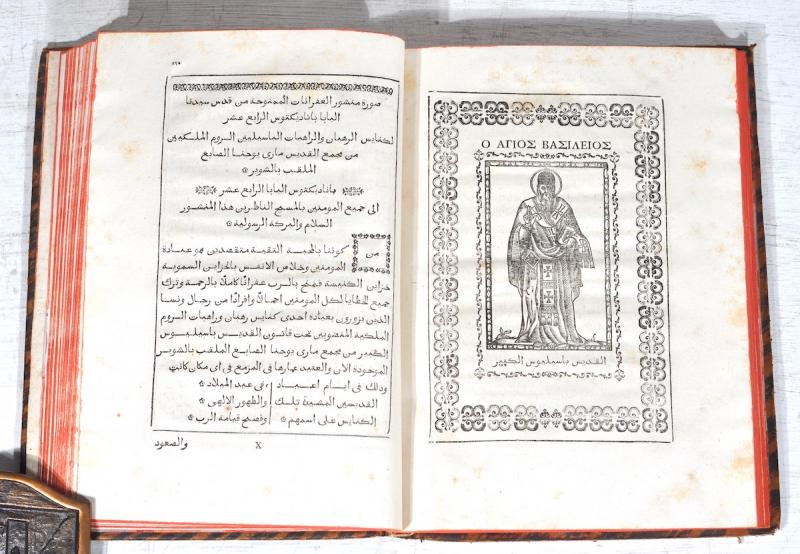
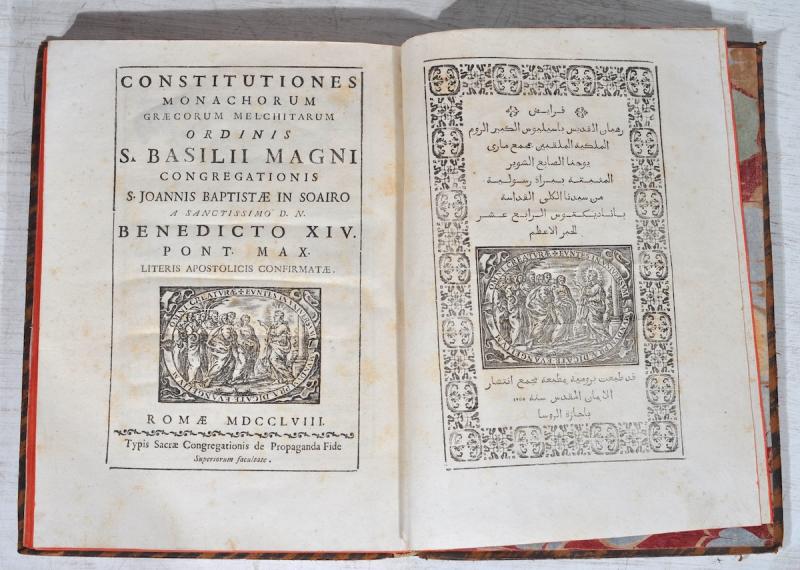
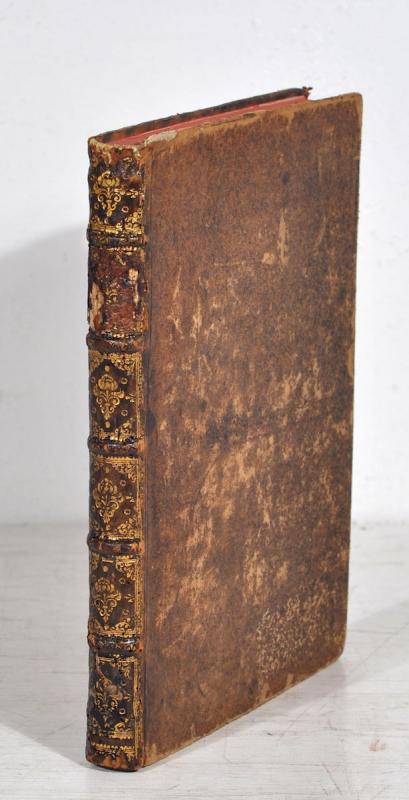
Constitutiones monachorum græcorum Melchitarum ordinis S. Basilii Magni congregationis S. Joannis Baptistæ in Soairo a sanctissimo d.n. Benedicto XIV. Pont. Max. Literis apostolicis confirmatæ. Rome, Typis Sacræ Congregationis de Propaganda Fide, 1758. 4to. (1 blank,2,1 blank,1-54,1-207,1 blank,1-24) pp. & 1 engraved plate. Worn contemporary sprinkled calf, spine with raised bands and gilt decoration. Red edges. Worming to the spine, with more extensive damage at upper portion. Rear inner joint superficially cracked. Foxing throughout, mainly in the margins but occasionally extending into the text area. Heaviest staining on leaves C3–C4 of the first sequence. A tiny wormhole affecting the text on leaf X3 of the second sequence. The last three leaves with a repair to the outer margin, extending only minimally into the ruled border.
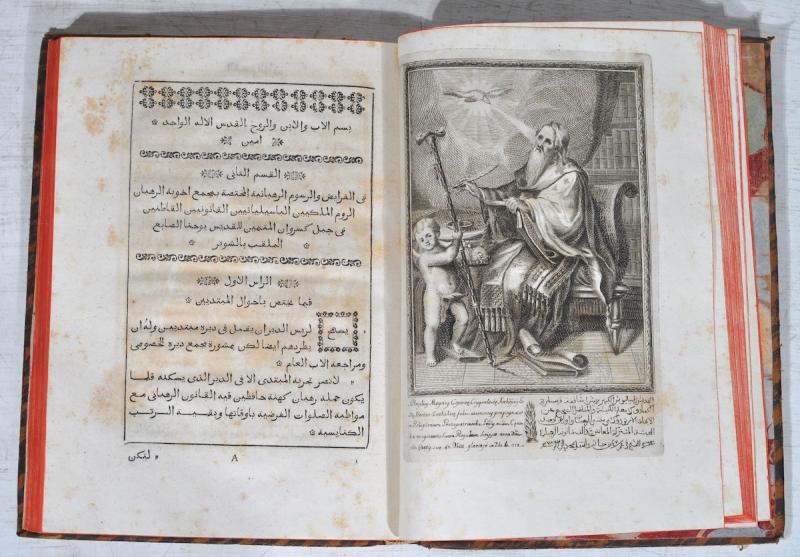
The work begins from the back in the Arabic manner. Printed at the Propaganda Fide mission press of the Congregation founded in 1622 to oversee the Roman Curia's missionary activities, today known as the Congregatio pro Gentium Evangelizatione (Congregation for the Evangelization of Peoples). Published for the Melkite Greek Catholic monastic order Ordo Basilianus Sancti Iohannis Baptistæ (Basilian Chouerite Order of Saint John the Baptist), it contains a bilingual Latin and Arabic edition of texts relating to the order, including its rule and the papal approval thereof. The order was founded in 1696 by five monks who left Balamand Monastery, located in the Crusader County of Tripoli in present-day Lebanon, to establish a new monastery in which they intended to observe the rule of Saint Basil. After several years spent searching for a suitable site, they settled in 1710 in the village of Choueir in Mount Lebanon and its church Saint John the Baptist, from which the order derived its name. In 1757 the rule received the approval of Pope Benedict XIV, explaining the publication of the present work in the following year. The order soon became one of the two principal Melkite monastic orders and the foremost contemplative one. In the early nineteenth century it divided into two branches, and in 1880 its theological seminary was established, leading to the foundation of numerous parishes in present-day Lebanon and Syria. The engraved plate depicts St Basil writing one of his works while a white dove whispers divine inspiration into his ear.
2700,- EUR
Differenzbesteuert/Subject to margin taxation
Sachgebiete: Kirchengeschichte, Ordensgeschichte, Religion, Religionsgeschichte
Kontakt zum