Rare Books Berlin - Internationale Messe für Bücher und Graphik

...

(wunderkammer) KUNDMANN, Johann Christian.

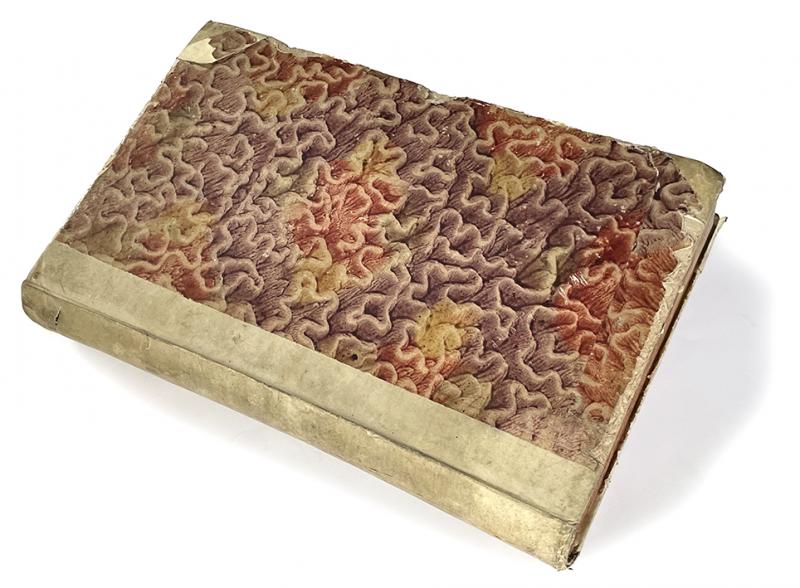
Rariora Naturae & Artis item in Re Medica, oder Seltenheiten der Natur und Kunst des Kundmannischen Naturalien= Cabinets, wie auch in der Artzeney= Wissenschafft., Darinnen abgehandelt werden I. Examen, Fossilum & Lapidum quorundam rariorum, oder Untersuchung verschiedener unterirdischer Seltenheiten und sonderbar figuriten Steine. II. Memorabilia Naturæ & Artis, oder Merckwürdigkeiten der Natur und Kunst. III. Observationes in Re Medica singulares, oder Sonderbare Anmerkckungen zur Artzeney= Kunst und Wissenschafft gehörig. Denen beygesezt I. Ungewöhnliche Delicatessen und abgeschmackte Speisen in allen Theilen der Welt, wie auch einzelner Personen; 2. Historie von der erschrecklichen Menschen= Pestilentz, wie sie vom Anfang dieses Seculi, bis auf das Jahr 1715. von Orlent aus, durch die Polnische, Ungarische, Teutsche, Schwedische und Dänische Reiche von Jahren zu Jahren, von Ort zu Ort, aufs besstigste gewütet, aus gedruckten, wie auch schrifftlichen Nachrichten gesammlet, und was wegen der Præservation und Cur sonderbares angemercket worden; 3. Reflexiones über die Kranckheits= und Todten= Listen, mit Medicinischen Anmerkungen begleitet, und dem Druck, Nebst vielen Kupffern und eingedruckten Figuren, überlassen … Breßlau und Leipzig, (Wroclaw & Leipzig) Bey Michael Hubert. 1737. Folio (340 x 210 mm). 12 Bll., column 9 - 728, 2 Bll., column 745 - 1084, 1 Bl., pp. 1093 - 1096, 1097 - 1312 columns, 17 Bll. with front-title, title printed in red and black, engraved portrait of the author, 19 engraved plates (two fold.), 7 Bll. tables (two on two sheets), and numerous text woodcuts. Contemporary half vellum over Kleisterpapier boards, red sprinkled edges, evenly browned, partly spotted, some old ownership entries darkened (19. cent ?); repair to foot of spine.

Sachgebiete: Geologie, Mineralogie, Naturwissenschaften, Schlesien

27.08.2026 - 10:31

4000,- EUR

Antiquariat Michael Kühn

...

Vigenere, Blaise de

Vigenere, Blaise de (1523-1596). Traicté des chiffres, ou Secretes manieres d’escrire. Paris: Abel l’Angelier, 1587. 4°. 1 nn.Bl., 343 Bl., 1 nn.Bl. Title in red and black with woodcut device, letterpress tables and some text leaves also printed in red and black, engraved motto on title verso, woodcut illustrations including 2 double-page woodcut alphabets, and 6 plates (3 double page plates, 1 folded plate and 2 plates on 1 page). Late 17th-century flexible vellum, manuscript title on spine (a little bit stained). old name on title. paper somewhat browed, in good condition. EUR 22000,- First edition, second issue. The Vigenere Cypher was regarded as inbreakable for over 300 years, until Charles Barbbage and Fredrich Kasiski independently developed a method of multiple tests to carry out successful cryptanalysis. In 1586 the French diplomat and cryptographer Blaise de Vigenère published in Paris his Traicté des chiffres ou secrètes manières d'escrires. Vigenère's book described a text autokey cipher that became known as the Vigenère cipher after being misattributed to Vigenère in the 19th century: the actual inventor was Giovan Battista Bellaso (in 1563). 'Vigenère became acquainted with the writings of Alberti, Trithemius, and Porta when, at the age of twenty-six, he was sent to Rome on a two year diplomatic mission. To start with, his interest in cryptography was purely practical and was linked to his diplomatic work. Then, at the age of thirty-nine, Vigenère decided that he had accumulated enough money for him to be able to abandon his career and concentrate on a life of study. It was only then that he examined in detail the ideas of Alberti, Trithemius, and Porta, weaving them into a coherent and powerful new cipher … The cipher is known as the Vigenère cipher in honour of the man who developed it into its final form. The strength of the Vigenère cipher lies in its using not one, but 26 distinct cipher alphabets to encode a message… To unscramble the message, the intended receiver needs to know which row of the Vigenère square has been used to encipher each letter, so there must be an agreed system of switching between rows. This is achieved by using a keyword… Vigenère’s work culminated in his Traicté des Chiffres, published in 1586. Ironically, this was the same year that Thomas Phelippes was breaking the cipher of Mary Queen of Scots. If only Mary’s secretary had read this treatise, he would have known about the Vigenère cipher, Mary’s messages to Babington would have baffled Phelippes, and her life might have been spared' (Singh, The Code Book. The Secret History of Codes and Codebreaking, 46-51). Vigenère's work is also one of the first European printed books to deal with Chinese and Japanese writing, though strangely the leaf devoted to these remains blank in all the copies of this edition we have inspected . Galland, An Historical and Analytical Bibliography of the Literature of Cryptography, 193; Adams V-743; Jean Balsamo et Michel Simonin, Abel L’Angelier & Françoise de Louvain…; Robert Birley, 'Press-marks of the de Thou library', in The Book Collector, 1956, n° 2, p. 173; 'Blaise de Vigenère, poète et mythographe au temps de Henri III', Cahiers V.L. Saulnier n° 11, Presses de l’École Nationale Supérieure, 1994; Caillet, Manuel bibliographique des sciences, III, n° 11159; Antoine Coron, 'Note sur les cotes dites de la bibliothèque de Thou', in Bulletin du bibliophile, 1982, III, pp. 339-357 (for the provenance); Mortimer, Harvard French 543; J.-F. Maillard, 'Aspects de l’encyclopédisme au XVIe siècle dans le Traicté des chiffres annoté par Blaise de Vigenère', in Bibliothèque d’Humanisme et Renaissance, 1982, tome XLIV, 2, pp. 235-268; Denyse Métral, Blaise de Vigenère…, Paris, 1939, p. 57 ff.; Trésors de l’écrit 10 ans d’enrichissement du patrimoine écrit, RMN, 1991, p. 58.

Sachgebiete: Mathematik, Naturwissenschaften

26.08.2026 - 16:15

22000,- EUR

Antiquariat Kainbacher
...

Kepler, Johannes

Ad Vitellionem paralipomena quibus astronomiae pars optica traditur. Frankfurt, C. Marnius & Heirs of J. Aubrius 1604. 4to (203 x 160 mm), pp. [xvi], 449, [18], [1, blank], with one engraved plate (with adjacent unsigned and unpaginated leaf of explanation) before page 177, two folding letterpress tables (between pp. 424 and 425), woodcut printer’s device on title and numerous woodcut diagrams in text (some leaves browned, as usual, due to the quality of the paper). Contemporary vellum. Flexibler Pergamentband der Zeit mit neuen Bändern (etwas fleckig), leicht gebräunt, ein gutes, vollständiges Exemplar. EUR 45000,- Die beiden "Einschubblätter" vor Seite 177 des "Vitallionem" von Kepler tragen keine Paginierung. Sie stammen aus einem anderen Buch (nicht von Kepler) und enthalten einen Kupferstich des menschlichen Auges aus medizinischer Sicht und 3 Seiten Auflistung der einzelnen Bilder. Kepler hat dies wohl zum besseren Verständnis seines Textes beigegeben. Ich erwähne diesen Einschub, weil er anscheinend manchmal fehlt. In der Bibliographie von Max Caspar ist aber alles angegeben sodass er Bestandteil des Werkes ist. FIRST EDITION of Kepler's first important optical work and a highly significant book in the history of ophthalmology. The first part deals with human vision and the functions of the eye, the crucial role played by the retina, the process of refraction and the first scientifically correct explanation of myopia. The second part is divided into six astronomical chapters which "include not only a discussion of parallax, astronomical refraction, and his eclipse instruments but also the annual variation in the apparent size of the sun. Since the changing size of the solar image is inversely proportional to the sun's distance, this key problem was closely related to his planetary theory; unfortunately, his observational results were not decisive" (DSB). Kepler was responsible for introducing the terms "prism," "lens," "meniscus," and many others into the field of optics. Caspar 18; Cinti 13; Hirschberg 308; NLM/Krivatsy 6343; Zinner 3993.

Sachgebiete: Astronomie, Mathematik, Naturwissenschaften, Physik

26.08.2026 - 15:54

45000,- EUR

Antiquariat Kainbacher

...

Kepler, Johannes

Kepler, Johannes Harmonices Mundi Libri V. Linz, Johannes Plancus 1619. Folio (302 x 196 mm). [iv], 66, 255 pp. Title-page, leaves *2-*4 (containing the dedication to James I) and the 5 engraved plates in good facsimile. Woodcut text illustrations. Very minor foxing and browning, a few frayed edges repaired. Stamp of the Bibliotheca Regia Monacensis on title of book 1. Period style vellum over boards with manuscript in ink on spine. EUR 58000,- Dibner 6. Horblit 58. Sparrow 115, Norman 1207. - First Edition. Kepler's third law of planetary motion-that the squares of the orbital periods of planets are directly proportional to the cubes of the major axis (the "length" of the ellipse) of the orbits-was announced in Book 5 of his major treatise on the harmony of the universe. Harmonices mundi represents Kepler's attempt to discover God's archtypal model of the universe in the simple mathematical ratios embodied in the five regular polyhedrons, in the laws of musical harmony (based upon the seven ratios recently accepted as the basis of the "just" scale), in his own theory of astrological aspects, and in the planetary system he had proposed in Mysterium cosmographicum (1596), in which the mean distances of the planets from the sun were in proportions related to spheres inscribing and circumscribing the five regular solids. Book 1, devoted to investigation of polygons and polyhedrons, introduced the great and small stellated dodecahedrons, rediscovered in 1810 by Louis Poinsot; these, along with the two others of this class, are now known as the "Kepler-Poinsot" solids. Caspar, Bibliographia Kepleriana 58; Kepler, pp. 264-290. DSB Titelblatt und Widmung an den englischen König Jakob (5 Seiten) sowie die Tafeln in Faksimile, Haupttext Liber I-V in Original (255 Seiten). Aus der königlichen Bibliothek in München (Stempel), abgegeben als Doppelstück von der Bayr. Staatsbibliothek (Stempel) . Das in diesem Werk stehende 3. Kepler´sche Gesetz: „Die Quadrate der Umlaufzeiten verhalten sich wie die dritten Potenzen der mittleren Abstände“ ist auf Seite 189 unten zu finden.

Sachgebiete: Astronomie, Mathematik, Naturwissenschaften, Physik

26.08.2026 - 15:40

58000,- EUR

Antiquariat Kainbacher